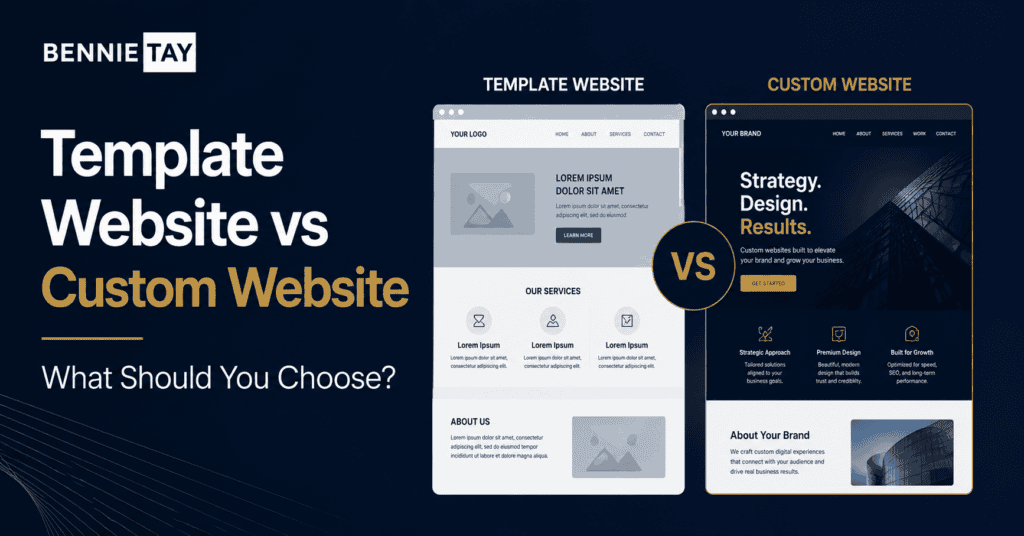
Choosing between a template website and a custom website is a common decision for businesses that want a professional online presence. Both options can work, but they solve different problems.
A template website uses a pre-designed structure that is customized with your content, branding, and images. A custom website is planned and designed more specifically around your business, audience, and goals.
The right choice depends on your budget, timeline, brand needs, content complexity, and how important the website is to generating leads.
What a template website offers
A template website gives you a faster starting point. The layout already exists, so the project can move more quickly than a fully custom design.
Templates can be cost-effective for simple websites. If your business needs a basic online presence and your services are easy to explain, a well-chosen template may be enough.
The limitation is fit. A template may not match your exact content, sales process, or brand style. If you force your business into the template, important information may feel awkward or generic.
What a custom website offers
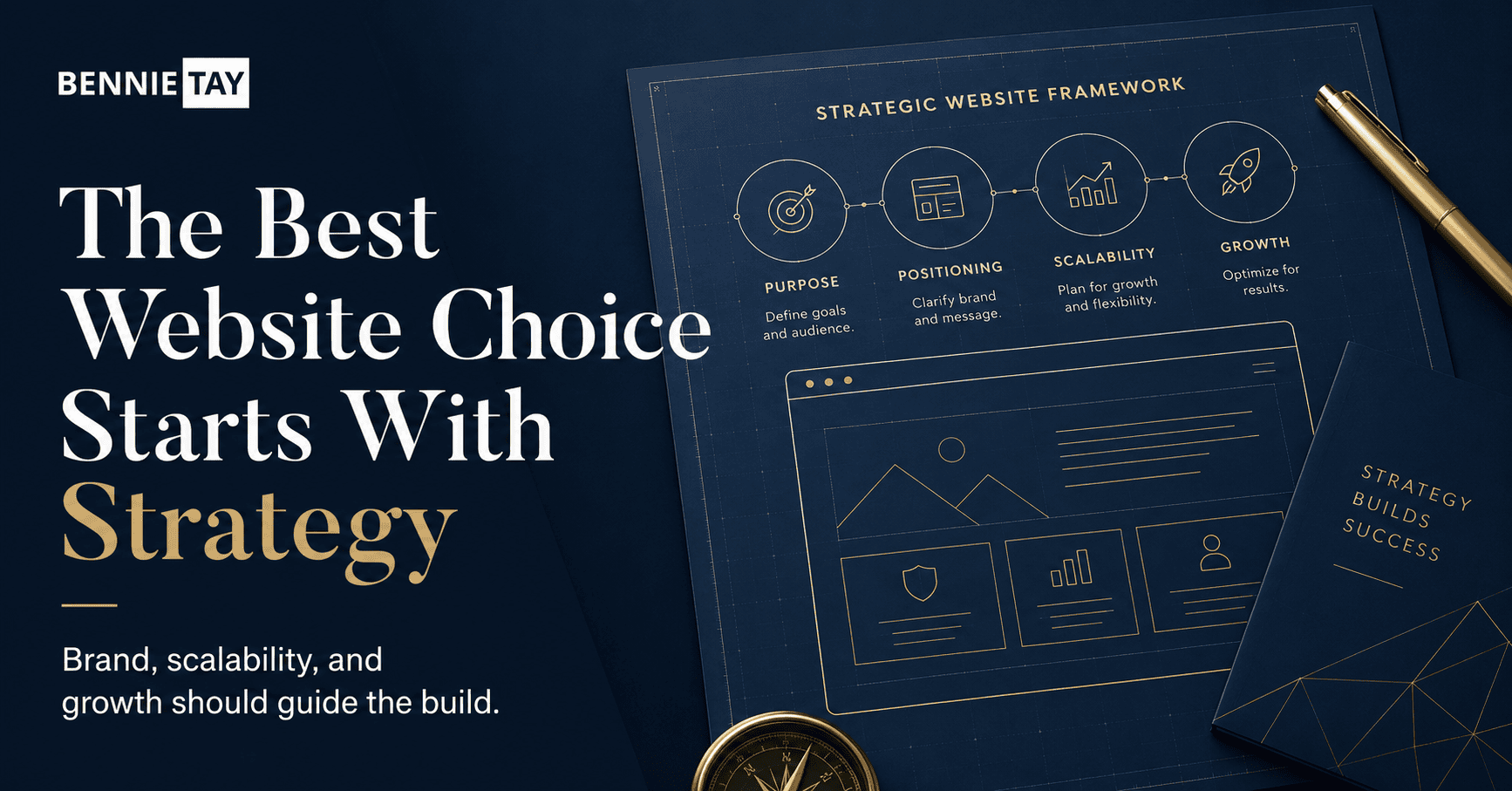
A custom website is planned around your business goals. The structure, sections, page flow, and design can be created specifically for your audience and offer.
This can be useful when your service is complex, your brand needs to stand out, or your website has a serious lead generation role. Custom planning can help visitors understand the value more clearly.
The tradeoff is cost and time. Custom work usually requires more strategy, design, development, feedback, and testing.
Branding differences
Templates can look professional, but they may also look familiar. If many businesses use similar layouts, your site may not feel distinctive.
A custom website gives more control over visual direction, spacing, content hierarchy, and interaction. It can better reflect your positioning and quality level.
However, branding is not only about visuals. Even a custom design will feel weak if the message is vague. Strong copy and structure matter in both options.
SEO and content structure
A template can support SEO if it is built properly and the content is planned well. The template itself is not the main SEO strategy. The page topics, headings, copy, speed, metadata, and internal links matter more.
A custom website may make SEO planning easier because pages can be structured around specific services, locations, questions, and search intent.
If SEO is important, do not choose only based on design. Ask how the website will handle page structure, content depth, URLs, metadata, and performance.
When a template is enough
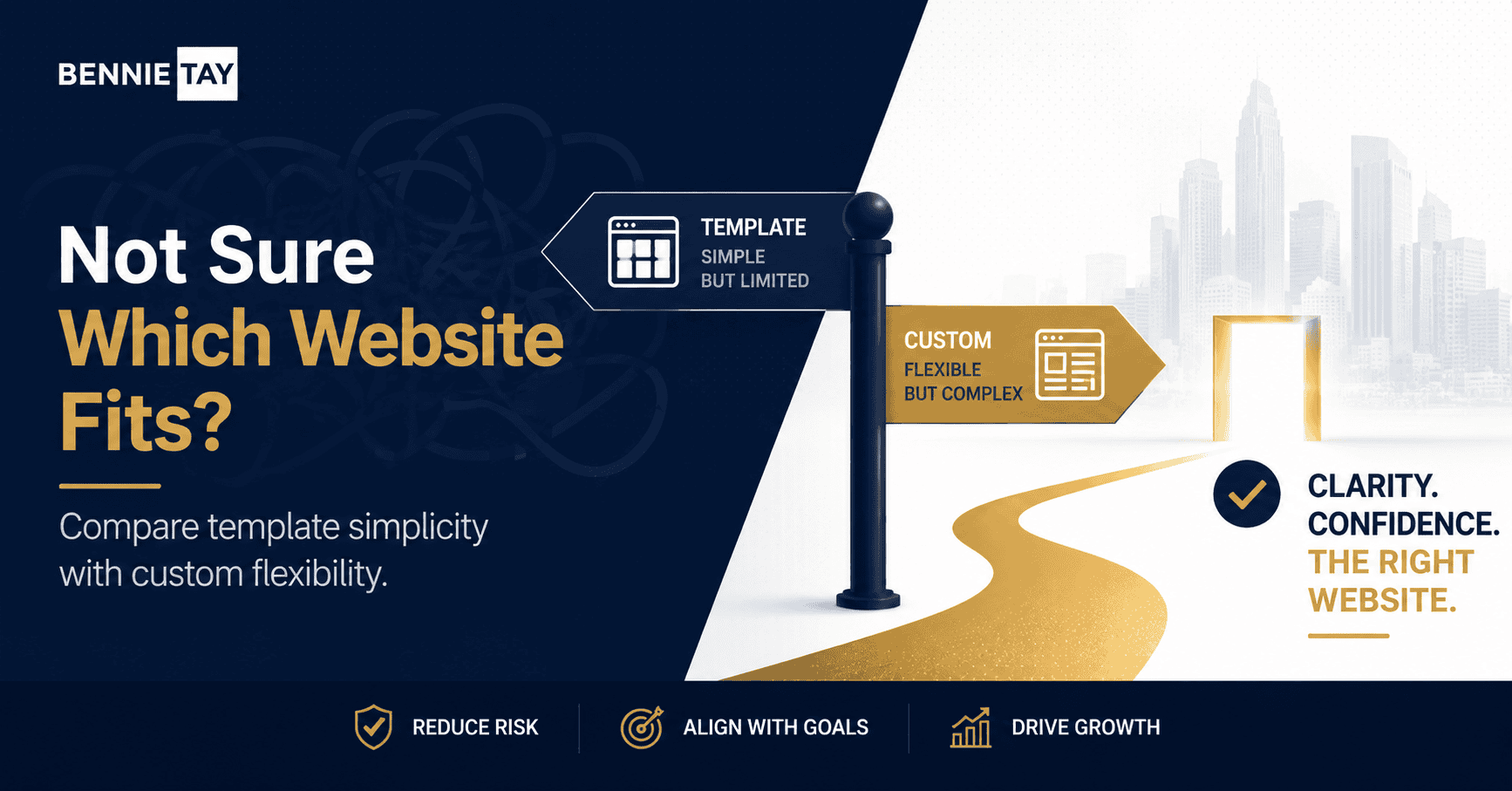
A template may be enough if your budget is limited, your website is simple, your brand does not need heavy customization, and you mainly need a credible online presence.
It can also be a good stepping stone. Some businesses start with a template and move to a custom website later when the offer, audience, and budget are clearer.
The key is to customize the template thoughtfully so it does not feel like generic filler content.
When custom is worth it
A custom website is worth considering when the website is central to sales, your offer needs careful explanation, or you want a stronger brand impression.
It is also useful when you need a unique page flow, custom integrations, advanced content structure, or design details that a template cannot handle well.
Custom is not automatically better. It is better when the extra planning and execution create real business value.
How to make the decision practical
The best choice for template website vs custom website depends on your current stage, budget, internal time, and how important the website is to lead generation. A business that relies heavily on online enquiries should judge the option by long-term performance, not only the launch cost.
Start by listing what you actually need the website to do. Do you need a simple credibility site, campaign landing pages, regular content updates, SEO growth, stronger sales pages, or ongoing support? Each option becomes easier to judge when the business goal is clear.
For businesses deciding how much customization they need, the most practical option is usually the one that gives enough quality, clarity, and support without creating unnecessary complexity. A website should be manageable after launch, not just impressive on the first day.
Questions to ask before choosing
Ask who will write the copy, who will plan the page structure, who will handle revisions, and who will maintain the site after launch. Many website problems happen because these responsibilities are assumed but never clearly assigned.
Also ask how changes will be handled later. A website may need new service pages, campaign pages, testimonials, pricing updates, or SEO improvements. If every small change becomes slow or expensive, the initial option may not be as practical as it looked.
Finally, ask what success will look like. A better website should improve trust, enquiry quality, conversion, or operational efficiency. Without a clear target, it becomes too easy to compare only design samples and prices.
Mistakes to avoid
Avoid choosing purely on price. The cheapest option can become expensive if it produces a weak message, poor mobile experience, slow pages, or a website that nobody can update properly.
Avoid choosing purely on design style too. A beautiful website that does not explain the offer or guide visitors toward action will still underperform. Design should support the business goal, not replace strategy.
Avoid assuming all providers include the same work. Strategy, copywriting, SEO setup, speed optimization, maintenance, and support can vary widely. Compare what is actually included before deciding.
What a strong website option should include
A strong website option should include clear page planning, readable copy, mobile-friendly layouts, basic SEO setup, fast loading, trust-building sections, and a clear enquiry path. These are not optional details if the website is expected to bring leads.
It should also include a realistic handover or support plan. If the business owner cannot maintain the site, there should be a clear way to request updates, fix issues, and keep the website current.
The right choice should feel aligned with your business operations. If you want control and have technical support, a flexible build may make sense. If you want simplicity and ongoing help, a managed plan may be better.
Final thoughts
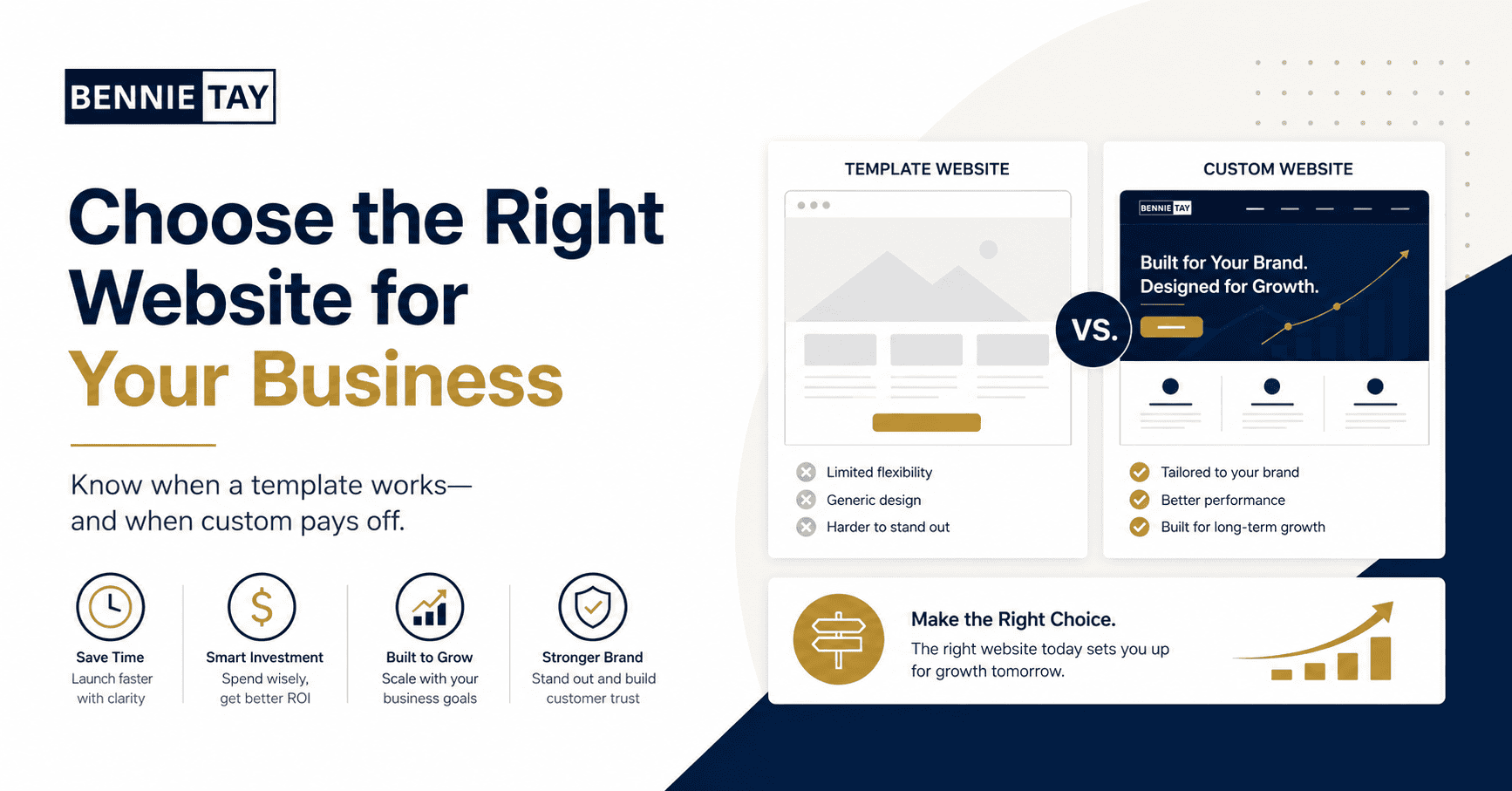
Choose a template website if you need something faster, simpler, and more affordable. Choose a custom website if you need stronger fit, clearer strategy, and more control over the user journey.
The best website is not the one with the most custom work. It is the one that communicates clearly, builds trust, and supports your business goals.
How to compare total value, not just price
Price is only one part of the decision. A cheaper website option can become expensive if it creates weak positioning, poor enquiry quality, slow loading, or a layout that needs to be rebuilt after a few months. A more expensive option can also be wasteful if the scope is larger than the business actually needs.
Compare value by looking at what the website will help you do. Will it explain your services clearly? Will it support search traffic? Or will it help paid ads convert? Will it make your business look credible to referral prospects? Will it be easy to update when your offer changes?
The right option should reduce friction for both the business and the customer. It should make the business easier to understand and make the next step easier for qualified visitors.
What happens after launch matters
Many website decisions focus too much on the launch. Launch is important, but the website will need updates after it goes live. Services change, testimonials improve, offers evolve, and new campaign pages may be needed.
Before choosing an option, check whether you will have support for maintenance, small content updates, troubleshooting, analytics checks, and SEO improvements. A website that cannot be improved easily will become outdated faster.
This is especially important for small businesses that do not have an internal marketing or technical team. The simpler the support process, the more likely the website will stay useful over time.
How this affects lead quality
A website should not only bring more enquiries. It should help bring better enquiries. Clear positioning, service explanations, pricing guidance where appropriate, proof, and process details can filter visitors before they contact you.
When the website is too vague, it attracts people who are unsure what you do or who are mainly comparing prices. This can waste time in sales conversations. When the website is clear, prospects arrive with better expectations.
Better lead quality often comes from better communication. Explain who the service is for, what problems it solves, what makes your approach different, and what happens after someone enquires.
A simple action plan
Start by reviewing your current website or planned website brief. Write down the main business goal, the main audience, the key services, the proof you can show, and the action you want visitors to take.
Then match the website option to that goal. If the goal is simple credibility, a lighter option may be enough. If the goal is lead generation, SEO growth, or a stronger brand position, the website needs more planning and support.
Useful reference: If you are considering templates, WordPress.org’s block themes documentation explains how modern theme-based sites are structured. See WordPress.org block themes documentation.Finally, ask for clear deliverables. You should know what pages are included, who writes the copy, what SEO
setup is done, how revisions work, what happens after launch, and what costs may appear later.