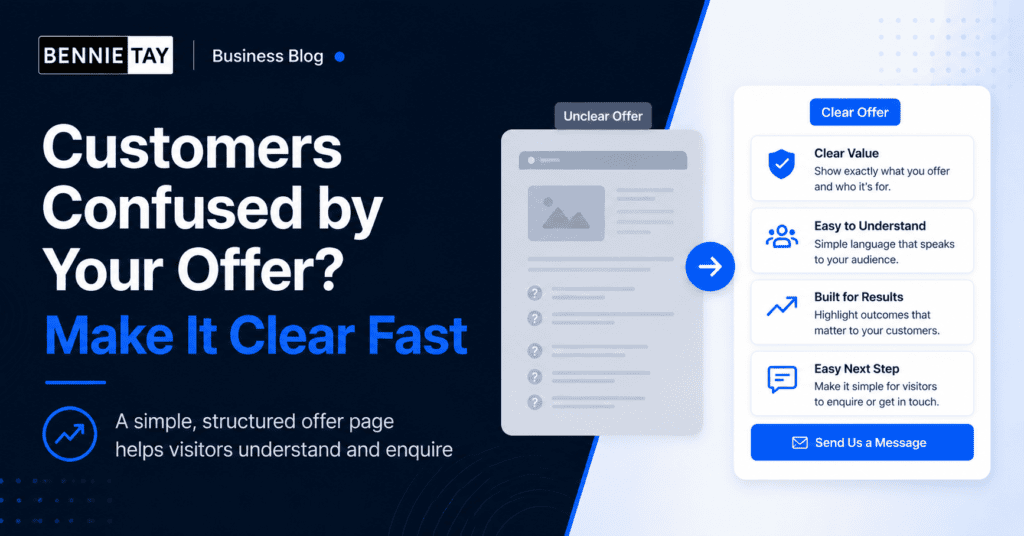
A website offer is the clear promise visitors see when they land on your page. It tells them what you provide, who it is for, and why it matters. If your website offer is confusing, people may leave even if your service is useful.
Many small-business websites describe the company but not the offer. They talk about quality, passion, experience, or solutions, but visitors still do not know what they can buy, book, request, or ask for. A strong offer removes that confusion.
Your website does not need complicated copy to convert. It needs a simple message that a busy person can understand quickly. The faster visitors understand your offer, the easier it is for them to decide whether to contact you.
Start with the customer problem
Before writing your offer, identify the problem your customer wants solved. This keeps your message grounded in real needs instead of broad marketing language.
For example, a business owner may not be looking for “digital transformation.” They may want more enquiries, a website that looks credible, or a landing page for Facebook ads. A homeowner may not be looking for “property solutions.” They may need roof repair, waterproofing, cleaning, or renovation.
When your offer starts with the customer problem, visitors feel that your business understands them. This creates trust before you even explain the details.
Name the service clearly
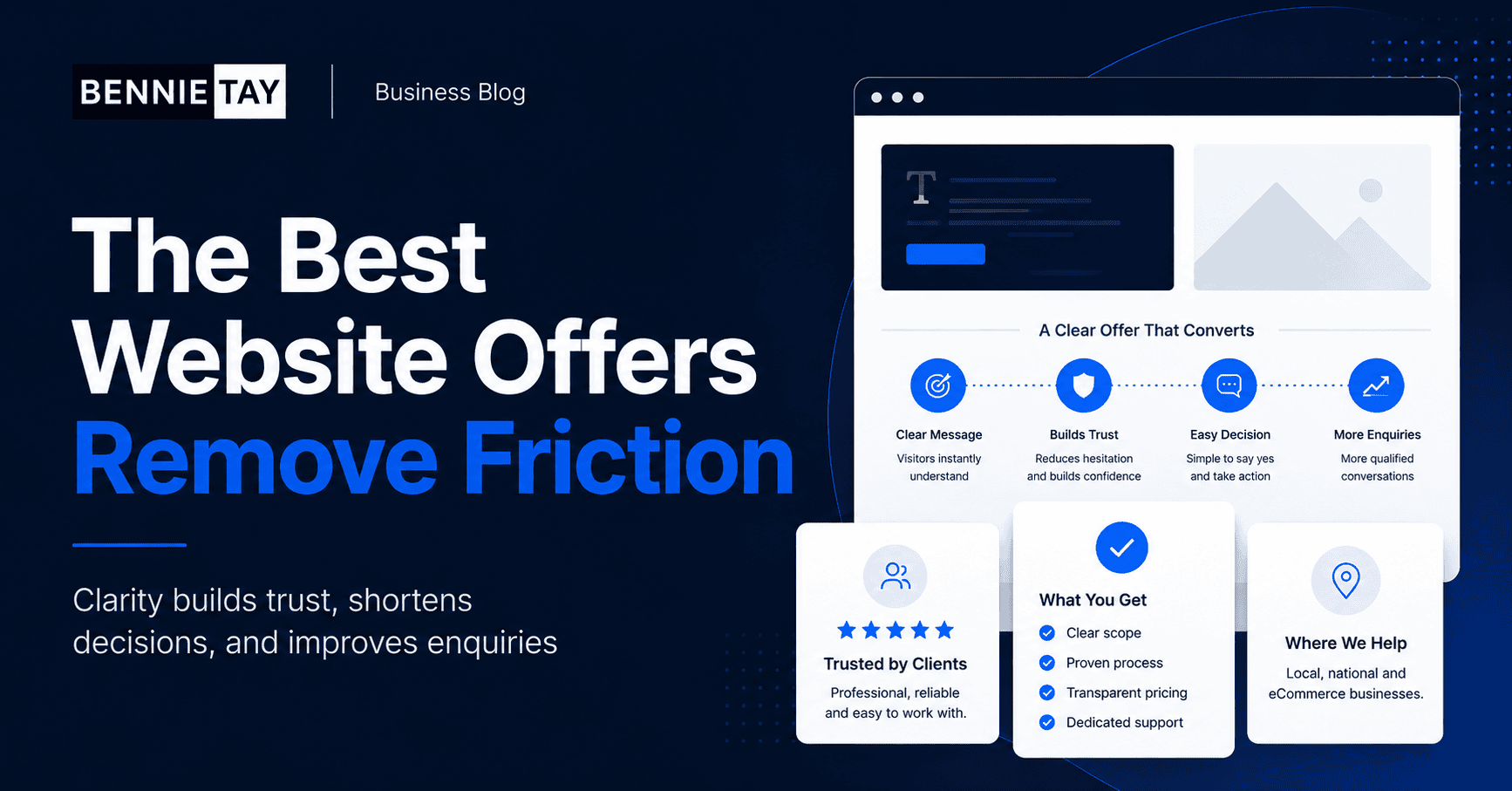
Do not make visitors guess what you sell. Use clear service names. If you design websites, say website design. If you provide bookkeeping, say bookkeeping. If you offer clinic marketing, say clinic marketing.
Creative names can work later, but they should not replace clarity. A package called “Growth Accelerator” may sound interesting, but visitors need to know whether it is a website package, ad management service, coaching programme, or consulting offer.
A clear service name also helps search engines understand your page. It supports SEO because people search for specific services, not vague brand phrases.
Explain who the offer is for
A good website offer should not speak to everyone. It should help the right customers recognize that the service fits them.
For example, “Website design for Malaysian service businesses” is clearer than “professional website design.” “Landing pages for coaches and consultants” is clearer than “high-converting digital solutions.” The audience gives context to the offer.
This does not mean you can only serve one type of customer. It means your page should be specific enough that visitors understand whether they are a good fit.
Connect the offer to a result
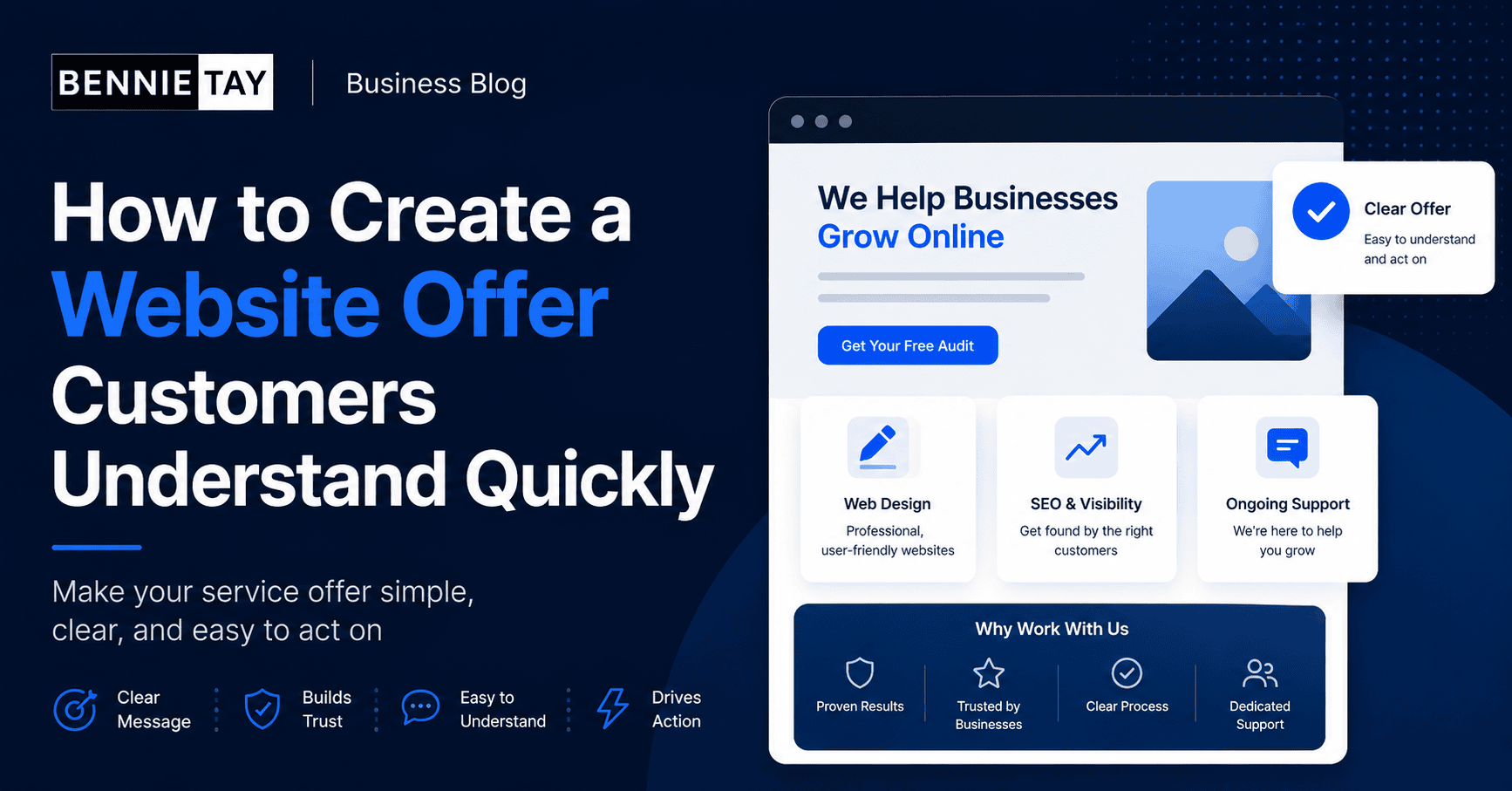
Customers care about outcomes. They want to know what the service helps them achieve. Your website offer should connect the service to a result without making unrealistic promises.
For example, a stronger offer might say: “A clearer business website that helps visitors understand your services and send enquiries.” This is more useful than saying: “We build modern websites.”
The result can be practical. It may be more enquiries, easier booking, better trust, clearer pricing, faster follow-up, or less technical stress. Choose the result your customers actually care about.
Avoid broad claims
Phrases like “best quality,” “trusted partner,” “one-stop solution,” and “premium service” are common but weak when they stand alone. They do not explain what makes your offer valuable.
Instead of saying you provide quality, show what quality means. Do you include mobile-friendly design, copywriting, SEO setup, speed optimization, support, project planning, or clear reporting? Specific details are easier to trust.
A visitor should be able to repeat your offer after reading the first section. If they cannot, the message is probably too vague.
Make the first section do the heavy lifting
Your homepage or landing page should explain the offer in the first section. This section usually needs a headline, short supporting sentence, and call to action.
A simple formula is: service + audience + result. For example: “Website Design for Small Businesses That Need More Enquiries.” Then add a short sentence: “We build clear, mobile-friendly websites that explain your services and make it easier for customers to contact you.
The call to action should match the offer. If the offer requires discussion, use “Book a Consultation” or “Request a Quote.” If the next step is simple, use “WhatsApp Us” or “Get Started.”
Support the offer with proof
A clear offer gets attention. Proof helps visitors believe it. Add testimonials, project examples, reviews, case studies, before-and-after results, or simple process details.
Proof does not need to be huge. A short review, a project photo, or a specific example can support the offer. If you say you help businesses get enquiries, show how the website structure, forms, WhatsApp buttons, and service pages support that goal.
Place proof close to the offer. Do not make visitors scroll too far before they see why they should trust you.
Explain what is included
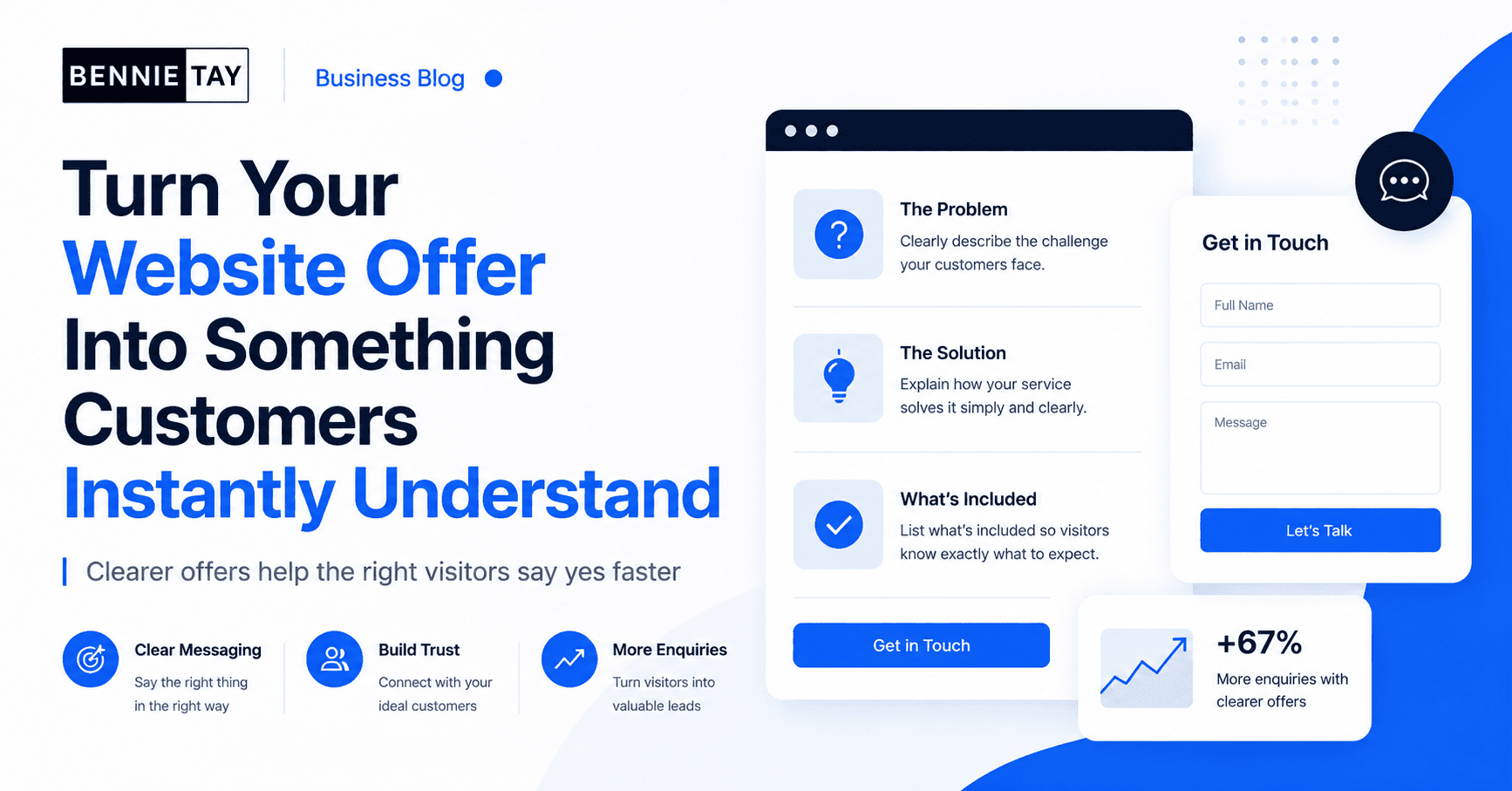
After the first section, explain what the offer includes. This helps visitors understand the scope and reduces unnecessary questions.
For a website package, you might list homepage design, service pages, mobile optimization, basic SEO, contact forms, WhatsApp buttons, analytics setup, and launch support. For a consulting offer, you might list assessment, strategy, action plan, review calls, and implementation support.
Keep the list readable. Use short bullets or compact sections. The goal is to make the offer feel concrete, not overwhelming.
Clarify who it is not for
Sometimes the best way to make an offer clearer is to say who it is not for. This helps filter poor-fit leads and protects your time.
For example, a monthly website plan may not be for businesses that want full custom development from scratch. A landing page package may not be for companies that need a full ecommerce store. A strategy session may not be for people who want someone else to execute everything.
You do not need to sound negative. Keep it helpful. Explain the best fit and the situations where another service may be more suitable.
Use customer language
Your offer should use words your customers understand. Avoid internal industry terms unless your audience already uses them.
For example, a customer may not say they need “conversion rate optimization.” They may say their website gets visitors but no enquiries. A business owner may not say they need “information architecture.” They may say their website feels messy.
When your website uses customer language, the offer feels more relevant. It also makes the page easier to read.
Make the next step obvious
A clear offer needs a clear next step. Do not make visitors wonder whether they should call, fill a form, book a meeting, or message on WhatsApp.
Choose one primary action and repeat it across the page. You can include a secondary action if needed, such as viewing examples or reading FAQs, but the main path should be obvious.
If your enquiry process has steps, explain them briefly. For example: send your details, discuss your needs, receive a proposal, then start the project. This makes the offer feel safer and easier to act on.
Final thoughts
Turn your offer into a simple page structure
Once the offer is clear, the page becomes easier to organize. The first section introduces the offer. The next section explains the problem. Then you show what is included, why it works, proof, FAQs, and the next step.
This structure helps visitors move from interest to understanding. They are not forced to piece together your service from random sections. The page answers their questions in a logical order.
For small businesses, this is often more important than visual effects. A simple page with a clear offer can outperform a beautiful page that does not explain anything well.
Test your offer with a simple question
After writing your website offer, ask someone outside your business to read it for ten seconds. Then ask them what you do, who it is for, and what the next step is. If they cannot answer, the offer needs work.
You can also test the offer against real customer conversations. If customers always ask the same basic questions after visiting your website, your offer may not explain enough. Add the missing information to the page.
A clear offer should reduce confusion. It should not answer every detailed question, but it should help visitors understand whether they should contact you.
Create different offers for different pages
Your homepage may introduce the overall business offer, but individual service pages should have more specific offers. A page about website maintenance should not use the same message as a page about new website design.
Specific service-page offers usually convert better because they match the visitor intent. Someone searching for website maintenance wants support, updates, backups, and peace of mind. Someone searching for landing page design wants campaign performance and better conversions.
This is why one clear page per important offer can be useful. It lets you write a focused message, use the right proof, and choose the right call to action.
A strong website offer is simple. It explains the service, audience, result, proof, and next step in language customers understand.
Useful reference: When shaping your offer, Nielsen Norman Group’s guidance on how people scan web pages is worth keeping in mind. See Nielsen Norman Group guidance on scanning content.If visitors need too much effort to understand your offer, they may leave. Make the message clear, practical,
and specific. When customers understand quickly, they are more likely to trust you and enquire.