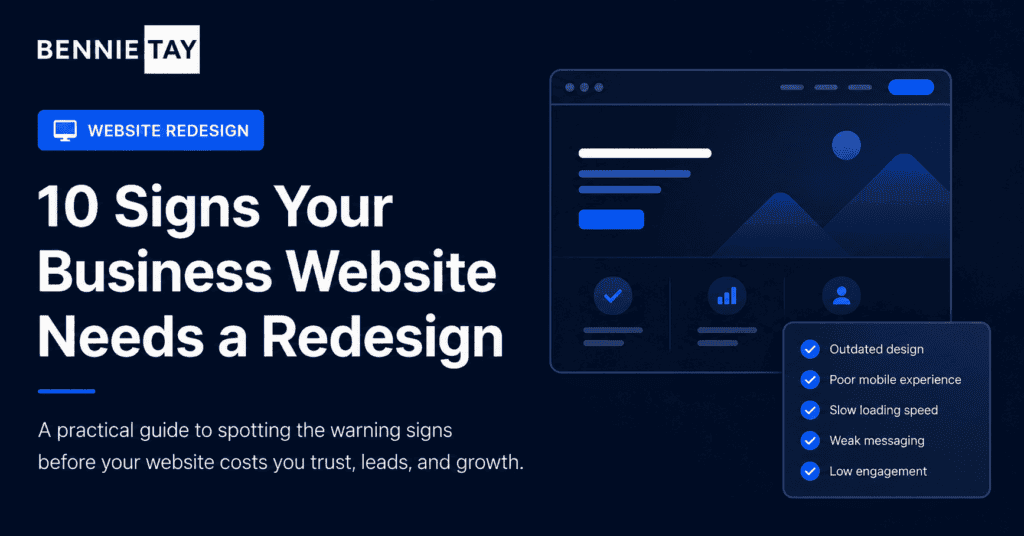
A business website does not need to win design awards, but it does need to support the business. It should explain what you offer, build trust, help visitors find the right information, and make it easy for them to contact you. When it stops doing those things, a redesign may be necessary.
Many websites become outdated slowly. The business grows, services change, customer expectations shift, and competitors improve their online presence. What looked acceptable a few years ago may now feel unclear or less credible.
A business website redesign should not be based only on personal taste. The question is whether the current website is helping or hurting results. These signs can help you decide whether it is time to rebuild the site instead of adding another small fix.
1. Your website does not explain what you do quickly
Visitors should understand your business within a few seconds. If the homepage uses vague phrases, long introductions, or generic claims, people may leave before they realize you can help them.
A clear website explains who you help, what problem you solve, and what action visitors should take next. If your homepage requires too much interpretation, the design and content may need to be rebuilt together.
This is especially important for service businesses. People compare multiple providers quickly. If your message is unclear, they may choose a competitor simply because that competitor is easier to understand.
2. The design looks outdated or inconsistent
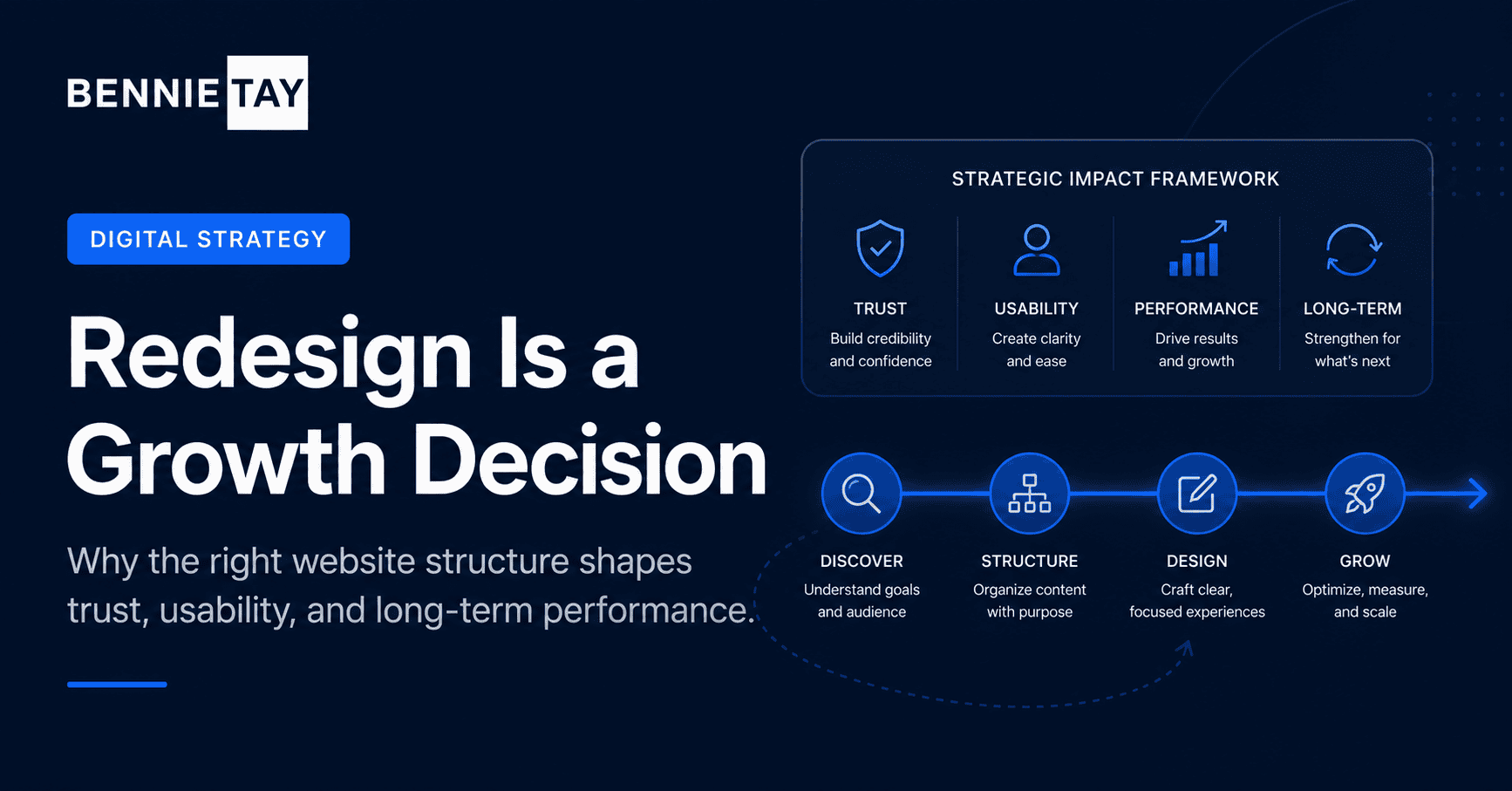
Design affects trust. A website can have good information, but if the layout feels old, cluttered, or inconsistent, visitors may question the quality of the business behind it.
Outdated design does not only mean old colors. It can include cramped spacing, poor typography, mismatched buttons, low-quality images, inconsistent page layouts, or a site that looks unfinished on modern screens.
A redesign can create a more professional first impression. The goal is not to follow every trend. The goal is to make the business feel credible, current, and easy to engage with.
3. The mobile experience is weak
If your website is hard to use on a phone, it is holding you back. Many visitors will never see the desktop version. They will judge your business from the mobile layout, loading speed, menu, forms, and readability.
Common mobile problems include tiny text, buttons placed too close together, images that crop badly, long forms, slow loading, and menus that hide important pages. These issues directly affect enquiries.
Some mobile problems can be fixed, but if the whole layout was not planned for mobile users, a redesign may be the cleaner solution.
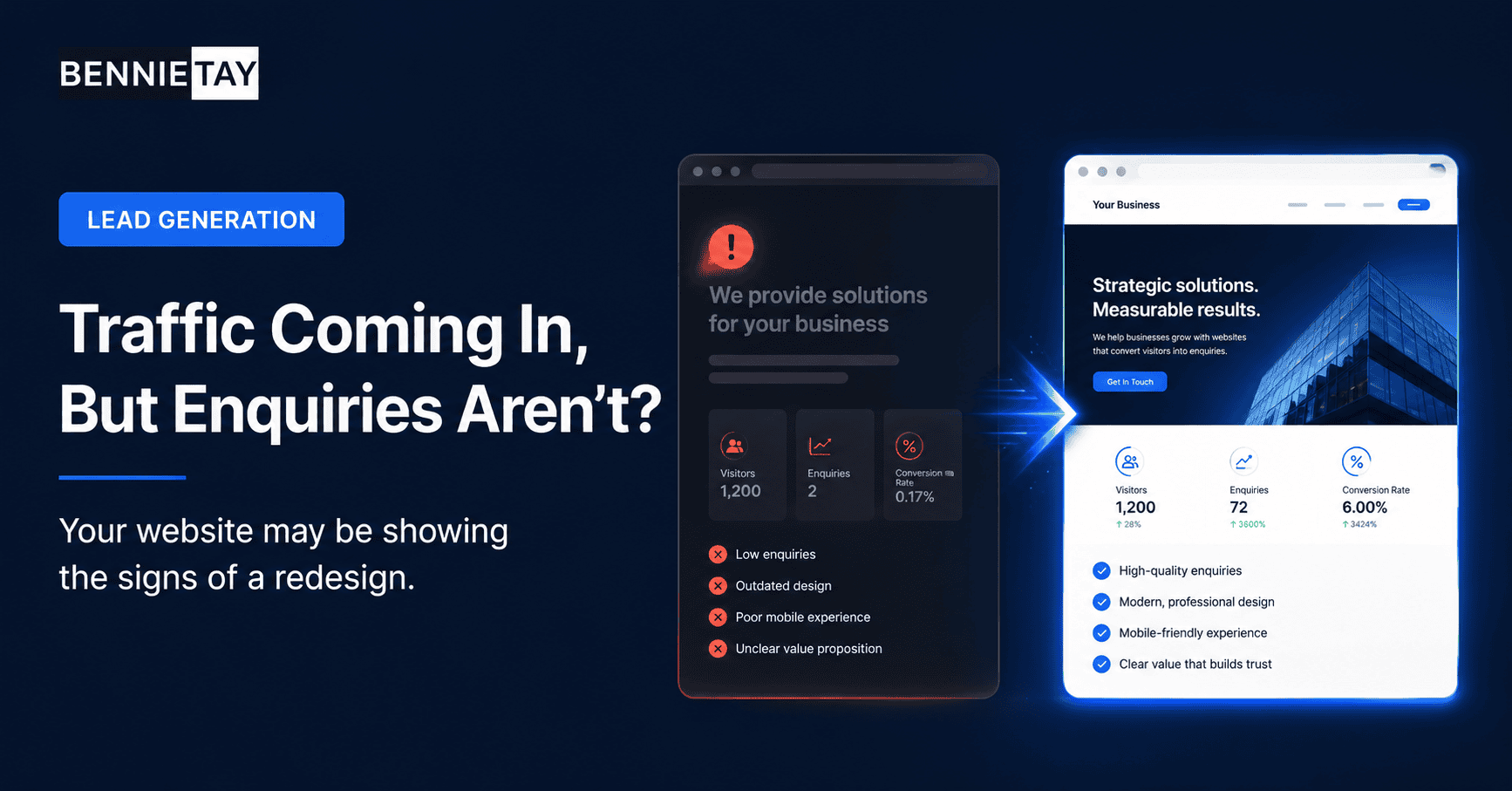
4. You are getting traffic but not enough enquiries
Traffic alone does not mean a website is working. If people visit but do not contact you, the site may not be building enough confidence or guiding them toward the next step.
Look at the service pages, proof sections, calls to action, and contact process. Visitors may need clearer explanations, stronger testimonials, better case studies, or a simpler enquiry form.
A redesign can improve the conversion journey by placing the right information in the right order. Instead of asking for contact too early, the website can answer objections and make the decision feel easier.
5. Your services or target audience have changed
Businesses evolve. You may now serve a different market, offer higher-value services, focus on a new niche, or have a clearer business model than when the website was first built.
If the website still reflects the old version of the business, it can attract the wrong enquiries. It may also make sales conversations harder because prospects arrive with the wrong expectations.
A redesign lets you reposition the website around the business you are building now. This can include new page structure, service descriptions, pricing guidance, proof, and calls to action.
6. Important pages are difficult to update
A business website should be manageable. If every small change requires technical help, or if the page builder feels fragile, the website becomes harder to keep current.
Outdated content can damage trust. Old team details, expired offers, broken links, and inaccurate service descriptions make visitors wonder whether the business is active and reliable.
A redesign can improve the editing experience. A good setup makes common updates easier, so the website can stay useful after launch instead of becoming stale again.
7. The website is slow
Slow pages frustrate visitors. They also reduce the effectiveness of SEO, ads, and social traffic. If people have to wait too long, many will leave before reading your message.
Speed problems can come from large images, heavy plugins, poor hosting, outdated themes, or messy code. Some of these can be optimized, but others are built into the old website setup.
If speed issues keep returning, a redesign with a lighter structure may be more practical than temporary cleanup.
8. Your competitors look clearer and more credible online
You do not need to copy competitors, but you should understand the standard visitors are seeing. If competing websites explain services better, show stronger proof, and make contact easier, your website may be losing trust silently.
This does not mean you need a flashy site. Often, the competitor advantage is simple clarity. Their pages answer questions, show relevant examples, and guide visitors with less friction.
A redesign can help you close that gap by making your strengths easier to see.
9. SEO performance is limited by the current structure
If your website has thin pages, confusing URLs, duplicate content, missing headings, or poor internal links, SEO growth can be difficult. Search engines need clear structure just like visitors do.
A redesign can help you organize pages around services, locations, industries, or common questions. This gives each important topic a stronger page instead of hiding everything on one generic page.
SEO should be planned carefully during redesign. Existing rankings, URLs, metadata, and redirects need attention so the redesign improves performance instead of causing avoidable losses.
10. The website no longer supports sales conversations
A useful website should make sales conversations easier. Prospects should arrive with a basic understanding of your services, value, process, and fit. If every call starts from zero, the website is not doing enough pre-selling.
Add sections that answer common objections: what is included, who the service is for, how the process works, what results are realistic, and what happens after someone contacts you.
If those sections cannot fit naturally into the current layout, a redesign can give the website a stronger structure for sales support.
Final thoughts
A business website redesign is worth considering when the current site creates confusion, weak trust, poor mobile experience, slow loading, or low enquiry quality. These problems do not always appear at once, but together they can quietly reduce growth.
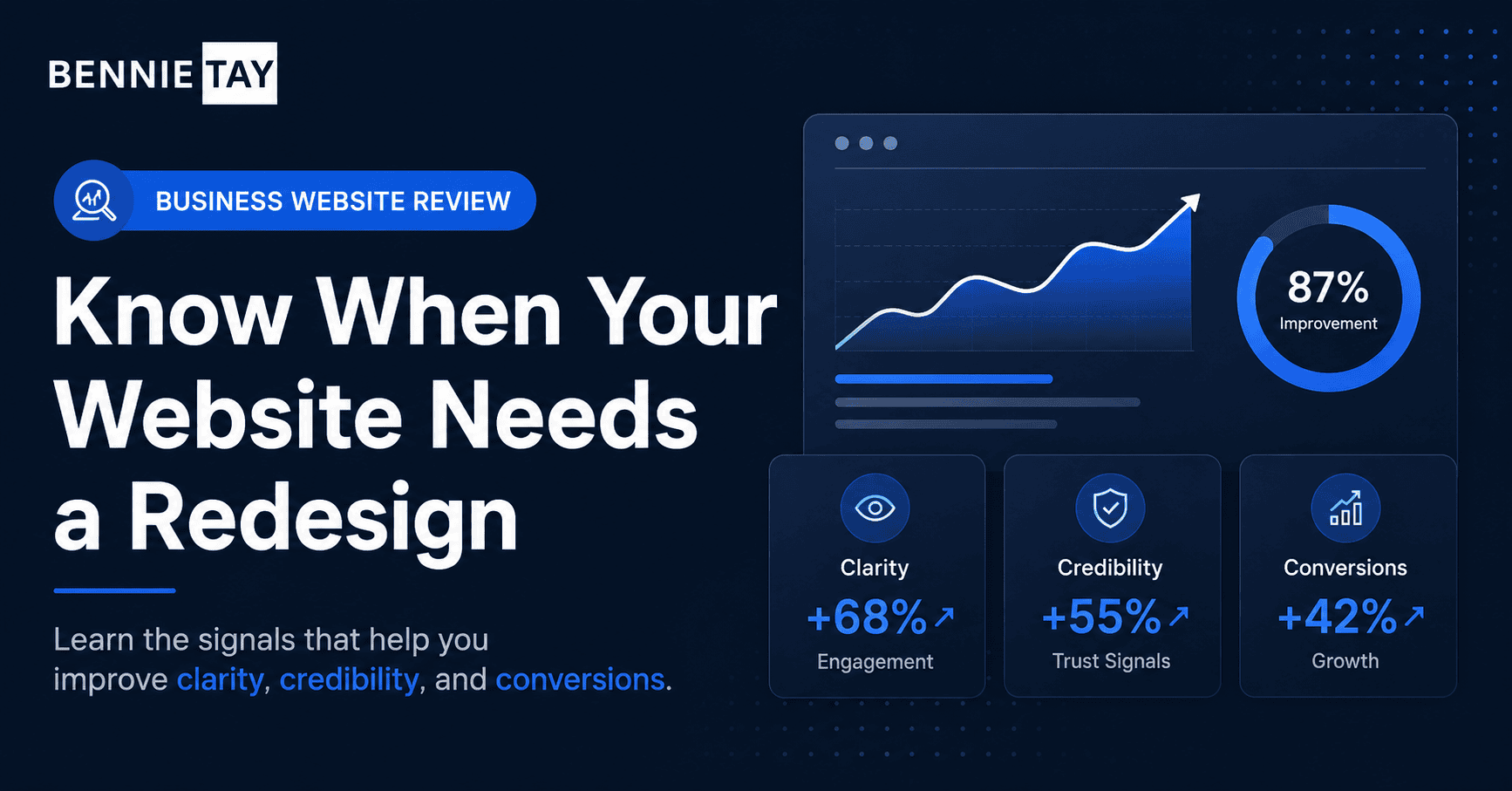
The best redesigns are not cosmetic. They improve clarity, credibility, SEO structure, and conversion flow. If your website is no longer helping people understand and choose your business, it may be time to rebuild it properly.
How to prioritize redesign work
If several signs apply to your website, start with the issues closest to revenue. A weak homepage message, broken mobile layout, slow service pages, and unclear contact process usually deserve attention before smaller visual details.
Next, review the pages that matter most. These are usually the homepage, main service pages, about page, case studies, and contact page. Improving these pages first can create a bigger impact than redesigning low-traffic pages that few visitors see.
A redesign should also include a content plan. Decide which pages to keep, rewrite, combine, or remove. This prevents the new website from carrying over the same old confusion in a nicer layout.
Finally, set a clear measure of success. You might track enquiry volume, enquiry quality, call bookings, form completions, organic traffic, or time spent on key pages. Without a clear target, it becomes too easy to judge the redesign only by appearance.
What not to do during a redesign
Do not redesign only because you are bored with the current look. Personal preference matters less than customer clarity. A redesign should solve problems that affect trust, usability, SEO, or conversion.
Also avoid copying competitors too closely. Their website may work for their positioning, budget, audience, and offer, but your business needs a message and structure that fits your own customers.
A practical next step
If you are not sure what to do next, avoid making the decision based on appearance alone. Start with a simple review of your most important pages and ask whether each page helps a visitor move closer to an enquiry. The page should explain the problem, present the solution, show proof, and make the next step clear.
Then separate quick wins from larger structural work. Quick wins might include rewriting headings, adding testimonials, improving contact buttons, compressing images, or making the enquiry form simpler. Structural work may include rebuilding navigation, rewriting service pages, changing the page hierarchy, or redesigning the mobile experience.
Useful reference: If you are unsure whether a redesign is needed, Google PageSpeed Insights can highlight speed and experience issues worth fixing.This process helps you spend budget where it matters. A website should not just look cleaner after the work is done. It should be easier to understand, easier to trust, easier to use, and easier to measure. That is what
turns design work into a business improvement.