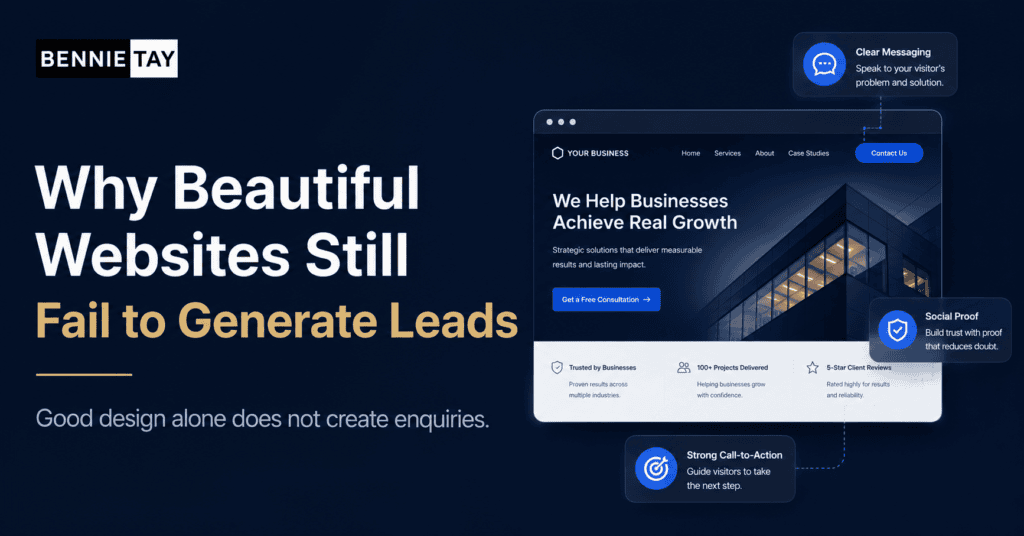
A beautiful website can still fail to generate leads. This surprises many business owners because they expect better design to automatically create better results.
Design can improve trust and make a website feel professional, but lead generation depends on more than appearance. Visitors need a clear offer, useful information, proof, and a simple next step.
If those elements are weak, the website may look impressive while quietly losing potential customers.
The message is unclear
Many beautiful websites use elegant but vague language. They talk about innovation, solutions, quality, or passion without clearly explaining what the business does.
Visitors should quickly understand who you help, what problem you solve, and why they should care. If they cannot, the design has not solved the real issue.
Clear messaging is often less flashy, but it is more effective. People contact businesses they understand.
The offer is too generic
A website needs a clear offer. If the page only says “contact us” without explaining what the visitor gets, the action feels vague.
A stronger offer might be a consultation, quote, audit, trial, booking, or project discussion. The visitor should understand the value of taking the next step.
Generic offers create hesitation because people do not know what will happen after they enquire.
There is not enough proof
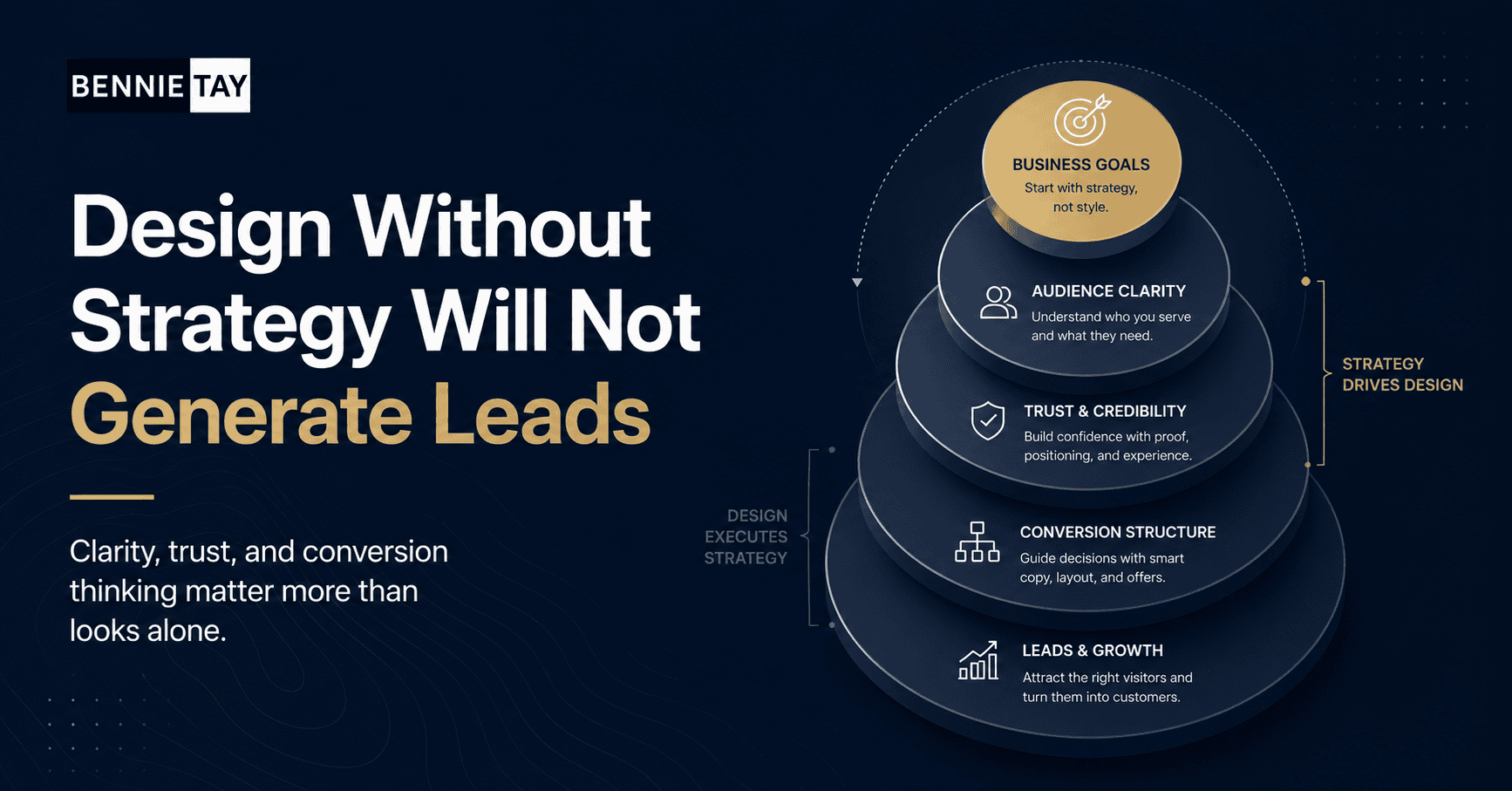
A beautiful layout can create a positive impression, but proof creates confidence. Visitors want to see that you have helped others, delivered results, or understand their situation.
Proof can include testimonials, case studies, project examples, client logos, reviews, certifications, awards, or specific outcomes.
Place proof near important decision points. If proof is hidden on a separate page, many visitors may never see it.
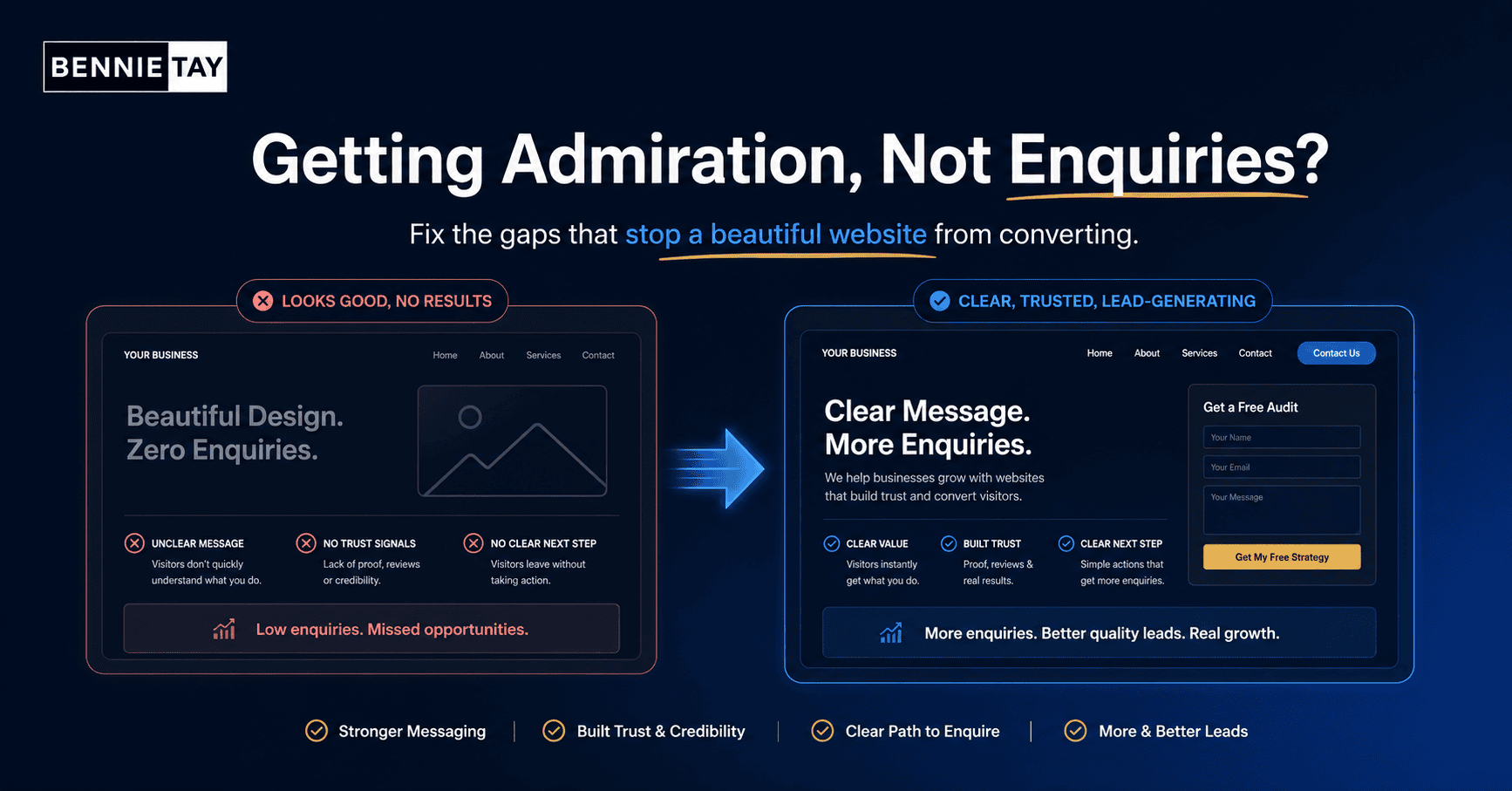
The page is designed for admiration, not action
Some websites are designed to impress instead of convert. They use large visuals, animations, and dramatic layouts but do not guide visitors clearly toward a decision.
A lead generation website should still look professional, but it needs practical structure. Each section should help visitors understand, trust, compare, or act.
If a section looks nice but does not support the decision, it may be decoration rather than conversion support.
Calls to action are weak or missing
A call to action should be visible, specific, and relevant. If the only contact link is hidden in the menu or footer, many visitors will not take the extra step.
Use calls to action that match the offer, such as “Request a Quote,” “Book a Consultation,” or “Send Project Details.”
Place them after key sections where visitors are likely to feel ready, not only at the top of the page.
The website attracts the wrong visitors
A beautiful website can still bring poor leads if the positioning is too broad. Generic messaging may attract people who are not a good fit or who are mainly comparing prices.
Better positioning explains who the service is for, what problems it solves, and what kind of client is best suited. This can improve lead quality even if total enquiries are lower.
Lead generation is not only about more leads. It is about better-fit leads.
How to make the decision practical
The best choice for beautiful websites that fail to generate leads depends on your current stage, budget, internal time, and how important the website is to lead generation. A business that relies heavily on online enquiries should judge the option by long-term performance, not only the launch cost.
Start by listing what you actually need the website to do. Do you need a simple credibility site, campaign landing pages, regular content updates, SEO growth, stronger sales pages, or ongoing support? Each option becomes easier to judge when the business goal is clear.
For businesses that want their website to convert better, the most practical option is usually the one that gives enough quality, clarity, and support without creating unnecessary complexity. A website should be manageable after launch, not just impressive on the first day.
Questions to ask before choosing
Ask who will write the copy, who will plan the page structure, who will handle revisions, and who will maintain the site after launch. Many website problems happen because these responsibilities are assumed but never clearly assigned.
Also ask how changes will be handled later. A website may need new service pages, campaign pages, testimonials, pricing updates, or SEO improvements. If every small change becomes slow or expensive, the initial option may not be as practical as it looked.
Finally, ask what success will look like. A better website should improve trust, enquiry quality, conversion, or operational efficiency. Without a clear target, it becomes too easy to compare only design samples and prices.
Mistakes to avoid
Avoid choosing purely on price. The cheapest option can become expensive if it produces a weak message, poor mobile experience, slow pages, or a website that nobody can update properly.
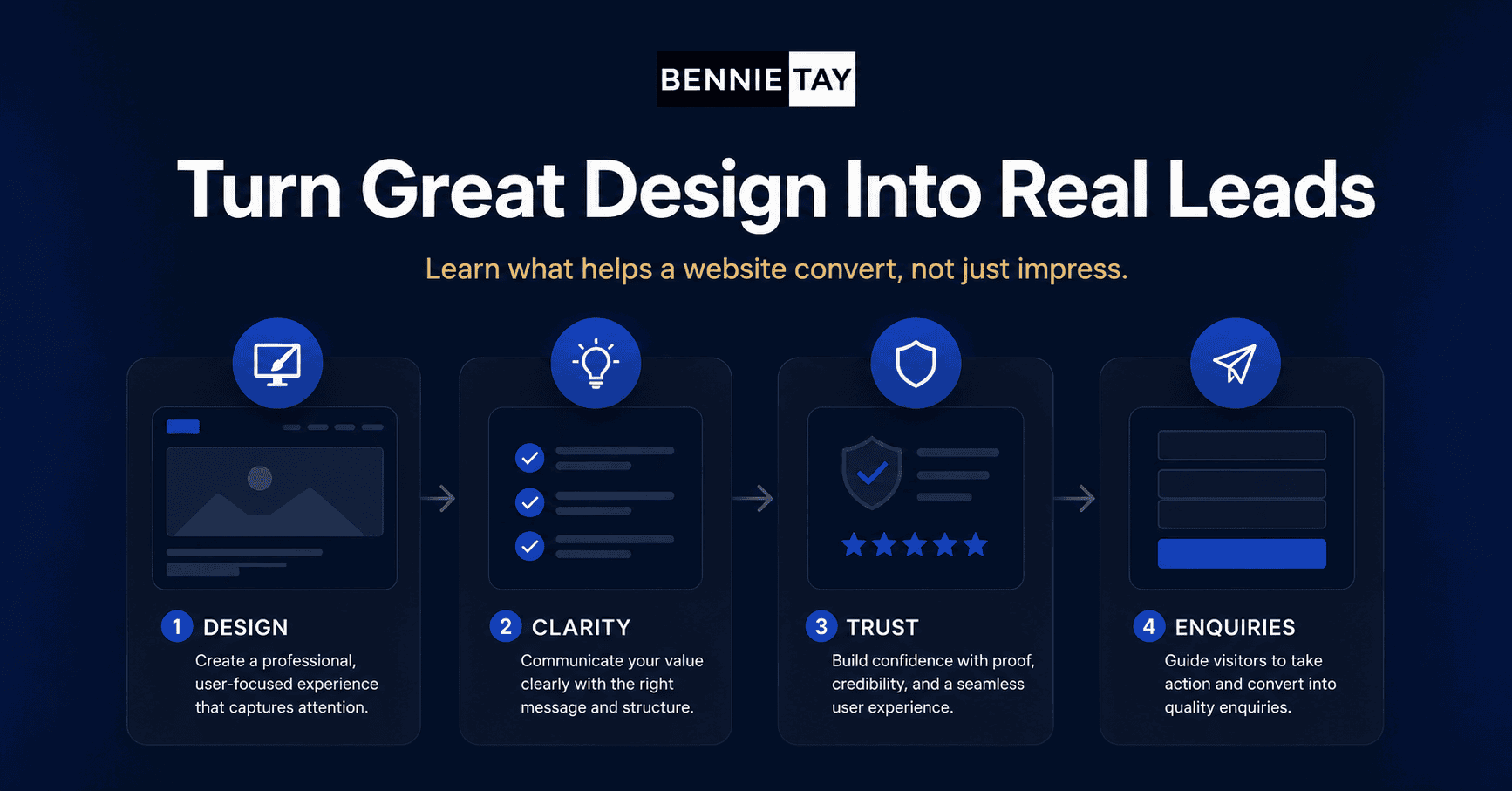
Avoid choosing purely on design style too. A beautiful website that does not explain the offer or guide visitors toward action will still underperform. Design should support the business goal, not replace strategy.
Avoid assuming all providers include the same work. Strategy, copywriting, SEO setup, speed optimization, maintenance, and support can vary widely. Compare what is actually included before deciding.
What a strong website option should include
A strong website option should include clear page planning, readable copy, mobile-friendly layouts, basic SEO setup, fast loading, trust-building sections, and a clear enquiry path. These are not optional details if the website is expected to bring leads.
It should also include a realistic handover or support plan. If the business owner cannot maintain the site, there should be a clear way to request updates, fix issues, and keep the website current.
The right choice should feel aligned with your business operations. If you want control and have technical support, a flexible build may make sense. If you want simplicity and ongoing help, a managed plan may be better.
Final thoughts
Beautiful websites fail to generate leads when they focus on appearance but ignore clarity, offer, proof, positioning, and calls to action. Design helps, but it cannot replace the fundamentals of persuasion.
A better website should look professional and work clearly. When visitors understand the offer, trust the business, and know what to do next, design becomes a support for lead generation instead of just decoration.
How to compare total value, not just price
Price is only one part of the decision. A cheaper website option can become expensive if it creates weak positioning, poor enquiry quality, slow loading, or a layout that needs to be rebuilt after a few months. A more expensive option can also be wasteful if the scope is larger than the business actually needs.
Compare value by looking at what the website will help you do. Will it explain your services clearly? Will it support search traffic? Or will it help paid ads convert? Will it make your business look credible to referral prospects? Will it be easy to update when your offer changes?
The right option should reduce friction for both the business and the customer. It should make the business easier to understand and make the next step easier for qualified visitors.
What happens after launch matters
Many website decisions focus too much on the launch. Launch is important, but the website will need updates after it goes live. Services change, testimonials improve, offers evolve, and new campaign pages may be needed.
Before choosing an option, check whether you will have support for maintenance, small content updates, troubleshooting, analytics checks, and SEO improvements. A website that cannot be improved easily will become outdated faster.
This is especially important for small businesses that do not have an internal marketing or technical team. The simpler the support process, the more likely the website will stay useful over time.
How this affects lead quality
A website should not only bring more enquiries. It should help bring better enquiries. Clear positioning, service explanations, pricing guidance where appropriate, proof, and process details can filter visitors before they contact you.
When the website is too vague, it attracts people who are unsure what you do or who are mainly comparing prices. This can waste time in sales conversations. When the website is clear, prospects arrive with better expectations.
Better lead quality often comes from better communication. Explain who the service is for, what problems it solves, what makes your approach different, and what happens after someone enquires.
A simple action plan
Start by reviewing your current website or planned website brief. Write down the main business goal, the main audience, the key services, the proof you can show, and the action you want visitors to take.
Then match the website option to that goal. If the goal is simple credibility, a lighter option may be enough. If the goal is lead generation, SEO growth, or a stronger brand position, the website needs more planning and support.
Useful reference: A beautiful website still needs to perform well, so Google PageSpeed Insights is useful for checking technical experience.Finally, ask for clear deliverables. You should know what pages are included, who writes the copy, what SEO
setup is done, how revisions work, what happens after launch, and what costs may appear later.