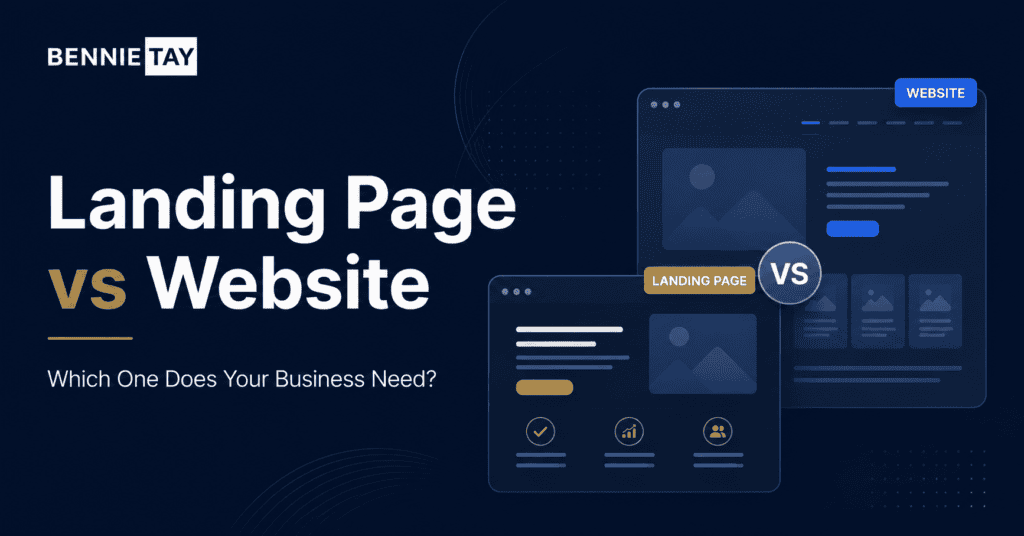
Many business owners are unsure whether they need a landing page or a full website. Both can help generate enquiries, but they are designed for different situations.
A website gives your business a complete online presence. It explains who you are, what you offer, why people should trust you, and how visitors can explore different services or information. A landing page is more focused. It is usually built around one offer, one audience, and one main action.
The right choice depends on your goal. If you need credibility, search visibility, and a place for people to learn about the business, a website is usually better. If you are running a specific campaign and want visitors to take one action, a landing page may be more effective.
What is a website?
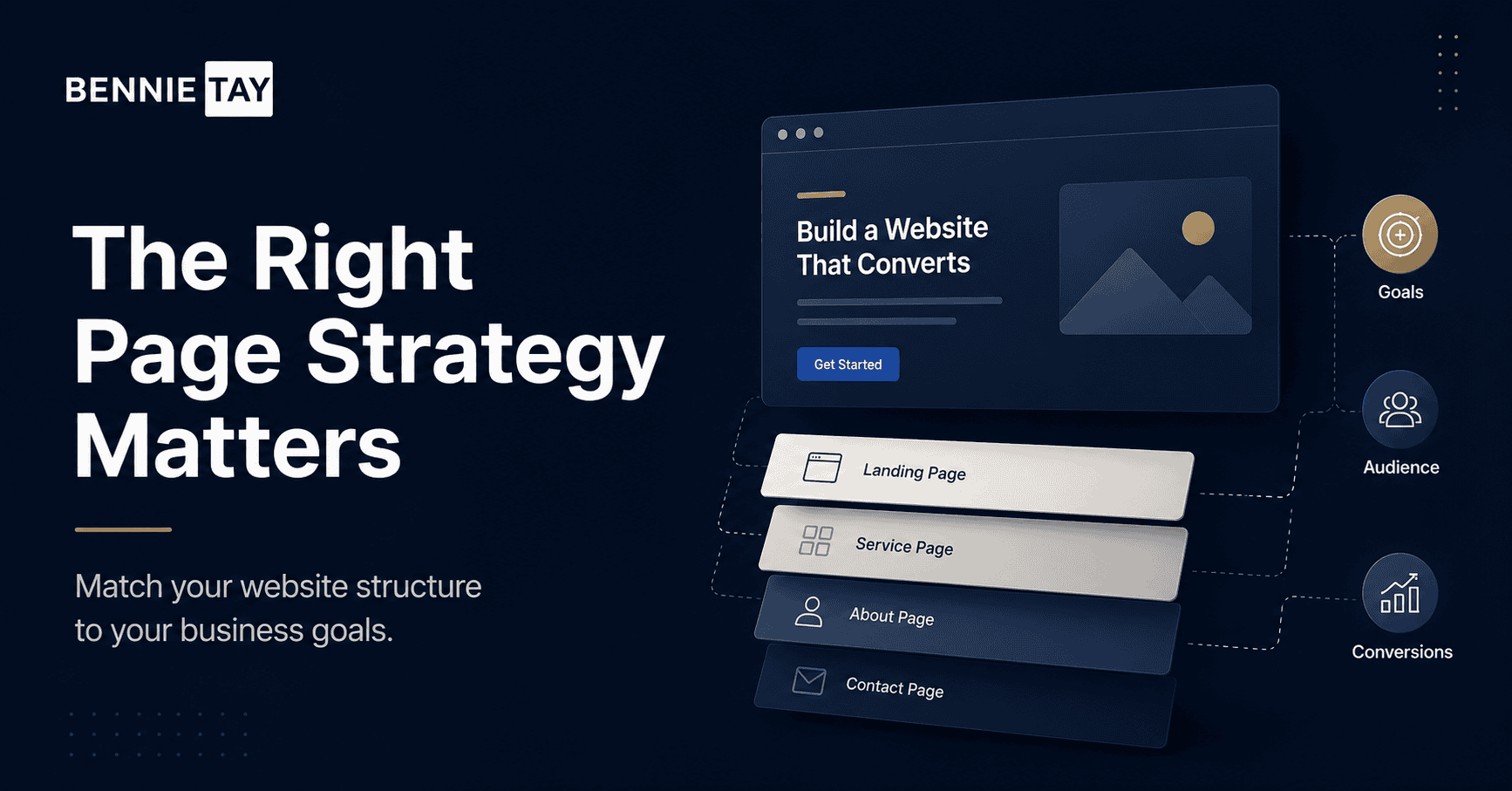
A website is a collection of connected pages that represent your business online. It may include a homepage, about page, service pages, blog articles, case studies, contact page, and other resources.
The purpose of a website is broader than one campaign. It helps people understand the business, compare services, check credibility, read helpful content, and decide whether to contact you.
A website is useful when visitors arrive from different sources and have different questions. Someone from Google may want service details. Someone from a referral may want proof. Someone from social media may want to understand who you are.
What is a landing page?
A landing page is a focused page designed for one specific conversion goal. That goal might be submitting a form, booking a consultation, downloading a guide, registering for an event, or requesting a quote.
Landing pages are commonly used with ads because paid traffic needs a clear path. If someone clicks an ad about one offer, they should land on a page that continues the same message and removes distractions.
A good landing page does not try to explain everything about the company. It focuses on the offer, the problem, the benefits, proof, objections, and the next step.
The main difference is focus
The biggest difference between a landing page and a website is focus. A website supports exploration. A landing page supports action.
On a website, visitors may move between pages, compare services, read articles, and learn gradually. This is useful when the buying decision is more complex or when trust needs to be built over time.
On a landing page, every section should support one decision. The page should reduce uncertainty and guide the visitor toward one action without sending them in many directions.
When your business needs a website
Choose a website when your business needs a credible online base. Most established businesses need one because customers expect to find basic information, service details, contact information, and proof before making an enquiry.
A website is also better for SEO. If you want to appear in Google for different services, industries, locations, or questions, you need structured pages and helpful content. A single landing page is usually too limited for that.
Websites are also important for referrals. Even when someone hears about you from another person, they will often check your website before contacting you. A weak website can reduce trust even when the referral was strong.
When your business needs a landing page
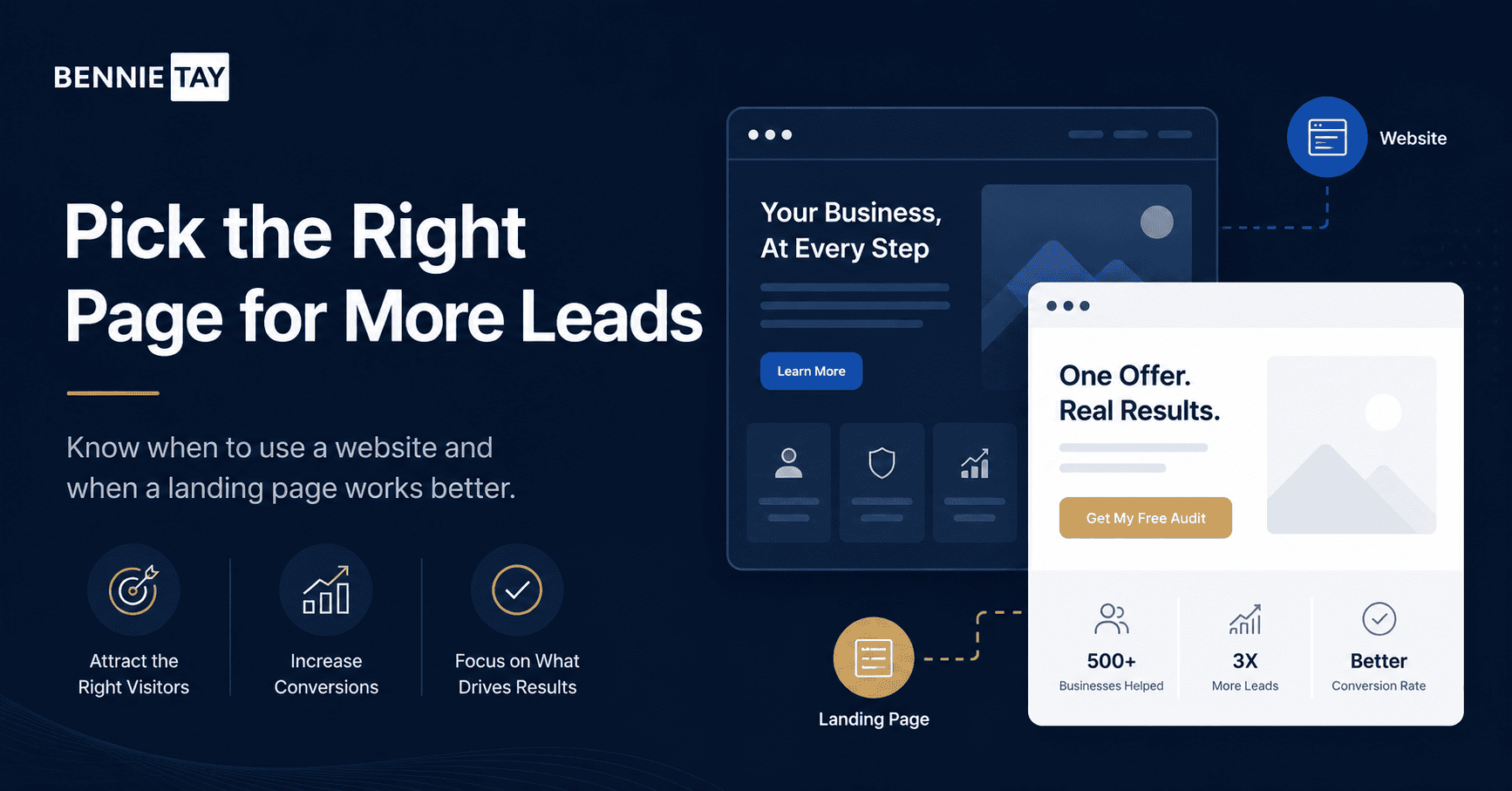
Choose a landing page when you have one clear offer and one traffic source. This is common for Facebook ads, Google Ads, webinar registrations, lead magnets, seasonal promotions, and specific service campaigns.
A landing page can outperform a general website page because it removes unnecessary choices. The visitor does not need to browse. They can quickly understand the offer and decide whether to act.
Landing pages are also useful for testing. You can test a new offer, headline, audience, or pricing angle without changing your entire website.
Why sending ad traffic to a homepage often fails
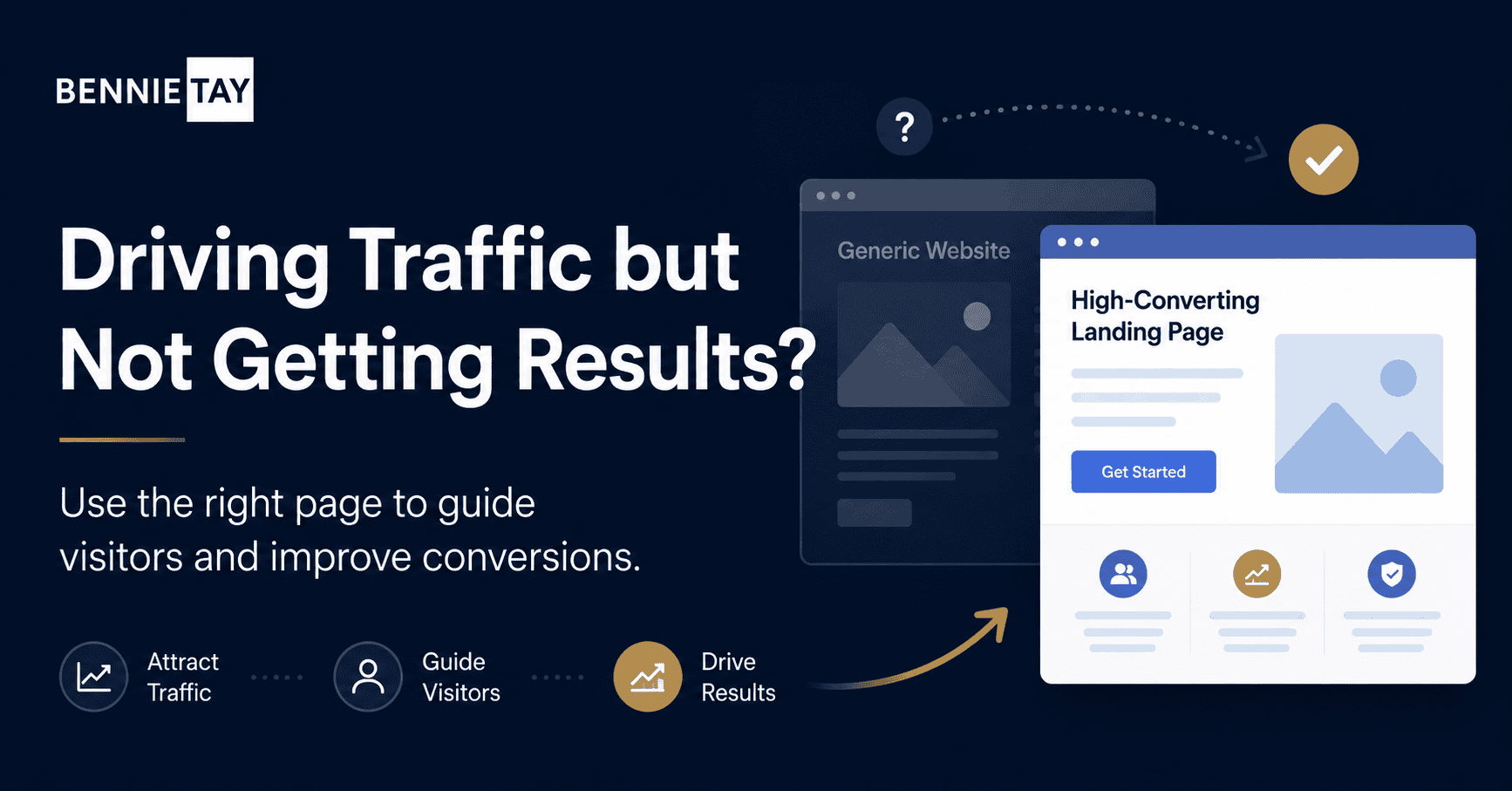
Many businesses run ads and send people to the homepage. This often wastes budget because the homepage has too many possible paths and may not match the promise made in the ad.
If the ad talks about a specific service, the landing page should continue that topic immediately. Visitors should not have to search through the website to find the offer they clicked for.
A focused landing page keeps the message consistent from ad to page. This improves clarity and can increase enquiries.
Why a landing page is not always enough
A landing page can generate leads, but it does not replace a full website in every situation. Some visitors will want to know more about your company before they trust you.
If your landing page is the only thing online, people may look for an about page, case studies, reviews, or more service information and find very little. That can create doubt, especially for higher-value services.
For many businesses, the best setup is both: a strong website for credibility and SEO, plus focused landing pages for campaigns.
How to decide based on traffic source
If your traffic comes from search engines, a website is usually more important because people search for many different topics. You need pages that match those searches clearly.
If your traffic comes from paid ads, a landing page is often better because ads are usually built around a specific promise. The page should match that promise tightly.
If your traffic comes from referrals or networking, a website helps build credibility. A landing page can still work for a specific offer, but the full website gives visitors more confidence.
How to decide based on offer complexity
Simple offers can work well on landing pages. For example, a free consultation, quote request, class trial, workshop, or lead magnet can be explained on one focused page.
Complex services often need a website or multiple supporting pages. Visitors may need to understand your process, compare options, read case studies, and learn about your background before contacting you.
If people usually ask many questions before buying, a full website gives you more room to answer those questions properly.
A practical setup for small businesses
For many small businesses, the most practical setup is a clear website with focused service pages, then separate landing pages for important campaigns. This gives you both long-term credibility and short-term conversion support.
Your website can handle organic search, referrals, trust-building, and general enquiries. Your landing pages can handle ads, promotions, and specific lead generation goals.
This approach also gives you more flexibility. You do not need to rebuild your website every time you test a new campaign.
Final thoughts
The landing page vs website decision comes down to purpose. A website is best for credibility, SEO, and complete business information. A landing page is best for focused campaigns and one clear action.
Most businesses eventually need both. Start with the asset that supports your current goal, then build the other when your marketing needs become more specific.
What a website should include
A practical business website should include a clear homepage, focused service pages, an about page, proof such as testimonials or case studies, and a contact page that makes enquiries simple. Depending on the business, it may also include articles, FAQs, pricing guidance, portfolio pages, or location pages.
Each page should have a job. The homepage creates orientation. Service pages explain offers. The about page builds confidence. Articles answer questions and support SEO. The contact page removes friction from the next step.
When these pages work together, the website becomes more than an online brochure. It becomes a system that helps different types of visitors find the information they need.
What a landing page should include
A strong landing page should include a specific headline, a clear explanation of the offer, benefits, proof, answers to objections, and a visible call to action. It should avoid unnecessary navigation that distracts from the main goal.
The page should also match the traffic source. If the ad promises a free consultation for a specific service, the landing page should repeat that promise and explain why the visitor should act now.
Trust still matters on landing pages. Add reviews, results, short case examples, guarantees where appropriate, or a simple explanation of what happens after the form is submitted.
How both can work together
A website and landing page should not compete with each other. The website builds long-term trust and search visibility. The landing page supports focused campaigns where one action matters most.
For example, a web design company may have a full website explaining services, process, portfolio, and articles. It may also create a separate landing page for a Facebook ad offering a website audit. Both assets support different parts of the marketing plan.
A practical next step
If you are not sure what to do next, avoid making the decision based on appearance alone. Start with a simple review of your most important pages and ask whether each page helps a visitor move closer to an enquiry. The page should explain the problem, present the solution, show proof, and make the next step clear.
Then separate quick wins from larger structural work. Quick wins might include rewriting headings, adding testimonials, improving contact buttons, compressing images, or making the enquiry form simpler. Structural work may include rebuilding navigation, rewriting service pages, changing the page hierarchy, or redesigning the mobile experience.
Useful reference: Google’s landing page experience guidance is useful when deciding whether a campaign needs a dedicated landing page or a fuller website. See Google Ads landing page experience.This process helps you spend budget where it matters. A website should not just look cleaner after the work is done. It should be easier to understand, easier to trust, easier to use, and easier to measure. That is what
turns design work into a business improvement.