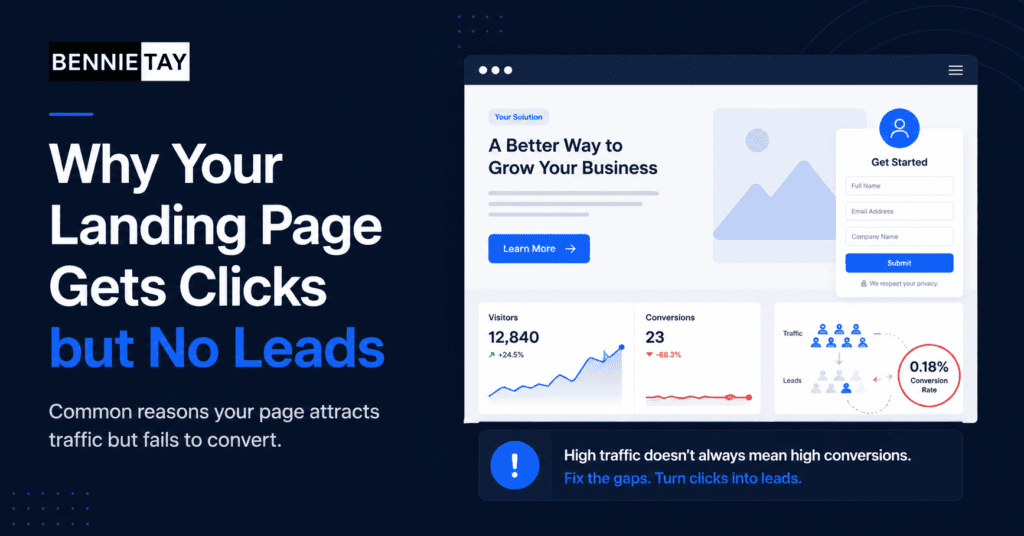
Getting clicks but no leads is one of the most frustrating landing page problems. It means your ad, social post, or search result is interesting enough to attract visitors, but the page is not convincing enough to turn them into enquiries.
This usually does not happen because of one small issue. It often comes from a mismatch between the traffic source and the landing page message, weak proof, unclear offers, slow loading, or a call to action that feels too risky.
The good news is that a landing page can often be improved without rebuilding everything. Start by understanding why visitors hesitate after they arrive.
The message does not match the click
People click because they expect something specific. If the ad promises a website audit, the landing page should talk about that audit immediately. If the ad talks about gym membership offers, the page should not start with a general company introduction.
A message mismatch makes visitors feel like they landed in the wrong place. Even a small mismatch can reduce trust and increase bounce rate.
Use the same core promise, language, and offer from the ad on the landing page. This creates continuity and helps visitors feel they made the right click.
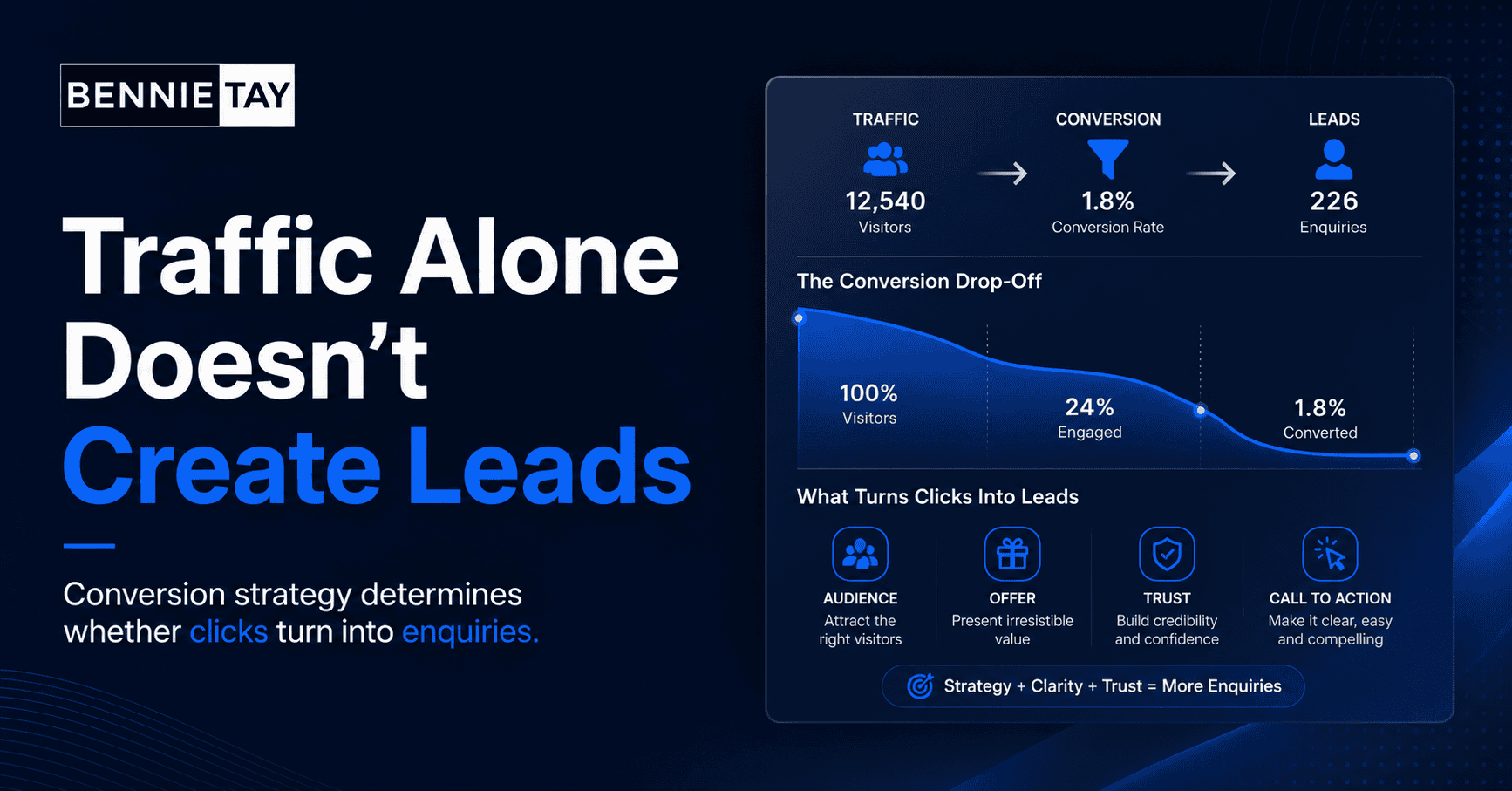
The offer is not clear enough
A landing page needs a clear offer. Visitors should know what they are getting, who it is for, why it matters, and what happens after they submit the form.
Weak offers sound vague. Phrases such as “contact us for solutions” or “learn more today” do not explain enough. A stronger offer is specific, relevant, and easy to understand.
If visitors cannot explain the offer in one sentence, they are unlikely to take action.
There is not enough trust
A visitor may like the offer but still hesitate because they do not trust the business yet. This is especially common when the traffic comes from cold ads.
Add proof close to the call to action. Use testimonials, client logos, case examples, reviews, before-and-after results, certifications, or a simple explanation of your process.
Proof should match the offer. If the page is about a service for small businesses, show proof from small businesses. Relevant proof is more persuasive than generic praise.
The page asks for too much too soon
Long forms can reduce leads, especially when trust is still low. If you ask for too much information before explaining the value, visitors may leave.
Only ask for what you need at this stage. Name, email, phone, and one short message may be enough for many service enquiries. More detailed questions can come later in the sales process.
Also explain what happens after submission. Visitors are more likely to complete a form when they know whether they will receive a call, email, quote, or consultation.
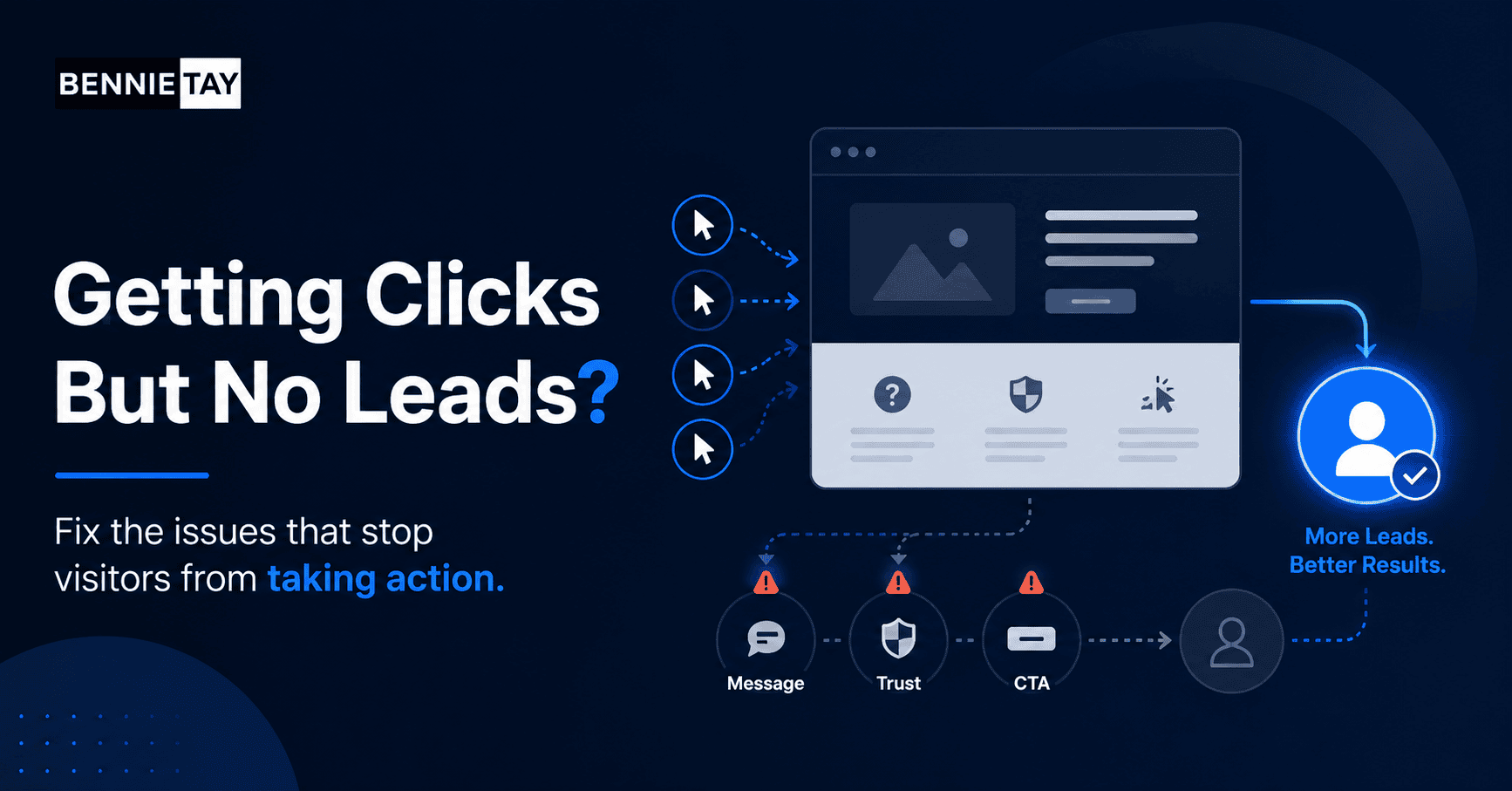
The page is too slow or hard to use
Slow loading can destroy paid traffic performance. If the page takes too long, visitors may leave before seeing the offer. This is especially true on mobile connections.
Mobile layout matters too. Buttons should be easy to tap, forms should be simple, and important information should appear before too much scrolling.
A landing page does not need to be complex. It needs to load quickly, explain clearly, and make action easy.
The call to action is weak
A call to action should tell visitors exactly what to do. “Submit” is not as clear as “Request a Website Audit” or “Book a Free Consultation.”
The button text should match the offer. If the visitor expects a quote, use quote language. If they expect a call, use booking language.
Place the call to action where it feels natural: after the offer is introduced, after proof, and near the end of the page.
What to check before making changes
Before changing anything, look at the visitor journey for a landing page that gets clicks but no leads. A useful review should cover the first headline, the page structure, the proof shown near decision points, the call to action, the form experience, and the follow-up expectation after someone submits an enquiry.
This review matters because many website problems are not caused by one weak section. They happen when several small points of friction work together. The message may be slightly unclear, the proof may appear too late, and the form may ask for too much information before trust has been built.
For businesses running ads or campaign traffic, the best improvements usually come from making the page easier to understand. A visitor should not have to guess who the offer is for, what happens next, or why your business is a credible choice.
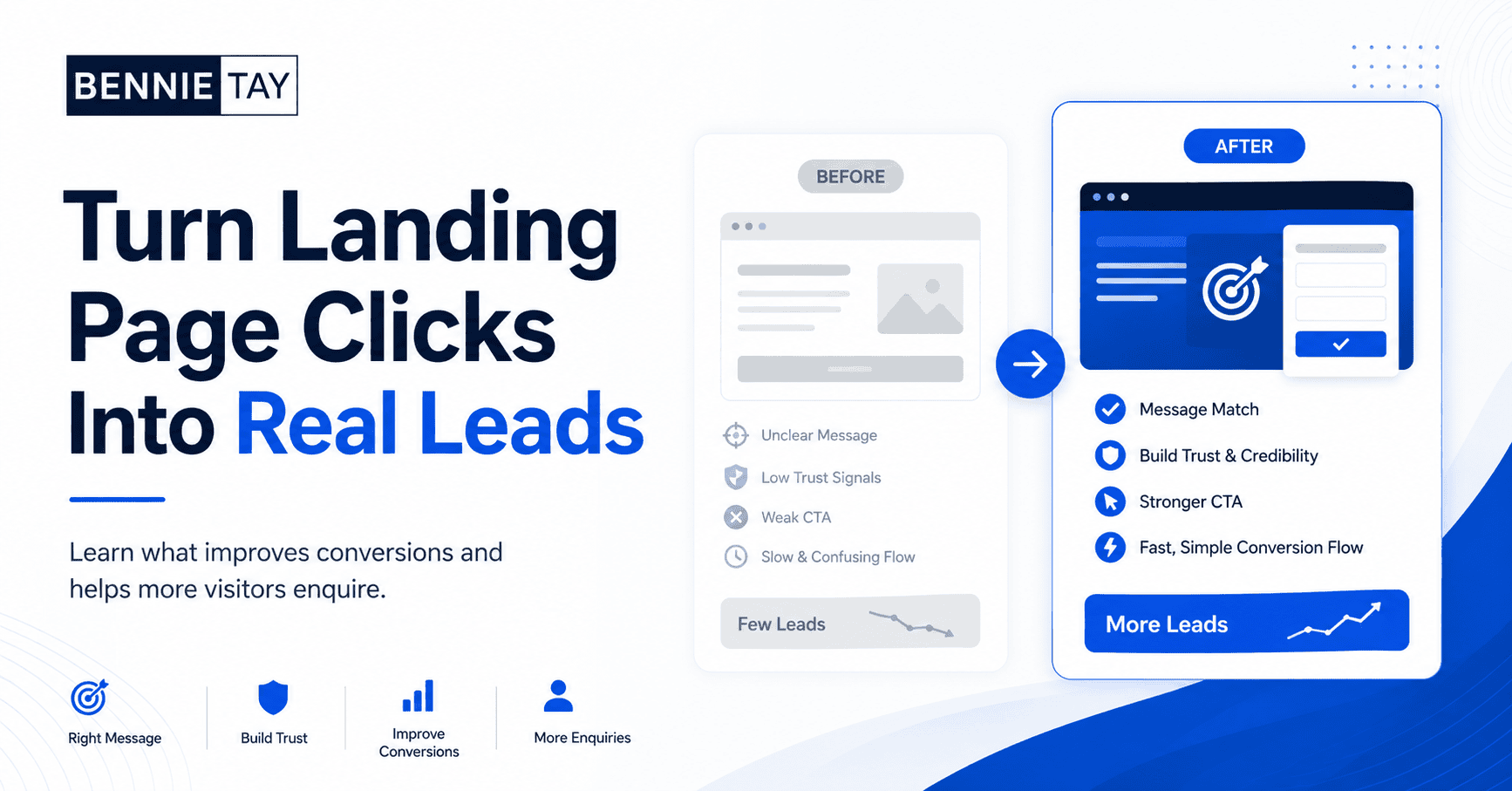
How to improve results without overcomplicating the page
Start with the core action: turning qualified clicks into enquiries. Every major section should make that action feel more reasonable. The page does not need to answer every possible question, but it should answer the questions that stop qualified visitors from taking the next step.
Use short paragraphs, clear headings, direct examples, and proof that matches the offer. If a section does not help visitors understand, trust, compare, or act, it may be distracting them from the main goal.
Also make the next step feel low-friction. Tell people what they will receive, how long it takes, and whether there is any obligation. Small details like this can reduce hesitation and improve enquiry quality.
Common mistakes to avoid
A common mistake is focusing only on visuals. A cleaner design helps, but it cannot fix a weak offer, vague message, or confusing journey. Good design should support the message, not hide the fact that the message is unclear.
Another mistake is asking for action too early. If visitors have not yet seen benefits, proof, or a reason to trust you, a button alone will not persuade them. Build the case first, then make the action easy.
Finally, avoid copying another business blindly. Their page may be designed for a different audience, price point, traffic source, or sales process. Use competitors for reference, but build your page around your own customers and goals.
Final thoughts
If your landing page gets clicks but no leads, the traffic is not always the problem. The page may not be matching the promise, building enough trust, or making the next step clear enough.
Improve the page by tightening the message, clarifying the offer, adding proof, simplifying the form, speeding up the mobile experience, and making the call to action specific.
How to measure whether it is working
After the page is live, measure more than visits. Look at enquiries, enquiry quality, form completion rate, button clicks, phone calls, bounce rate, and how visitors behave on mobile. These signals show whether the page is helping people move forward or simply attracting passive traffic.
For lead generation pages, the quality of enquiries matters as much as the number. A page that brings fewer but better-fit leads can be more valuable than a page that creates many weak enquiries. Review the questions people ask after contacting you. If they are confused about price, process, or fit, the page may need clearer information.
Also compare performance by traffic source. Search visitors, ad visitors, referral visitors, and social media visitors may behave differently. A page that works for one source may need changes before it works for another.
What the page should make clear
A strong page should make the basic decision easier. Visitors should understand what is offered, who it is for, what problem it solves, why the business is credible, and what the next step looks like. If any of these points are missing, the page may create hesitation.
Clarity is especially important for service businesses because the visitor cannot inspect the service like a physical product. They are judging the quality of your thinking, your process, your proof, and the way you explain the value.
Use plain language. Avoid broad claims that could apply to any provider. Specific explanations, examples, and proof help visitors decide whether your offer is relevant to them.
How to structure the page for easier reading
Most visitors scan before they read. Use a clear headline, short paragraphs, descriptive subheadings, and a logical order. Start with the visitor problem, explain the solution, show proof, answer objections, and then guide them to the next step.
Do not hide important information at the bottom. If pricing guidance, timelines, process, or eligibility affect the decision, include enough detail where visitors can find it easily. This can reduce poor-fit enquiries and improve trust.
The layout should support action without feeling pushy. Calls to action should appear after useful information, not only at the top of the page. Give visitors several natural moments to enquire once they understand the value.
A simple improvement checklist
Review the headline and make sure it matches the visitor’s main intent. Rewrite any vague section that talks about quality without explaining what the customer actually receives. Add proof close to the areas where a visitor may hesitate.
Check the mobile version carefully. Forms, menus, buttons, spacing, and images should feel easy to use on a phone. If the mobile experience feels cramped or slow, many visitors will leave before they reach the enquiry step.
Useful reference: To diagnose clicks without leads, Google Analytics events can help track whether visitors are reaching and using your enquiry actions.Finally, test the enquiry path yourself. Submit the form, click the phone number, check confirmation messages, and review the follow-up process. A page can have strong copy and still lose leads if the final action is
awkward or broken.