A fitness or gym website should do more than show equipment photos and opening hours. It should help people understand why your gym is the right place for them, what kind of training experience they can expect, and how easy it is to take the next step.
Potential members may find you through Google, Instagram, Facebook, TikTok, referrals, or local search. They may already be interested, but they still need confidence before they call, message, book a trial, or sign up.
Good gym website design is built around that decision. It communicates your offer clearly, shows your facilities, explains classes and programmes, builds trust, and makes enquiry simple.
Start with a clear first section
The first section of your homepage should quickly explain what your gym offers and who it is for. Avoid vague headlines like “Transform Your Body Today” unless the rest of the message makes the offer clear.
A stronger headline might be “Strength and Fitness Training in Subang Jaya for Busy Adults” or “Ladies-Only Gym in Kuala Lumpur with Beginner-Friendly Classes.” This helps visitors know immediately whether the gym fits them.
Add a short supporting sentence and a visible call to action, such as “Book a Trial Class,” “Request Membership Info,” or “WhatsApp Us.”
Show the facilities clearly
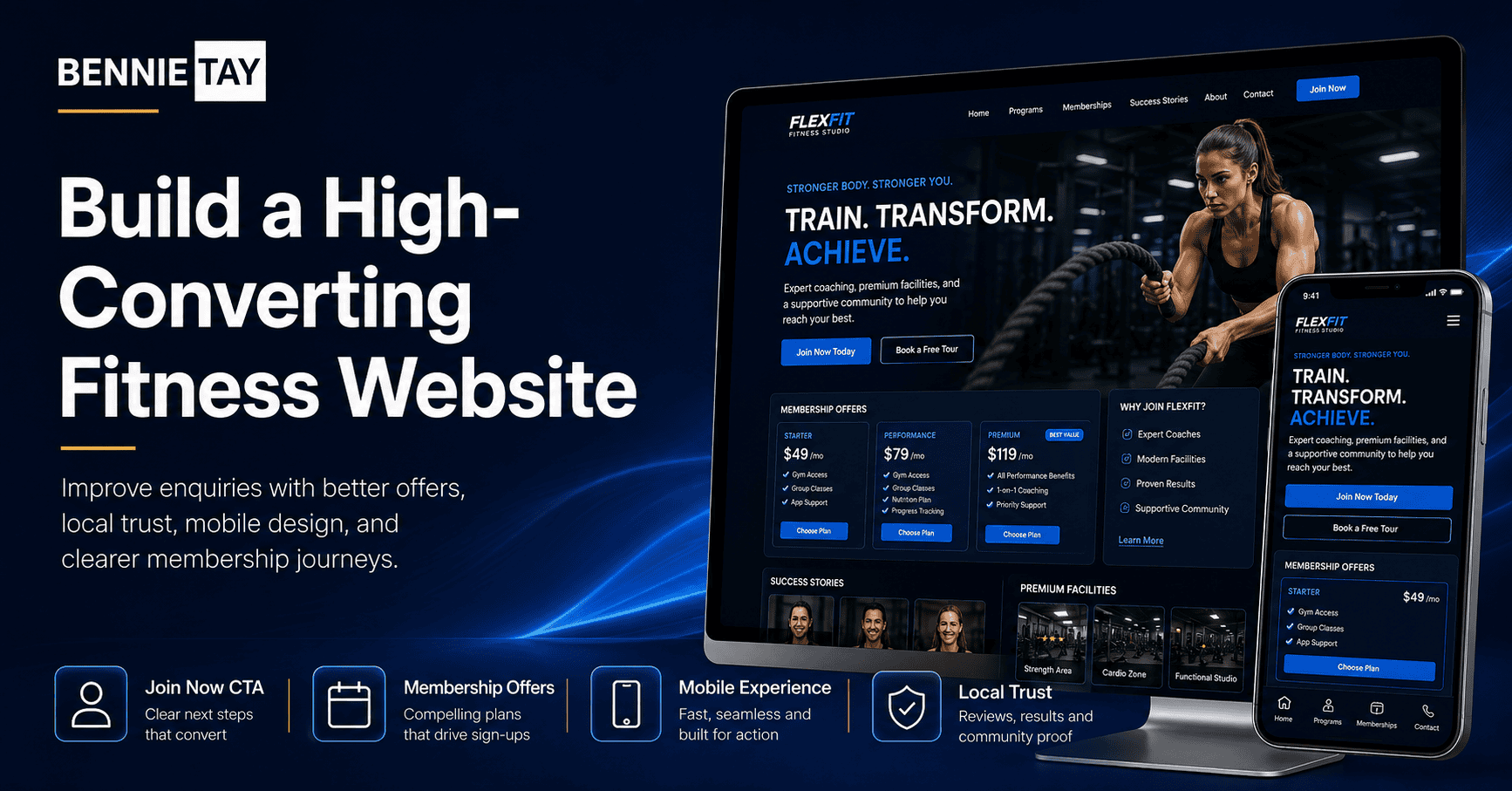
People want to see where they will train. Use real photos of your gym, equipment, studio, changing rooms, reception, trainers, and class environment.
Avoid relying only on stock photos. Real images help visitors imagine themselves inside the space. If your gym is clean, modern, beginner-friendly, specialized, or community-focused, your images should communicate that.
If you offer different areas, organize photos by section: strength area, cardio area, group class studio, personal training area, recovery area, or locker room.
Explain your programmes
A gym website should explain what people can join. Do you offer open gym access, personal training, group classes, strength training, yoga, pilates, HIIT, boxing, transformation programmes, nutrition coaching, or youth training?
Create clear programme sections or pages. For each programme, explain who it is for, what happens during training, schedule if relevant, and the best next step.
Do not assume visitors understand fitness terms. Beginners may not know the difference between functional training, strength training, HIIT, and conditioning. Simple explanations can increase confidence.
Make pricing or membership options easy to understand
Pricing does not always need to be fully public, but visitors need enough information to decide whether to enquire. If you do not show exact prices, explain your membership types.
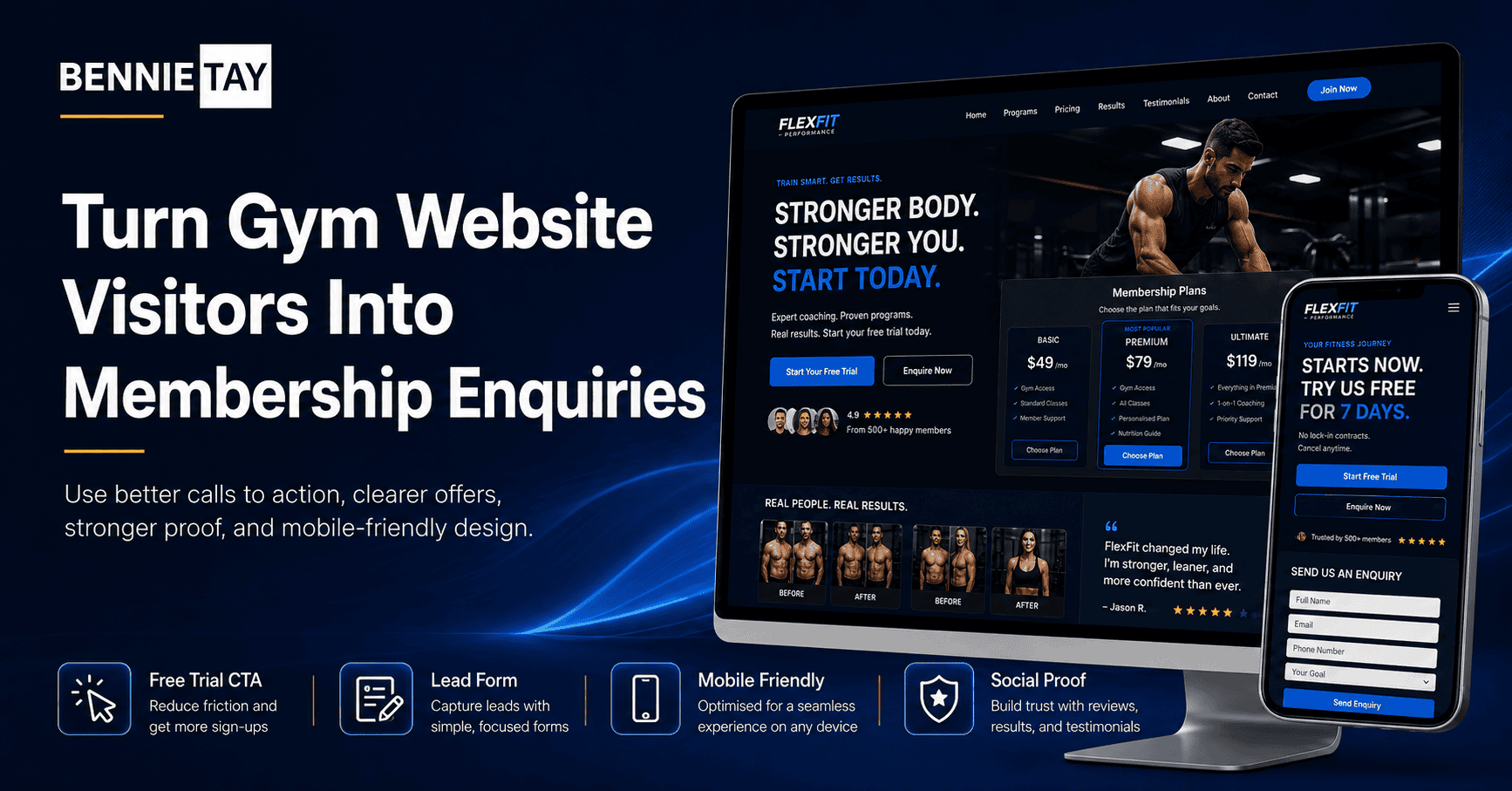
For example, you might describe monthly memberships, class packages, personal training packages, trial passes, or corporate plans. If there is a trial option, make it prominent.
People often hesitate because they fear hidden fees or long commitments. Clear membership information reduces friction.
Build trust with social proof
Fitness decisions are emotional. People want to know whether others like them have succeeded at your gym.
Use testimonials, transformation stories, review screenshots, member photos, trainer profiles, and class atmosphere photos. If you share transformation results, keep them honest and respectful.
Trainer profiles can also help. Show qualifications, specialties, and personality. A beginner may feel more comfortable booking when they can see who will guide them.
Optimize for local search
Most gyms depend on local customers. Your website should clearly mention your location, nearby areas, parking, public transport access, and opening hours.
Create a contact section with map, address, phone number, WhatsApp button, and directions. If you have multiple branches, each location should have its own page.
Use clear page titles and headings that include your service and location where natural. For example, “Gym in Petaling Jaya” or “Personal Training in Mont Kiara.”
Make mobile enquiry easy
Many people will visit your website from a phone after seeing your social media or searching nearby. The mobile experience needs to be smooth.
Buttons should be easy to tap. Class schedules should be readable. Forms should be short. WhatsApp and phone links should work properly.
If your website has a timetable, make sure it is not a tiny PDF that is impossible to read on mobile. A simple responsive schedule is better.
Create landing pages for campaigns
If you run ads for a trial class, weight loss programme, personal training package, or membership promotion, do not send everyone to the homepage.
Create focused landing pages for each campaign. The page should match the ad message, explain the offer, show proof, answer common questions, and include one clear action.
This helps improve lead quality and makes campaign results easier to measure.
Answer common concerns
Potential members often have questions. Is the gym beginner-friendly? Do I need to be fit before joining? Are trainers available? What should I bring? Are there contracts? Can I freeze membership? Is parking available?
Add an FAQ section to answer these clearly. Reducing uncertainty can increase enquiries, especially from beginners.
Show the member journey
Joining a gym can feel intimidating, especially for beginners. Your website can reduce that fear by showing what happens after someone enquires.
Explain the journey clearly. For example: book a trial, visit the gym, meet a trainer, discuss goals, choose a membership, attend the first session, and receive guidance. This makes the process feel less unknown.
If you offer assessments, onboarding sessions, body composition scans, or beginner orientations, highlight them. These details help people feel supported.
Create pages for different audiences
Not all gym visitors want the same thing. Some want weight loss. Some want strength training. Some want group classes. Some want personal training. Some want a beginner-friendly environment.
If your gym serves different audiences, create sections or pages for each. This can help visitors find the most relevant offer quickly.
For example, you might create pages for personal training, group classes, ladies-only training, beginner programmes, corporate fitness, or transformation challenges.
Each page should explain the outcome, what is included, schedule or format, trainer support, and how to start.
Use social media and website together
Fitness businesses often rely heavily on Instagram, TikTok, and Facebook. Social media is useful for attention, but the website should turn that attention into action.
Your social content can show energy, community, workouts, and results. Your website should provide details: pricing options, class schedules, trainer profiles, location, FAQs, and booking forms.
Link campaign posts to relevant pages, not always the homepage. If a post promotes a trial class, send people to a trial class page. If it promotes personal training, send people to the personal training page.
This creates a smoother path from interest to enquiry.
Track enquiry sources
If you invest in ads or social content, track where enquiries come from. Use analytics, Meta Pixel, Google Ads tracking, UTM links, and form tracking where appropriate.
At minimum, know how many people click WhatsApp, submit forms, or visit membership pages. This helps you understand which channels generate interest.
Tracking is useful because gym enquiries can come from many places. Without tracking, you may not know whether Google search, Instagram, referrals, or paid ads are driving the best leads.
Gym website page checklist
A gym website should make the decision easy for different types of visitors. The homepage should explain your gym, location, main programmes, and next step. A programmes page should explain classes, personal training, open gym access, or specialty training.
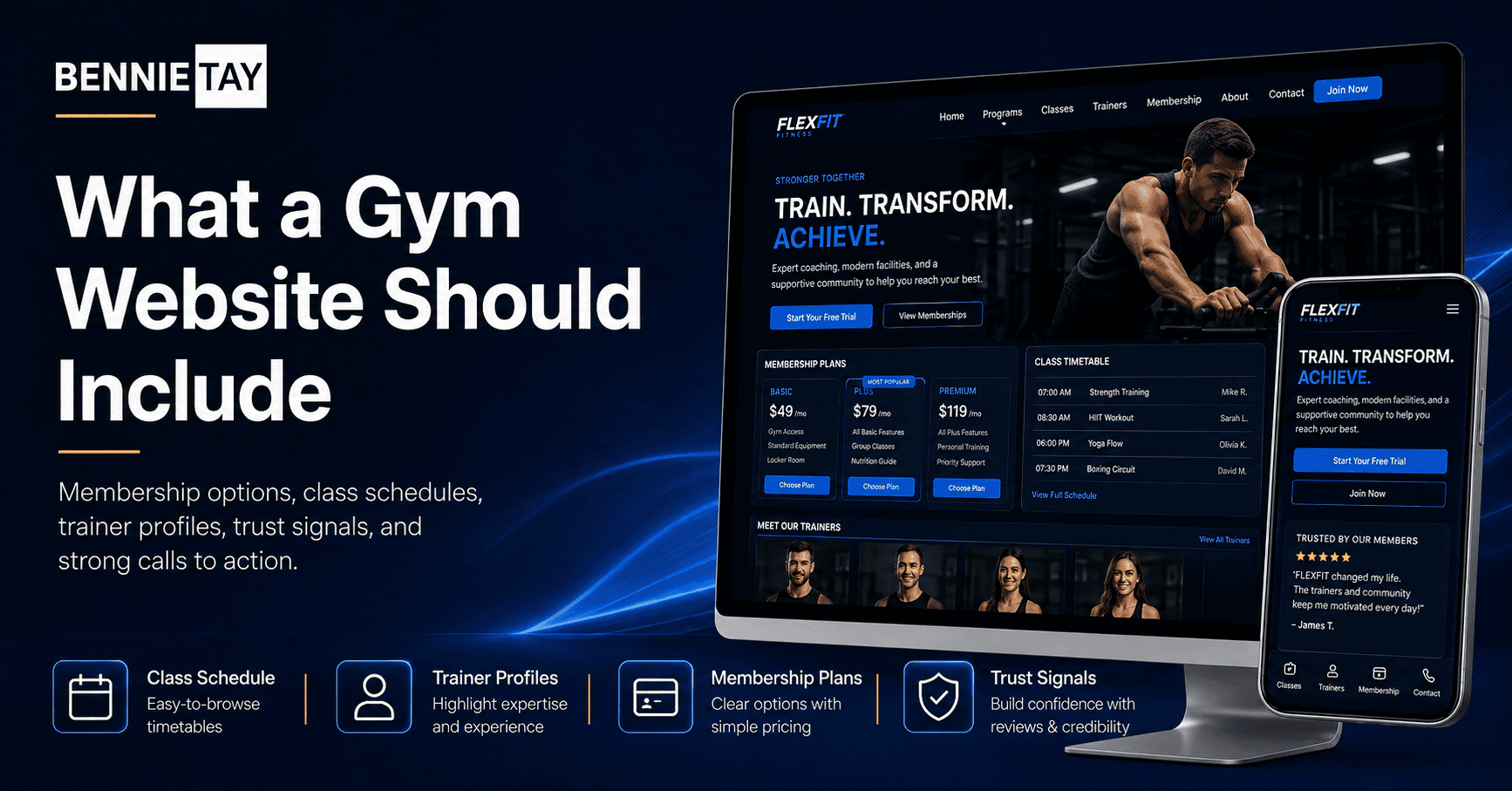
Add a trainers page if your coaches are part of the value. Add a timetable page if classes are important. Add a membership page if people compare packages before enquiring. Add a contact page with map, parking, hours, WhatsApp, and phone details.
If you run promotions, create landing pages instead of changing the whole homepage. This keeps the main website stable while allowing campaigns to be focused.
The website should answer practical questions before people contact you. Where are you located? What does it cost? Is it beginner-friendly? What is the first step?
Make the website feel welcoming
Some people feel nervous about joining a gym. Your website should not only target already-fit members. It should also reassure people who are starting again after a long break.
Use inclusive language. Show real members where appropriate. Explain beginner options clearly. If your gym is friendly, coached, community-focused, or non-intimidating, make that part of the message.
Photos matter here. A page filled only with intense workout images may attract one audience but push away beginners. Choose visuals that match the kind of members you want.
Keep schedules and offers updated
Outdated schedules create frustration. If class times, trainer availability, membership pricing, or promotions change often, make sure the website is easy to update.
A gym website should not say a trial is available if the offer has ended. It should not list classes that no longer run. Regular updates protect trust.
Set a monthly reminder to check key pages. This small habit keeps the website accurate and reduces confusion for potential members.
Use testimonials in the right places
Testimonials are useful, but placement matters. Put beginner testimonials near beginner programme sections. Put personal training testimonials near personal training offers. Put class reviews near class schedules.
This makes proof feel relevant. A visitor interested in weight loss wants to see people with similar goals. A visitor interested in strength training wants to see proof that your gym can support that outcome.
If you have Google reviews, feature a few strong ones on the website and link to the full review profile. If you have member stories, keep them honest and specific.
Support both quick and careful decision makers
Some visitors want to enquire quickly. Others want to compare before contacting you. Your website should support both.
For quick decision makers, show clear buttons, location, opening hours, trial offers, and WhatsApp links. For careful decision makers, provide programme details, trainer profiles, FAQs, photos, reviews, and membership information.
This balance helps you capture ready-to-act visitors without losing people who need more confidence first.
Final thoughts
Fitness and gym website design should help people feel confident enough to take the first step. Show the real training environment, explain your programmes, build trust with proof, make mobile enquiry easy, and support local search.
Useful reference: For gyms and fitness studios, keeping business information consistent with Google Business Profile guidelines can support local enquiries.The best gym website does not only look energetic. It helps the right people imagine joining and makes it
simple for them to contact you.