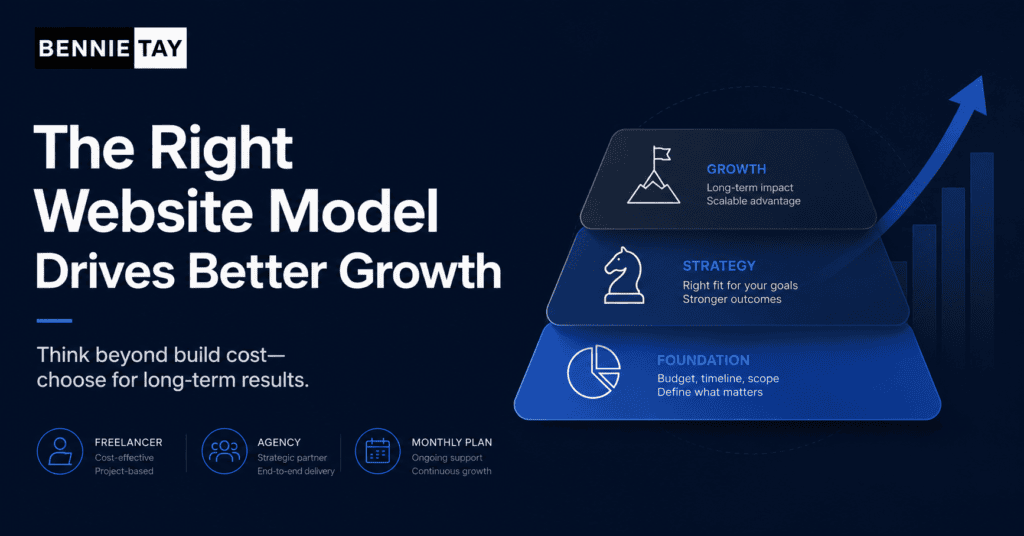
When planning a new website, many business owners compare three common options: hiring a freelancer, working with a web design agency, or choosing a monthly website plan. Each can work, but they fit different needs.
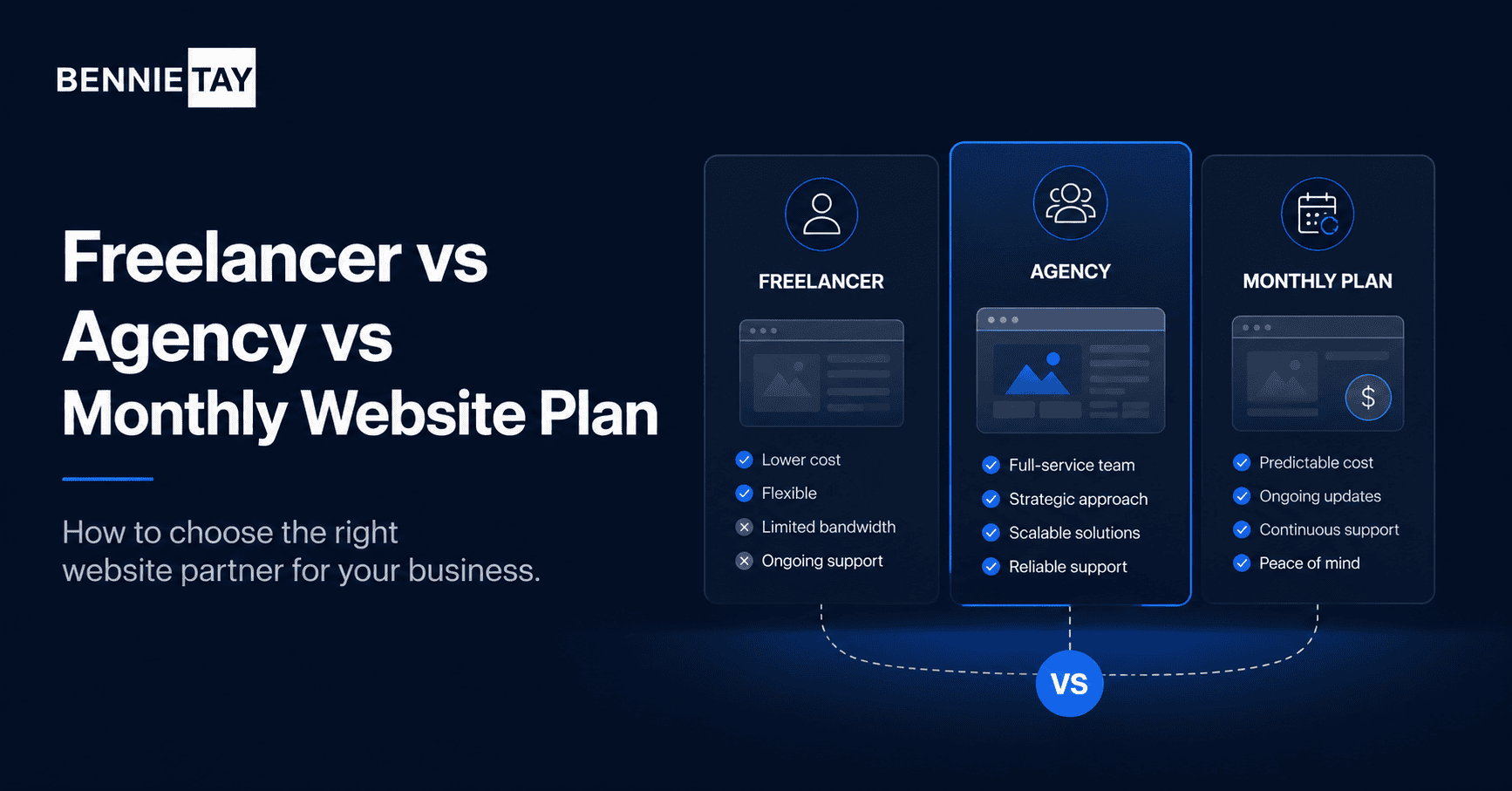
A freelancer may be more affordable and flexible. A web design agency may offer a wider team and a more structured process. A monthly website plan may reduce upfront cost and include ongoing support.
The best choice depends on your budget, timeline, expectations, internal skills, and how much help you need after the website goes live.
What you get with a freelancer
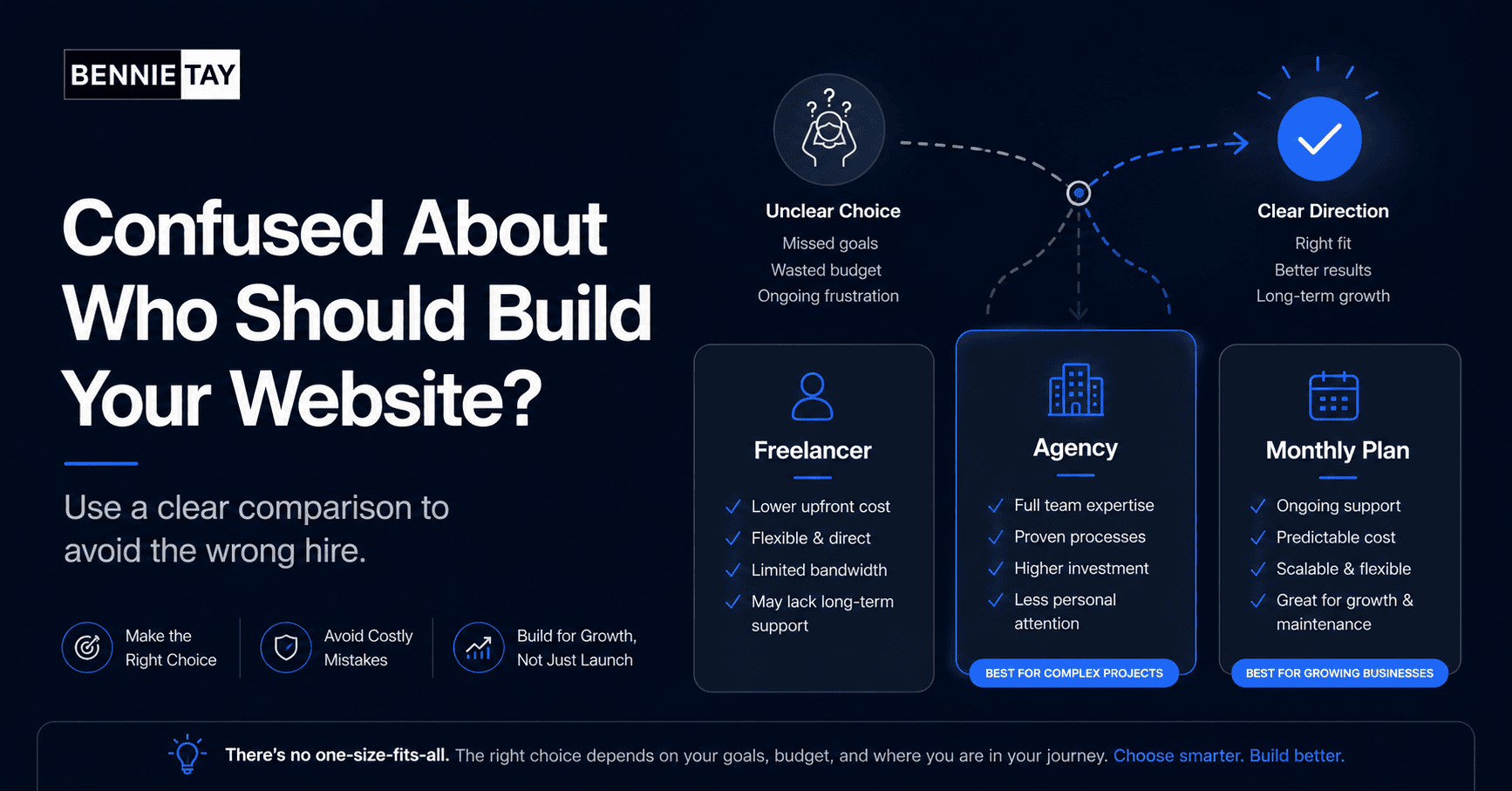
A freelancer is usually one person or a small independent provider. They may handle design, development, copy, setup, and revisions directly. This can make communication simple because you deal with the person doing the work.
Freelancers can be a good fit for smaller websites, tight budgets, simple landing pages, or businesses that already know what they want. They can also be flexible when the scope is clear.
The risk is capacity. One person may not be strong in every area. A freelancer may be excellent at design but weaker in SEO, copywriting, or strategy. Availability can also become an issue if you need urgent support later.
What you get with a web design agency
A web design agency usually has a team or structured process. They may include strategy, design, development, copywriting, project management, SEO support, and maintenance.
Agencies can be useful for businesses that need a more complete website project. If your website has many pages, complex requirements, integrations, or multiple stakeholders, an agency process can reduce confusion.
The tradeoff is cost and speed. Agencies often charge more because more people and more process are involved. For very small projects, that structure may be more than you need.
What you get with a monthly website plan
A monthly website plan spreads the cost over time and often includes hosting, maintenance, support, and updates. It can be useful for SMEs that want a professional website without handling technical work.
This model can make budgeting easier. Instead of paying a large upfront fee and then arranging support separately, the website becomes an ongoing service.
The main thing to check is what is included. Some monthly plans include design, updates, maintenance, hosting, and support. Others are more limited. Also ask what happens if you cancel.
Compare based on strategy, not only production
A website is not only a design file or a set of pages. It needs a clear message, structure, calls to action, trust signals, and a plan for how visitors become enquiries.
Some providers are strong at production but weak at strategy. They can build what you request, but they may not challenge unclear offers or weak page flow.
If you need lead generation, choose a provider or plan that helps with the thinking behind the website, not just the visual execution.
Compare based on support after launch
Many website issues happen after launch. You may need content updates, plugin fixes, design changes, speed improvements, or new landing pages.
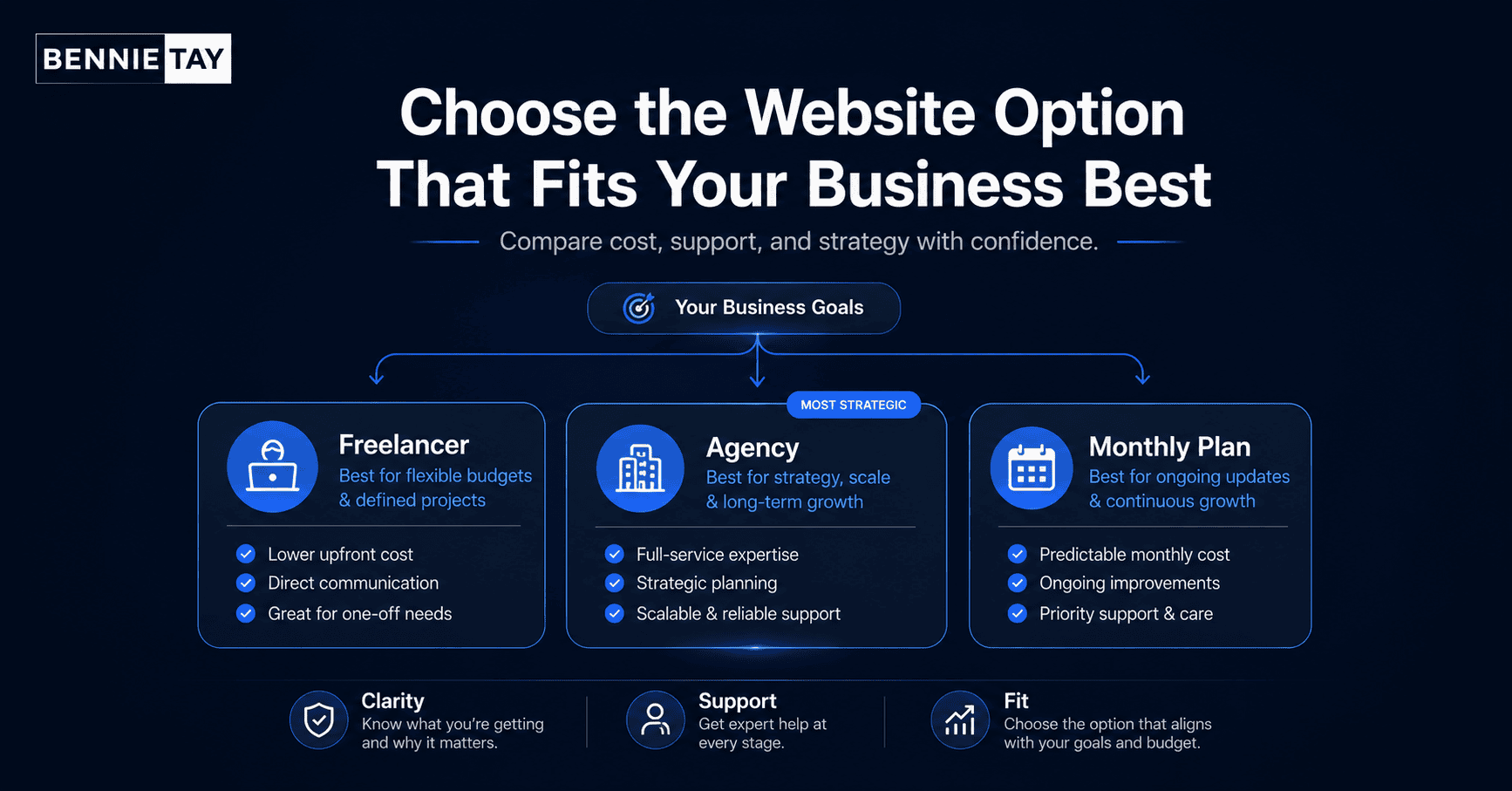
A freelancer may offer support if they are available. An agency may have a maintenance package. A monthly website plan may include support by default.
Before choosing, ask how quickly updates are handled, what is included, and whether there are extra charges for normal changes.
How to make the decision practical
The best choice for freelancer vs web design agency vs monthly website plan depends on your current stage, budget, internal time, and how important the website is to lead generation. A business that relies heavily on online enquiries should judge the option by long-term performance, not only the launch cost.
Start by listing what you actually need the website to do. Do you need a simple credibility site, campaign landing pages, regular content updates, SEO growth, stronger sales pages, or ongoing support? Each option becomes easier to judge when the business goal is clear.
For SMEs comparing website providers, the most practical option is usually the one that gives enough quality, clarity, and support without creating unnecessary complexity. A website should be manageable after launch, not just impressive on the first day.
Questions to ask before choosing
Ask who will write the copy, who will plan the page structure, who will handle revisions, and who will maintain the site after launch. Many website problems happen because these responsibilities are assumed but never clearly assigned.
Also ask how changes will be handled later. A website may need new service pages, campaign pages, testimonials, pricing updates, or SEO improvements. If every small change becomes slow or expensive, the initial option may not be as practical as it looked.
Finally, ask what success will look like. A better website should improve trust, enquiry quality, conversion, or operational efficiency. Without a clear target, it becomes too easy to compare only design samples and prices.
Mistakes to avoid
Avoid choosing purely on price. The cheapest option can become expensive if it produces a weak message, poor mobile experience, slow pages, or a website that nobody can update properly.
Avoid choosing purely on design style too. A beautiful website that does not explain the offer or guide visitors toward action will still underperform. Design should support the business goal, not replace strategy.
Avoid assuming all providers include the same work. Strategy, copywriting, SEO setup, speed optimization, maintenance, and support can vary widely. Compare what is actually included before deciding.
What a strong website option should include
A strong website option should include clear page planning, readable copy, mobile-friendly layouts, basic SEO setup, fast loading, trust-building sections, and a clear enquiry path. These are not optional details if the website is expected to bring leads.
It should also include a realistic handover or support plan. If the business owner cannot maintain the site, there should be a clear way to request updates, fix issues, and keep the website current.
The right choice should feel aligned with your business operations. If you want control and have technical support, a flexible build may make sense. If you want simplicity and ongoing help, a managed plan may be better.
Final thoughts
Choose a freelancer if your project is simple, your budget is tight, and you are comfortable managing more details. Choose an agency if you need a larger team, more process, and broader expertise. Or choose a monthly website plan if you want lower upfront cost and ongoing support.
The right choice is the one that fits your business needs after launch, not only the one that looks attractive during the quotation stage.
How to compare total value, not just price
Price is only one part of the decision. A cheaper website option can become expensive if it creates weak positioning, poor enquiry quality, slow loading, or a layout that needs to be rebuilt after a few months. A more expensive option can also be wasteful if the scope is larger than the business actually needs.
Compare value by looking at what the website will help you do. Will it explain your services clearly? Will it support search traffic? Or will it help paid ads convert? Will it make your business look credible to referral prospects? Will it be easy to update when your offer changes?
The right option should reduce friction for both the business and the customer. It should make the business easier to understand and make the next step easier for qualified visitors.
What happens after launch matters
Many website decisions focus too much on the launch. Launch is important, but the website will need updates after it goes live. Services change, testimonials improve, offers evolve, and new campaign pages may be needed.
Before choosing an option, check whether you will have support for maintenance, small content updates, troubleshooting, analytics checks, and SEO improvements. A website that cannot be improved easily will become outdated faster.
This is especially important for small businesses that do not have an internal marketing or technical team. The simpler the support process, the more likely the website will stay useful over time.
How this affects lead quality
A website should not only bring more enquiries. It should help bring better enquiries. Clear positioning, service explanations, pricing guidance where appropriate, proof, and process details can filter visitors before they contact you.
When the website is too vague, it attracts people who are unsure what you do or who are mainly comparing prices. This can waste time in sales conversations. When the website is clear, prospects arrive with better expectations.
Better lead quality often comes from better communication. Explain who the service is for, what problems it solves, what makes your approach different, and what happens after someone enquires.
A simple action plan
Start by reviewing your current website or planned website brief. Write down the main business goal, the main audience, the key services, the proof you can show, and the action you want visitors to take.
Then match the website option to that goal. If the goal is simple credibility, a lighter option may be enough. If the goal is lead generation, SEO growth, or a stronger brand position, the website needs more planning and support.
Useful reference: Whichever provider you choose, Google Search Central’s SEO Starter Guide is a good checklist for the basics that should not be skipped. See Google Search Central SEO Starter Guide.Finally, ask for clear deliverables. You should know what pages are included, who writes the copy, what SEO
setup is done, how revisions work, what happens after launch, and what costs may appear later.