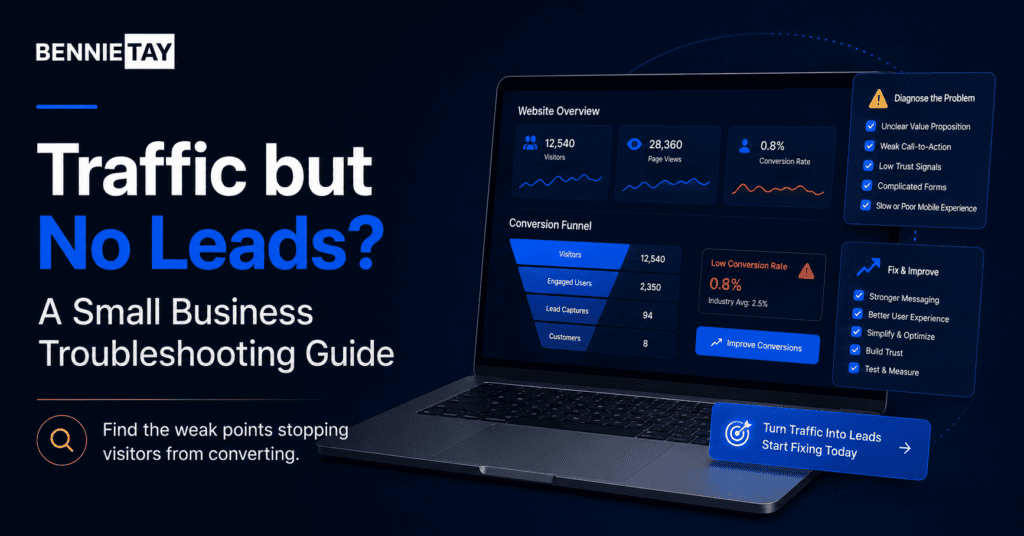
Getting traffic to your website is good, but traffic alone does not pay the bills.
Many small business owners in Malaysia look at their website analytics and see that people are visiting. Some come from Google. Some come from Facebook, Instagram, LinkedIn, Pinterest, WhatsApp links, ads, or referrals. On the surface, this looks promising.
Then the problem appears.
Visitors arrive, look around, and leave. No enquiry. No WhatsApp message. No quote request. No consultation booking. No form submission. Just quiet digital disappointment.
If your website gets traffic but no leads, the issue may not be traffic volume. The issue may be conversion. In simple terms, people are finding your website, but your website is not convincing them to take the next step.
This is common for service businesses, consultants, clinics, beauty salons, renovation companies, agencies, tuition centres, fitness trainers, and local service providers. Your website may look acceptable, but if it does not explain your value clearly, build trust quickly, and guide visitors toward action, it will not generate enquiries.
A website should not only attract visitors. It should help turn visitors into leads.
This guide explains why your website may be getting traffic but no leads, and how to fix the most common problems.
Traffic Is Not the Same as Buyer Intent
The first thing to understand is that not all traffic has the same value.
Some visitors are serious buyers. They are comparing providers, checking prices, reading service pages, and looking for someone to contact. These visitors are closer to making a decision.
Other visitors are only researching. They may be reading a blog post, browsing casually, or trying to understand a topic. They are not ready to enquire yet.
This matters because a website can get traffic from many sources, but not all visitors are ready to become leads immediately. If most of your traffic comes from broad informational content, you may get visitors but fewer enquiries. If your traffic comes from service pages, location pages, pricing pages, or landing pages, those visitors may have stronger buying intent.
For example, someone searching “what is a landing page” may not be ready to hire a website designer. But someone searching “landing page design Malaysia” or “website design for clinic Malaysia” is likely much closer to taking action.
This does not mean informational traffic is useless. Blog content can build trust and bring people into your website. But your website must guide those readers toward the next step. If a blog post gets traffic but has no internal links, no relevant service mention, and no CTA, the visitor reaches the end and disappears. The internet is already very good at making people disappear.
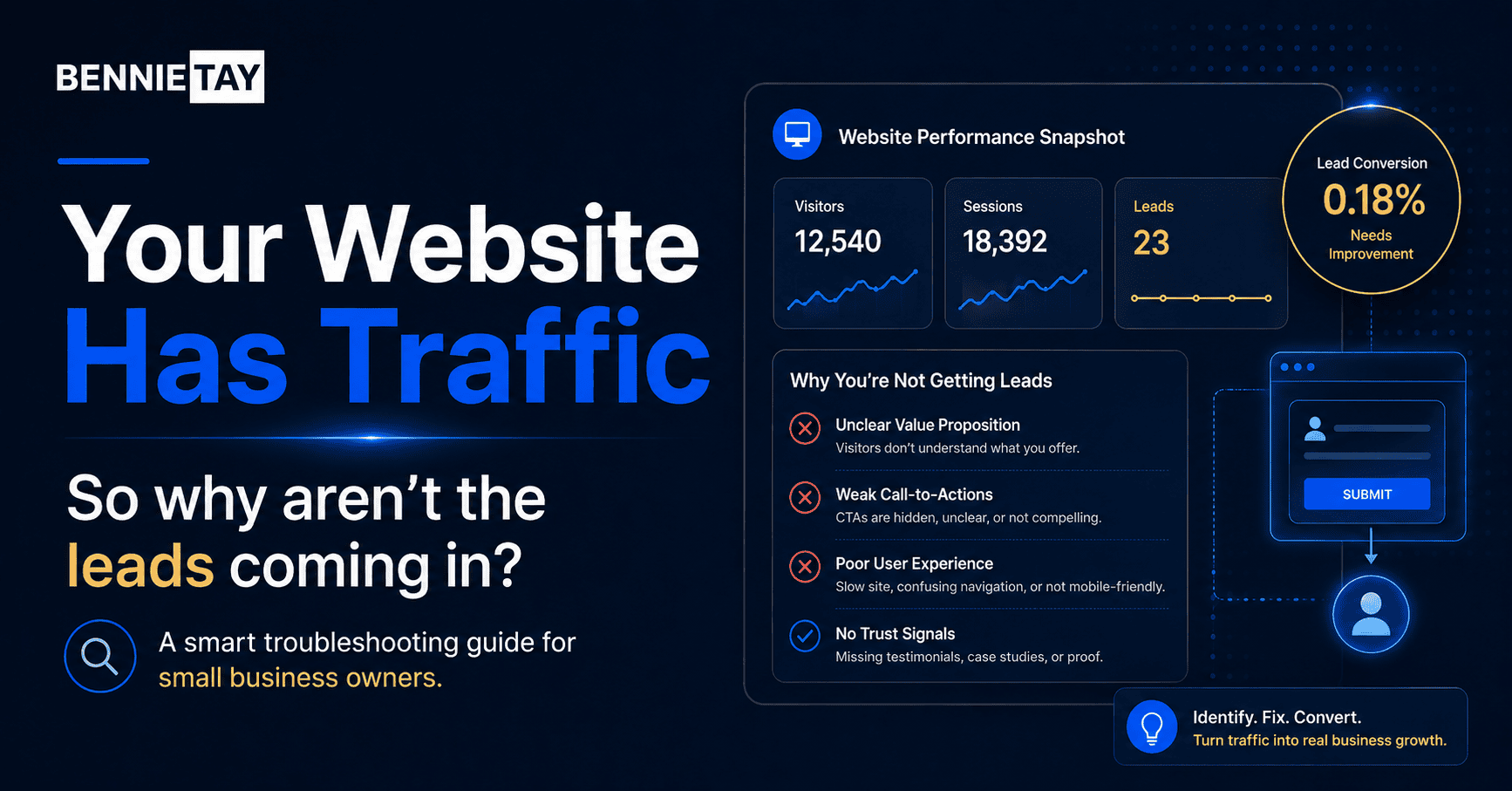
Your Homepage Message May Be Too Vague
One of the biggest reasons websites fail to generate leads is unclear messaging.
When visitors land on your homepage, they should understand what you do within a few seconds. They should know who you help, what problem you solve, and what action they should take next.
Many small business websites use vague headlines like “We Provide Quality Solutions” or “Your Trusted Business Partner.” These phrases sound professional, but they do not say anything specific. They force visitors to scroll, click, and guess.
Most visitors will not guess. They will leave.
A stronger homepage message is direct. It tells people exactly what the business offers and why it matters. For example, a website designer could say, “Website Design for Service Businesses in Malaysia That Want More Enquiries.” A clinic could say, “Professional Skin and Aesthetic Treatments in Kuala Lumpur With Easy WhatsApp Booking.” A renovation company could say, “Home Renovation Services in Klang Valley With Clear Process, Portfolio, and Quote Request.”
The goal is not to sound clever. The goal is to be understood.
If your website gets traffic but no leads, review your homepage headline first. Ask whether a stranger could understand your business in five seconds. If not, your website may be losing visitors before they even reach your service details.
Your Website May Be Talking About You Too Much
Many business websites make the mistake of focusing too much on the company and not enough on the customer.
They talk about their history, mission, vision, values, and commitment to excellence. These things may matter, but they are not usually the first thing a visitor wants to know.
A potential customer is mainly thinking about their own problem. They want to know whether you can help them. They want to know what service is right for them, how the process works, whether they can trust you, and what they should do next.
If your website sounds like a company profile instead of a helpful sales conversation, visitors may not feel a strong reason to enquire.
This is especially important for service businesses. Your website should connect your service to the customer’s situation. Instead of only saying, “We provide website design services,” explain what that means for the customer. Say that you help service businesses build websites that explain their offer clearly, build trust, and make it easier for visitors to enquire.
Instead of saying, “We offer renovation services,” explain that you help homeowners plan and complete renovation projects with clear communication, transparent scope, and practical design guidance.
Good website copy makes the customer feel understood. When visitors see their own problem reflected on the page, they are more likely to continue reading.
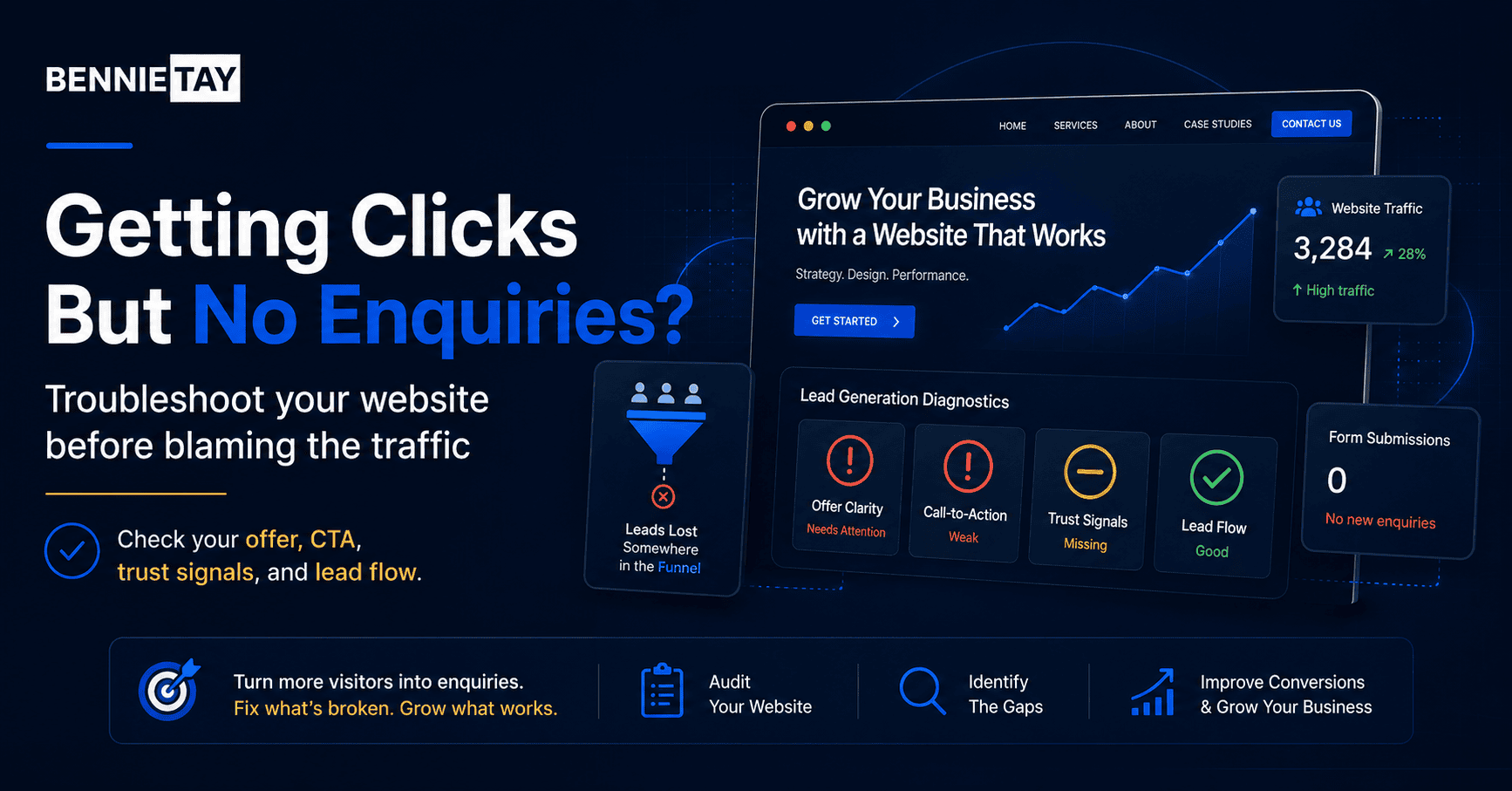
Your Call-to-Action May Be Weak or Hidden
A website without a clear CTA is like a salesperson who explains everything and then walks away before asking for the sale. Very polite. Very useless.
If your website gets traffic but no leads, check whether your call-to-action is clear, visible, and repeated at the right points.
Many websites only place a contact button in the navigation bar or at the bottom of the page. That is not enough. Visitors should see a clear next step early on the page and again after important sections.
Your CTA should also be specific. “Submit” is not persuasive. “Contact Us” is acceptable but not very strong. “Request a Free Website Growth Audit,” “Get a Website Quote,” “Book a Consultation,” or “WhatsApp Us for Advice” are clearer because they tell the visitor what action they are taking and what they can expect.
For Malaysian service businesses, WhatsApp is often one of the easiest enquiry channels. If visitors prefer WhatsApp, your website should make that path obvious. A floating WhatsApp button, CTA sections, and service-specific WhatsApp links can reduce friction.
The key is to make action easy. If a visitor has to search for how to contact you, the website is already failing.
Your Service Pages May Be Too Thin
A common reason for poor lead generation is weak service pages.
Many businesses have service pages that only contain a short paragraph and a few generic points. This is not enough for serious buyers. If someone is considering paying for a service, they need details.
A good service page should explain the problem, the service, who it is for, what is included, how the process works, what makes your approach different, and what the visitor should do next.
For example, a website design service page should not only say that you design websites. It should explain what type of businesses you serve, what pages are included, how the website helps generate enquiries, whether copywriting is included, whether the site is mobile-friendly, and how the project begins.
A clinic service page should explain the treatment, suitability, process, expected appointment flow, safety considerations, FAQs, and booking CTA. A renovation service page should explain project types, planning process, quotation flow, timeline expectations, and portfolio examples.
Thin service pages do not build enough confidence. Visitors may leave because they still have too many unanswered questions.
If your website has traffic but no leads, check whether your service pages give enough information for someone to feel ready to contact you.
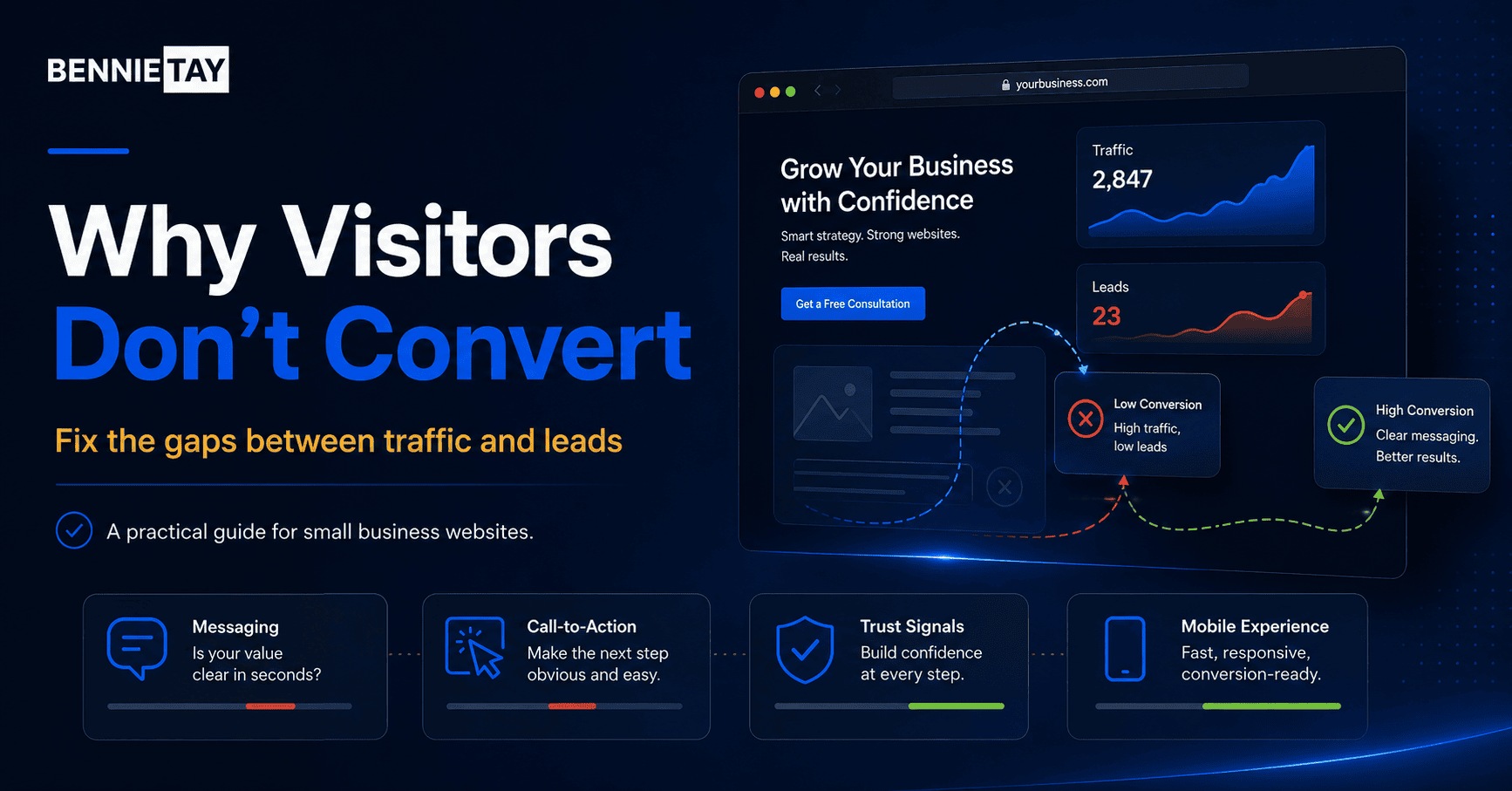
Your Website May Lack Trust Signals
People do not enquire only because they understand your service. They enquire when they feel enough trust to take the next step.
Trust signals are especially important for service businesses because customers are often comparing several providers. They may not know you personally. Your website needs to reduce their doubt.
Trust can be built through testimonials, case studies, portfolio examples, reviews, certifications, team photos, process explanations, client logos, before-and-after examples, detailed FAQs, and clear contact information.
If your website has no proof, visitors may hesitate. They may wonder whether your business is active, experienced, reliable, or suitable for them.
Even if you are new and do not have many testimonials yet, you can still build trust through clarity. Explain your process. Show examples. Share your thinking. Be transparent about who your service is for. Add helpful FAQs. Use real photos where possible. Make your contact details easy to find.
A website that feels empty or vague creates doubt. A website that explains clearly creates confidence.
Your Website May Not Match the Visitor’s Stage
Not every visitor is ready to contact you immediately.
Some visitors need more education before they enquire. Others need pricing guidance. Some need proof. Some need to compare service options. Some need to understand whether they need a full website, a landing page, a redesign, or a monthly website plan.
If your website only has one generic contact CTA, you may lose visitors who are interested but not ready.
This is where different conversion paths help.
A visitor who is ready can click “Request a Quote.” A visitor who is still evaluating can read a pricing guide. A visitor who is unsure can request a free audit. A visitor comparing options can view monthly website plans. A visitor coming from a blog post can be guided to a related service page.
Your website should not treat every visitor the same. It should give people a next step based on where they are in the decision process.
This does not mean making the website complicated. It means creating a simple journey from information to trust to enquiry.
Your Mobile Experience May Be Hurting Conversions
Many people browse business websites from their phones. If your website is difficult to use on mobile, you are likely losing leads.
A mobile website should load quickly, display text clearly, make buttons easy to tap, and keep contact options visible. Visitors should not need to zoom in, fight with menus, or scroll through huge empty sections.
For service businesses, mobile experience is especially important because many enquiries happen through WhatsApp. If someone finds your website on their phone and wants to contact you, the WhatsApp button should be easy to find.
Poor mobile design creates friction. Friction kills enquiries.
If your desktop website looks good but your mobile version is hard to use, your website may be getting traffic but losing leads at the exact moment people are ready to act.
Your Website May Not Explain Pricing or Next Steps
Many business owners avoid mentioning pricing because every project is different. That is understandable, especially for services like website design, renovation, consulting, or custom solutions.
But if you provide no pricing guidance at all, some visitors may leave because they do not know whether your service fits their budget.
You do not always need to show exact prices. You can provide starting prices, package ranges, examples, or a note explaining what affects cost. This helps qualify leads and reduces uncertainty.
The same applies to next steps. Visitors should know what happens after they contact you. Will they receive a call? A WhatsApp reply? A proposal? A free audit? A consultation? A quotation?
People are more likely to enquire when the next step feels clear and low-risk.
For example, “Request a Free Website Growth Audit” feels easier than “Contact Us.” It tells the visitor they are not immediately committing to a project. They are starting with a review.
That small difference can improve conversion.
Your Blog Traffic May Not Be Connected to Your Services
Some websites get blog traffic but no leads because the blog content is disconnected from the business offer.
A blog post may rank on Google or get traffic from social media, but if it does not link to a relevant service, the visitor has nowhere meaningful to go next.
Every blog post should have a purpose. If you write about website pricing, link to your website design package or monthly website plan. If you write about landing pages, link to your landing page service. If you write about website redesign, link to your redesign or audit CTA.
The internal link should feel natural. It should help the reader continue their journey.
A blog post should educate, but it should also guide. Otherwise, you are giving free information and then politely escorting the visitor back to Google. Brilliant strategy, if the goal is emotional damage.
Your Website May Be Attracting the Wrong Audience
Sometimes the problem is not the website design. Sometimes the problem is the traffic source.
If your website gets visitors from broad, unrelated, or low-intent topics, those visitors may never become leads. For example, a website design company may get traffic from people searching for free templates, DIY website tips, or student project examples. Those visitors may not be buyers.
This is why keyword strategy matters.
Your website should target a mix of informational and commercial keywords. Informational content builds awareness, while commercial pages capture people closer to buying.
For a service business, commercial keywords may include phrases like “website design Malaysia,” “clinic website design,” “landing page design Malaysia,” “website redesign service,” or “monthly website plan Malaysia.”
If your traffic is growing but enquiries are not, review where the traffic comes from and which pages receive it. You may need to create stronger service pages, location pages, and buyer-intent content.
How to Start Fixing the Problem
If your website gets traffic but no leads, do not rush into a full redesign immediately.
Start by reviewing the customer journey.
Look at your homepage first. Is the message clear? Is the CTA visible? Does the page explain who you help and what result you provide?
Then review your service pages. Are they detailed enough? Do they answer customer questions? Do they include trust signals and clear next steps?
Next, check your contact flow. Is WhatsApp easy to find? Is the form simple? Does the visitor know what happens after submitting?
After that, review your trust signals. Add testimonials, portfolio examples, case studies, FAQs, process explanations, and real business details where possible.
Finally, check your blog and traffic sources. Make sure your content links to relevant service pages and guides visitors toward action.
Improving conversion is usually not one big fix. It is a series of small improvements that reduce confusion and increase trust.
Final Thoughts
If your website gets traffic but no leads, the issue is not always traffic.
The problem may be unclear messaging, weak service pages, hidden CTAs, lack of trust signals, poor mobile experience, missing pricing guidance, or a blog strategy that does not connect to your services.
A website should not only bring people in. It should help visitors understand your business, trust your offer, and take the next step.
For small businesses and service providers in Malaysia, this is especially important. Your website may be the first serious impression before someone sends a WhatsApp message, books a consultation, or requests a quotation.
If your website already has visitors, you have an opportunity. The next step is to improve the structure, copy, trust signals, and enquiry flow so more visitors become leads.
Before spending more money on ads or trying to get more traffic, fix the website experience first.
More traffic will not solve a weak conversion problem. It will only send more people into the same broken journey.