Most small business owners know they need a website. The problem is usually not awareness. The problem is cost, maintenance, updates, technical confusion, and finding someone reliable enough to manage the whole thing.
Website-as-a-Service, often called WaaS or WAAS, is one answer to that problem. Instead of paying a large one-time website development fee, a business pays a monthly fee for a managed website solution.
The provider usually handles design, setup, hosting, maintenance, security, updates, and technical support. In simple terms, you do not only buy a website. You subscribe to a website service.
How Website-as-a-Service works
Website-as-a-Service usually starts with a discovery process. The provider learns about your business, services, audience, goals, and content needs. Then they design and build a website based on an agreed structure.
After launch, the provider continues to manage the website. This may include hosting, backups, plugin updates, security monitoring, small content changes, technical fixes, and sometimes ongoing improvements.
The exact scope depends on the plan. Some monthly website plans are simple. Others include strategy, copywriting, SEO setup, landing pages, analytics, and conversion support.
What is usually included?
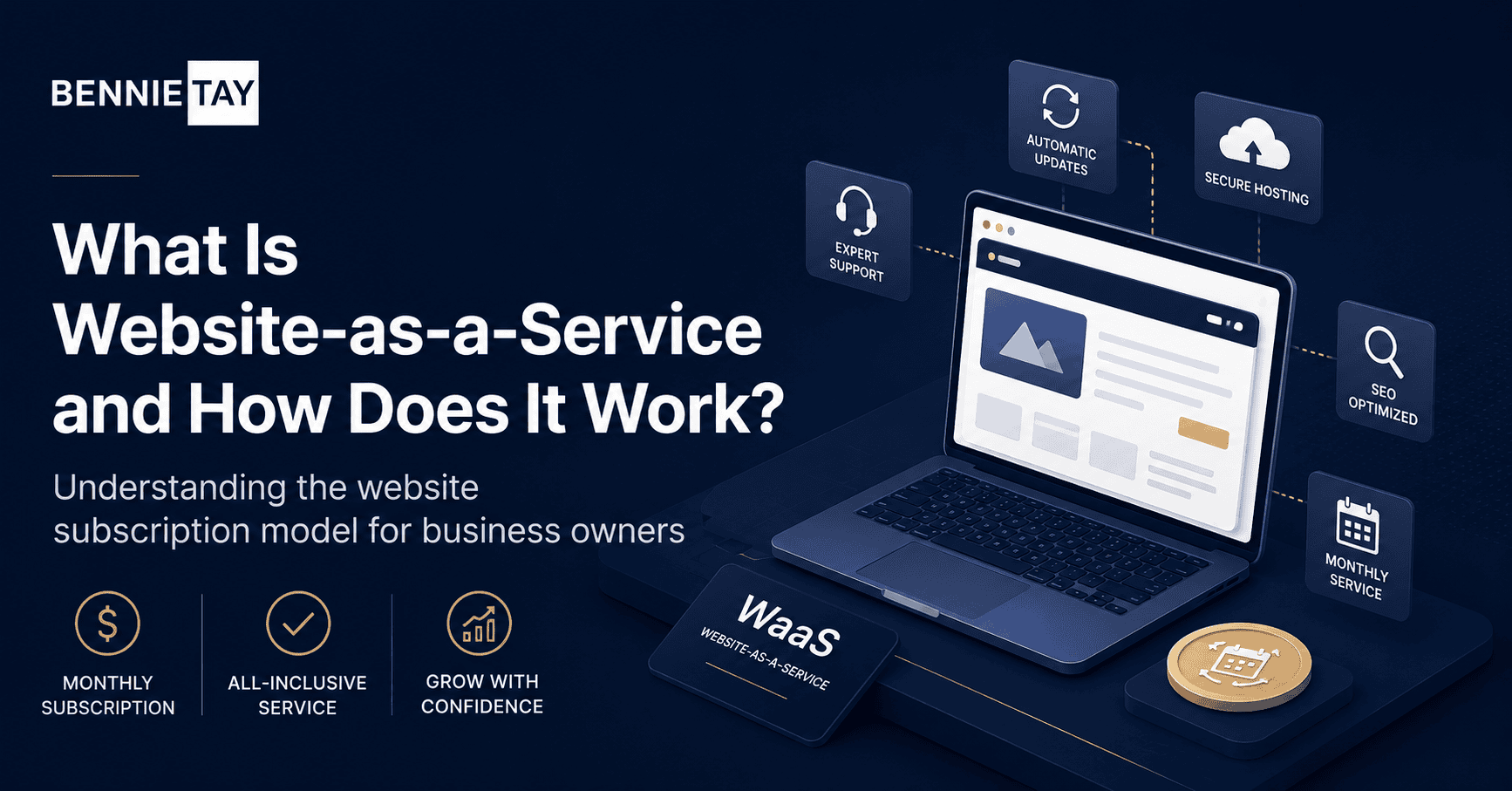
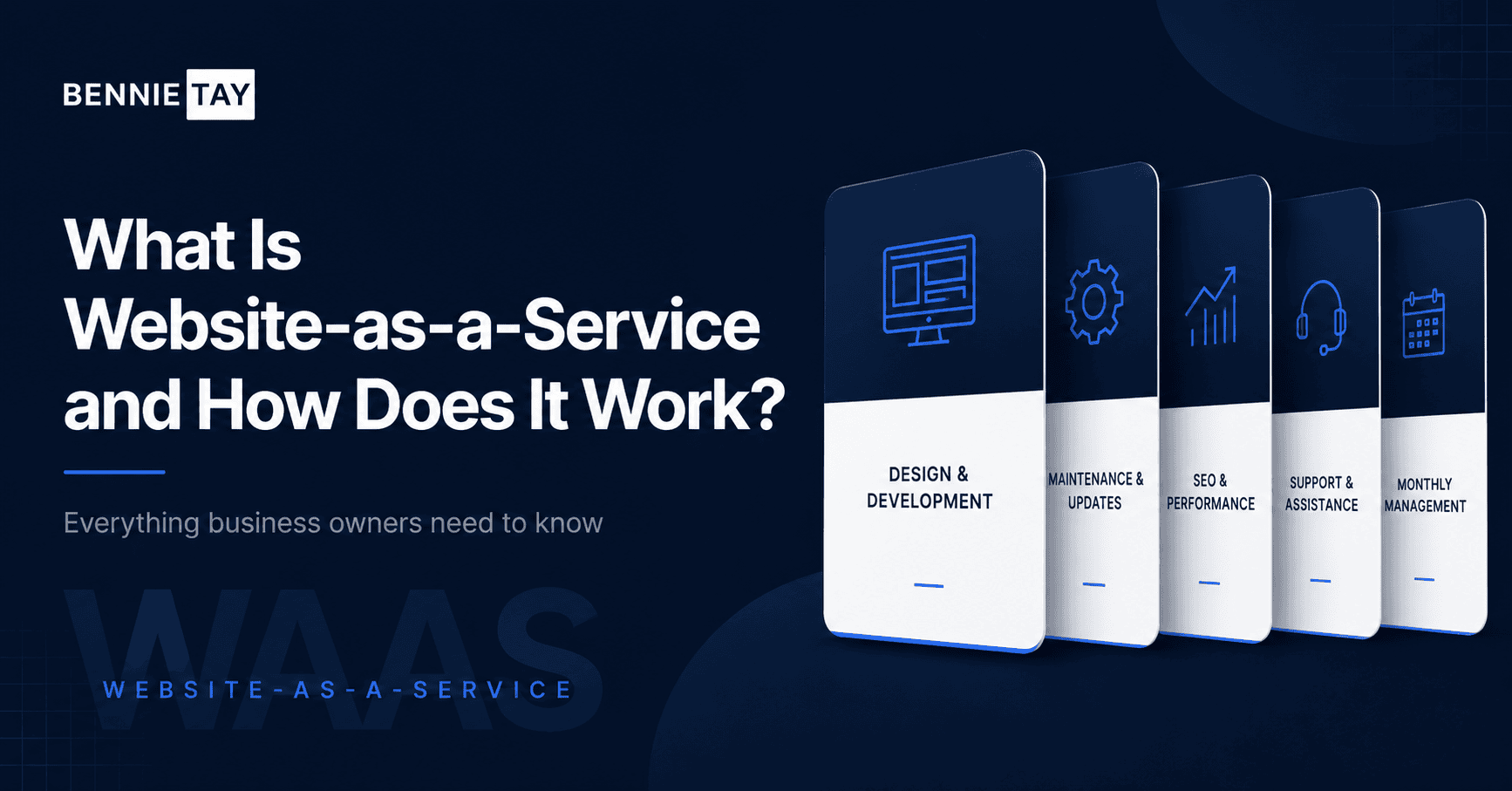
A basic Website-as-a-Service plan may include website design, responsive layout, hosting, SSL, backups, software updates, and support.
A stronger plan may also include copywriting, service page structure, technical SEO setup, analytics, speed optimization, monthly updates, landing pages, and performance improvements.
Before choosing a provider, ask exactly what is included. A low monthly fee may look attractive but may not include enough support or flexibility.
Why businesses choose WAAS
The first reason is cash flow. A one-time website project can require a large upfront payment. A monthly website plan spreads the cost over time, which may be easier for small businesses.
The second reason is convenience. Many business owners do not want to manage hosting, plugins, backups, technical errors, security, or small website changes. They want the website to work without becoming another task on their list.
The third reason is ongoing improvement. A website is rarely perfect on launch day. Your services, offers, testimonials, and customer questions change over time. A monthly plan can make it easier to keep the website updated.
How WAAS differs from a one-time website project
A one-time website project usually has a fixed build fee. After launch, you may need to pay separately for hosting, maintenance, support, security, and future updates.
Website-as-a-Service bundles the website and ongoing support into a recurring fee. This can be useful if you prefer predictable costs and want one provider responsible for the website.
Neither model is automatically better. The right choice depends on budget, ownership preference, technical support needs, and how often the website will change.
Ownership and exit terms matter
Before choosing WAAS, ask what happens if you cancel. Can you keep the website? Can you move it to another host? Is there a buyout fee? Who owns the domain, content, images, and design?
These questions are important because every provider has different terms. A monthly plan can be convenient, but you should not be surprised later by restrictions you did not understand.
Clear ownership and exit terms protect your business.
Who should consider Website-as-a-Service?
WAAS can suit service businesses, consultants, clinics, salons, coaches, contractors, agencies, and local businesses that want a professional website without handling technical work.
It is also useful for businesses that need regular updates. If you often change offers, add testimonials, create landing pages, or publish content, ongoing support can save time.
New businesses may also like WAAS because it reduces upfront cost and helps them launch faster.
When WAAS may not be suitable
Website-as-a-Service may not be ideal if you want full ownership from day one, have your own technical team, or need a highly custom platform.
If your website requires complex ecommerce, membership systems, custom dashboards, booking logic, or deep software integrations, a custom project may be better.
Also be careful if the monthly plan is unclear. If you cannot understand what is included, what is excluded, and what happens when you cancel, ask more questions before signing.
Questions to ask before choosing a plan
Ask how many pages are included, whether copywriting is provided, who manages hosting, how updates are handled, and what support response time is expected.
Ask whether SEO basics are included. At minimum, your site should have clean URLs, page titles, headings, meta descriptions, mobile-friendly design, and fast loading pages.
Ask whether forms, WhatsApp buttons, analytics, and conversion tracking are included if your website needs to generate leads.
How much does Website-as-a-Service cost?
Pricing depends on the provider and scope. Some plans are basic and affordable. Others cost more because they include strategy, copywriting, SEO setup, landing pages, support, and ongoing improvements.
Do not compare only the monthly fee. Compare what is included. A low-cost plan may not include meaningful support, content help, ownership flexibility, or conversion-focused structure.
Look at the total cost over one, two, and three years. A monthly plan can be easier for cash flow, but you should understand the long-term commitment.
The right plan should match your business stage. A new business may need a simple managed website. A growing business may need regular landing pages, content updates, and conversion improvements.
What makes a WAAS plan valuable?
A valuable plan should save time, reduce technical stress, and help the website perform better. Hosting and maintenance alone are useful, but they are not the full story.
Look for a provider who understands business goals. Your website should explain your offer clearly, guide visitors, support SEO basics, and make enquiry easy.
Ongoing support should also be practical. If you need to update a service page, add a testimonial, fix a form, or create a landing page, the process should be clear.
The best Website-as-a-Service providers do not only keep the website online. They help keep it useful.
Common misunderstandings
Some people think Website-as-a-Service means renting a website with no ownership. That may be true for some providers, but not all. Ownership terms depend on the agreement.
Some think monthly websites are always cheaper. They are cheaper upfront, but the long-term cost depends on the monthly fee and contract length.
Others think WAAS is only for small websites. In reality, a monthly model can support ongoing growth if the provider has the right process.
The important point is to read the scope and terms carefully. A monthly model can be helpful, but only when expectations are clear.
How to decide
Choose Website-as-a-Service if you want predictable cost, technical support, and ongoing help. Choose a one-time project if you want full ownership upfront and have the resources to manage the website after launch.
If you are unsure, list what you need most: lower upfront cost, speed, support, ownership, customization, or long-term flexibility. The right model becomes clearer when you compare those priorities.
Website-as-a-Service checklist
Before signing up, check the practical details. Confirm who owns the domain, website content, design, and hosting account. Ask what happens if you cancel. Ask whether there is a minimum contract period.
Check what support includes. Does it cover plugin updates, security, backups, small content changes, broken forms, speed issues, and technical errors? Are there limits on requests?
Check what is included in the build. Does the plan include copywriting, service pages, mobile design, SEO basics, analytics, and contact forms? Or does it only include a simple template?
Check how updates are handled. Do you submit requests by email, WhatsApp, ticket system, or dashboard? How fast does the provider respond?
These details matter more than the monthly fee alone.
Examples of businesses that can use WAAS
A new clinic can use WAAS to launch a professional website with service pages, doctor profiles, booking information, and ongoing updates.
A consultant can use it to create a clear website with service pages, articles, booking forms, and regular content improvements.
A contractor can use it to show project photos, service areas, quote forms, and new portfolio updates.
A salon or fitness studio can use it to keep promotions, pricing, schedules, and testimonials current.
The common theme is simple: WAAS works best when the business wants a managed website that keeps improving over time.
What to avoid
Avoid plans that are vague about ownership. Avoid providers who cannot explain what happens after launch. Avoid packages that make every small change expensive or slow.
Also avoid choosing only because the monthly price is low. If the website does not communicate clearly or generate enquiries, the low cost may not be good value.
How WAAS supports lead generation
A website should not only exist online. It should help visitors become enquiries. A good Website-as-a-Service plan can support this by improving page structure, calls to action, forms, WhatsApp links, and landing pages over time.
For example, if a service page gets traffic but few enquiries, the provider can improve the headline, add proof, shorten the form, or clarify the offer. If an ad campaign needs a focused page, the provider can create a landing page without starting a new website project.
This ongoing improvement is one of the biggest advantages of WAAS. The website can evolve based on real business needs instead of staying frozen after launch.
What to prepare before starting
Before starting a WAAS project, prepare your service list, target customers, service areas, testimonials, brand assets, photos, and examples of websites you like.
Also prepare answers to basic questions: what do you want the website to achieve, what enquiries matter most, what objections customers have, and what makes your business different?
The clearer your input, the better the provider can build a useful website.
Final thoughts
Website-as-a-Service is a managed monthly website model. It can help small businesses launch faster, avoid large upfront costs, and reduce technical stress.
Useful reference: Website-as-a-Service can reduce technical overhead, while WordPress.org requirements show what a self-managed website must still handle.The best WAAS plan is not only a cheap monthly website. It should give you clear support, strong structure,
transparent ownership terms, and a website that helps your business get enquiries.