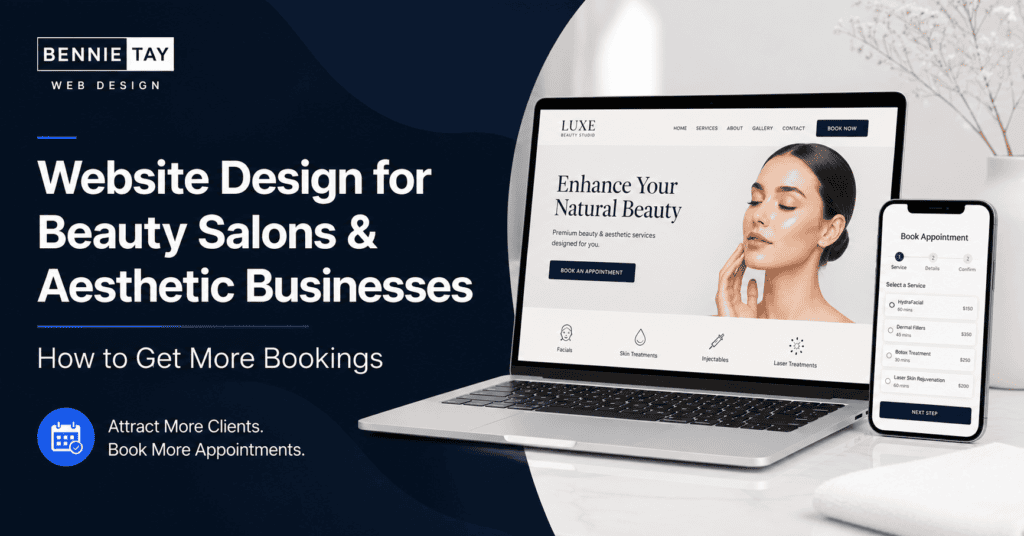
A beauty salon or aesthetic business website should do more than show pretty images.
It should help potential customers understand your services, trust your business, and book an appointment with confidence. For beauty salons, hair studios, facial centres, nail salons, lash studios, wellness centres, and aesthetic clinics in Malaysia, the website often becomes the first serious impression before someone sends a WhatsApp message, checks your pricing, or books a consultation.
The beauty and aesthetic industry is highly visual, but visuals alone are not enough. A beautiful website can still fail if visitors do not understand what you offer, where you are located, how booking works, or why they should choose you instead of another provider.
Many beauty business websites make the same mistake. They focus heavily on design, photos, and promotions, but they do not guide visitors properly. The homepage looks nice, yet the service details are unclear. The WhatsApp button is visible, but the visitor does not know what to ask. There are images, but not enough trust signals. There are service names, but no explanation of who each service is for.
A good website design for beauty salons and aesthetic businesses should balance visual appeal with clarity, trust, and booking flow. The goal is not just to impress visitors. The goal is to help more of them become enquiries and appointments.
Your Website Must First Build Confidence
Beauty and aesthetic decisions are personal. People are not only choosing a service. They are choosing who they trust with their appearance, comfort, money, and sometimes even health-related concerns.
This is why your website needs to create confidence before pushing for bookings.
A visitor may be wondering whether your business is professional, whether your team is trained, whether your service is suitable, whether your results look natural, whether your location is convenient, whether your pricing is clear, and whether the booking process is simple.
If your website only shows a few photos and a “Book Now” button, it may not answer enough of these concerns.
For beauty salons, trust can come from real photos, service explanations, customer reviews, location details, treatment room images, team introductions, hygiene standards, pricing guidance, and clear booking instructions.
For aesthetic clinics, trust and compliance matter even more. In Malaysia, MOH’s Medicine Advertisements Board says aesthetic services are categorised as medical treatment and should be conducted by registered medical practitioners; the same FAQ says they may only be advertised by CKAPS-licensed or registered clinics/private hospitals with MAB approval.
So if your business is an aesthetic clinic, website content should be reviewed carefully before publishing. The website should sound professional, responsible, and compliant, not like a miracle factory with a “limited time offer” button.
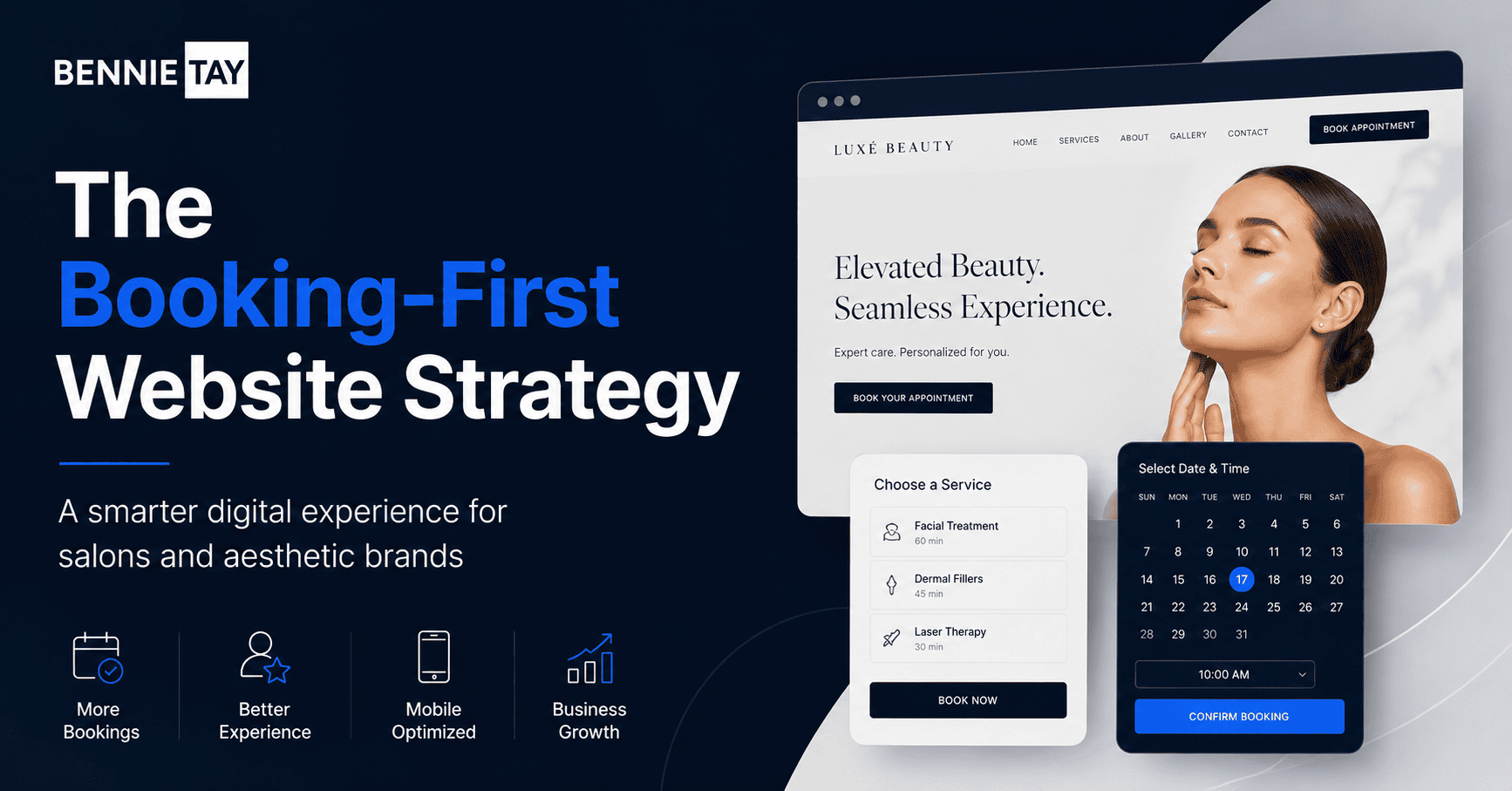
The Homepage Should Make the Business Clear Immediately
Your homepage should quickly explain what type of beauty or aesthetic business you are, who you serve, where you are located, and how customers can book.
A weak homepage headline might say, “Reveal Your Beauty Today.” That sounds nice, but it does not tell visitors what you actually do. Are you a facial salon? A hair studio? A medical aesthetic clinic? A nail salon? A spa? A place where vague adjectives go to retire?
A stronger headline is more specific.
For example, a beauty salon could say, “Facial and Beauty Treatments in Petaling Jaya With Easy WhatsApp Booking.” A lash studio could say, “Lash Extension and Brow Services in Kuala Lumpur for Natural, Everyday Looks.” An aesthetic clinic could use a more responsible line such as, “Aesthetic Consultation and Skin Services in Malaysia With Professional Appointment Booking.”
The homepage should not force visitors to guess. Within the first few seconds, they should know what you offer and what step to take next.
After the headline, your homepage should include a short explanation of your services, a clear booking CTA, your location, your main service categories, trust signals, customer reviews if suitable, and a simple explanation of how appointment booking works.
The homepage does not need to explain every detail. Its job is to help visitors feel that they are in the right place and guide them deeper into the website.
Service Pages Should Explain More Than Service Names
Many beauty websites list services with short names like “Hydrating Facial,” “Lash Lift,” “Hair Treatment,” “Skin Booster,” or “Body Contouring,” but they do not explain enough for new visitors.
This creates a problem. Existing customers may understand your service menu, but new customers may not. They may not know which service is suitable, what the appointment involves, how long it takes, how to prepare, or whether they need a consultation first.
A strong service page should explain the service in simple, customer-friendly language.
For a facial salon, the page can explain the skin concerns the treatment is commonly associated with, what the session flow looks like, how long it usually takes, and whether consultation is recommended. For a hair salon, the page can explain the difference between treatment types, colouring options, styling services, and maintenance expectations. For a nail or lash salon, the page can explain style options, appointment duration, aftercare basics, and booking instructions.
For aesthetic clinics, service pages should be written with more caution. Avoid exaggerated claims, guaranteed results, or language that pressures visitors. The page should provide general information and guide visitors to a professional consultation where appropriate.
The goal of a service page is not to overwhelm people. It is to help them understand enough to take the next step.
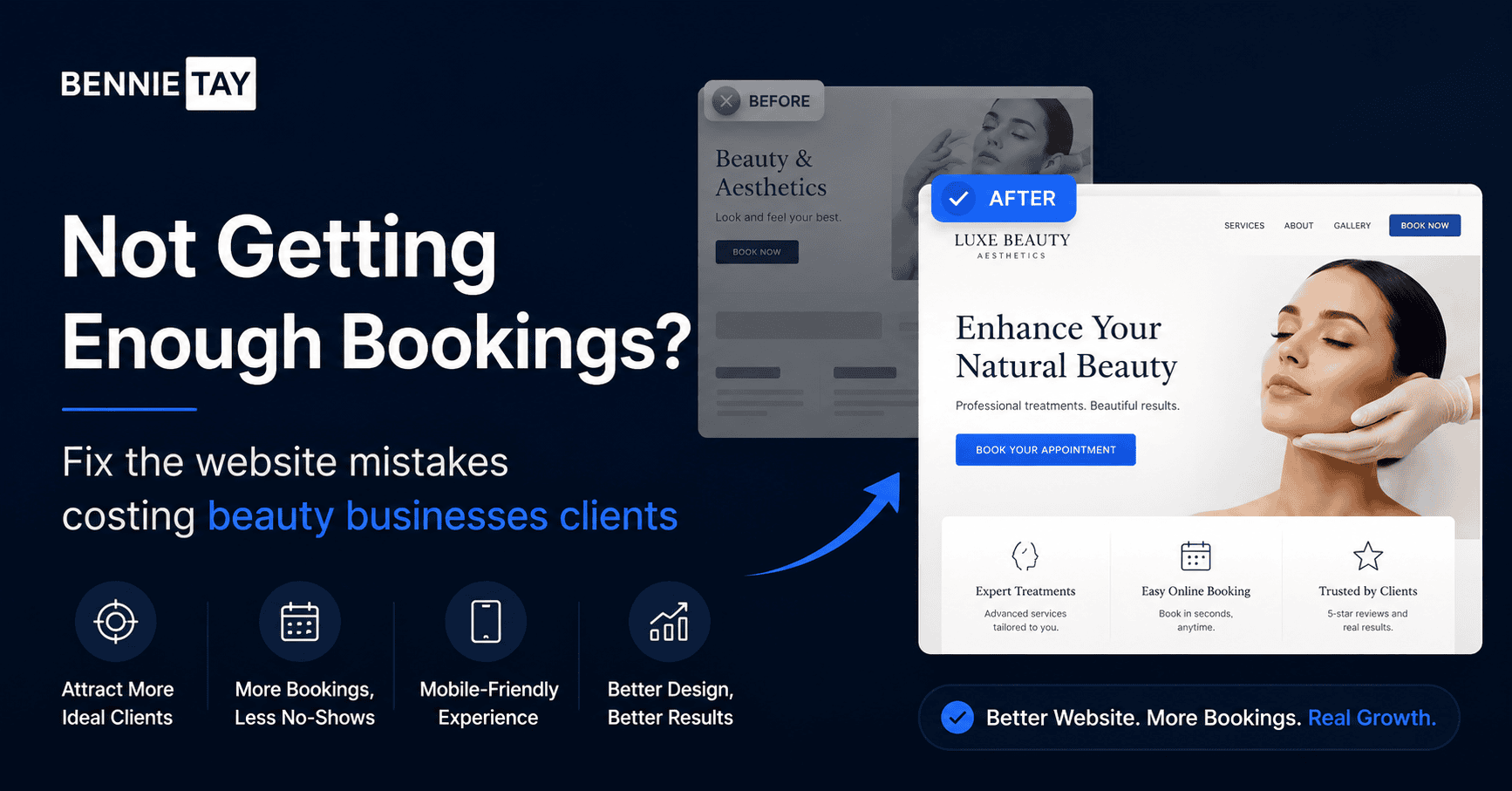
Your Website Should Help Visitors Choose the Right Service
A common reason beauty and aesthetic websites fail to convert is that visitors do not know which service to choose.
This is especially true when a business offers many treatments. Too many options can create hesitation. When people feel unsure, they often delay booking.
Your website can solve this by organizing services based on customer needs, not only by technical service names.
For example, instead of only listing every facial treatment, you can group services by concern or goal, such as hydration, brightening, acne care, sensitive skin support, anti-aging care, relaxation, or monthly maintenance. A hair salon can group services by cut and styling, colouring, treatment, scalp care, and bridal or event styling. A lash and brow studio can group services by natural look, fuller look, maintenance, and first-time customer options.
This makes the website easier to use because visitors can start from their problem or desired outcome.
You can also include a simple CTA such as “Not sure which service to choose? WhatsApp us for guidance.” That CTA works because it matches the visitor’s uncertainty. It gives them permission to ask instead of forcing them to decide alone like they are solving a beauty-themed exam.
Photos Matter, but Context Matters More
Beauty and aesthetic businesses need strong visuals. Photos help visitors understand your style, environment, service quality, and overall brand experience.
However, photos without context are less effective.
If you show treatment room photos, explain the experience. If you show hair or nail work, mention the service category. If you show before-and-after content, be careful, especially for medical aesthetic services, and make sure it is appropriate and compliant before publishing. If you show product photos, explain how they relate to the service.
For beauty salons, real photos often work better than generic stock photos. A clean photo of your treatment room, reception area, tools, team, or actual work can make the business feel more real and trustworthy.
For aesthetic clinics, photos should feel professional and responsible. Avoid overdramatic visuals or unrealistic presentation. The website should create confidence, not hype.
Good visuals help visitors imagine the experience. Good copy helps them understand it. You need both.
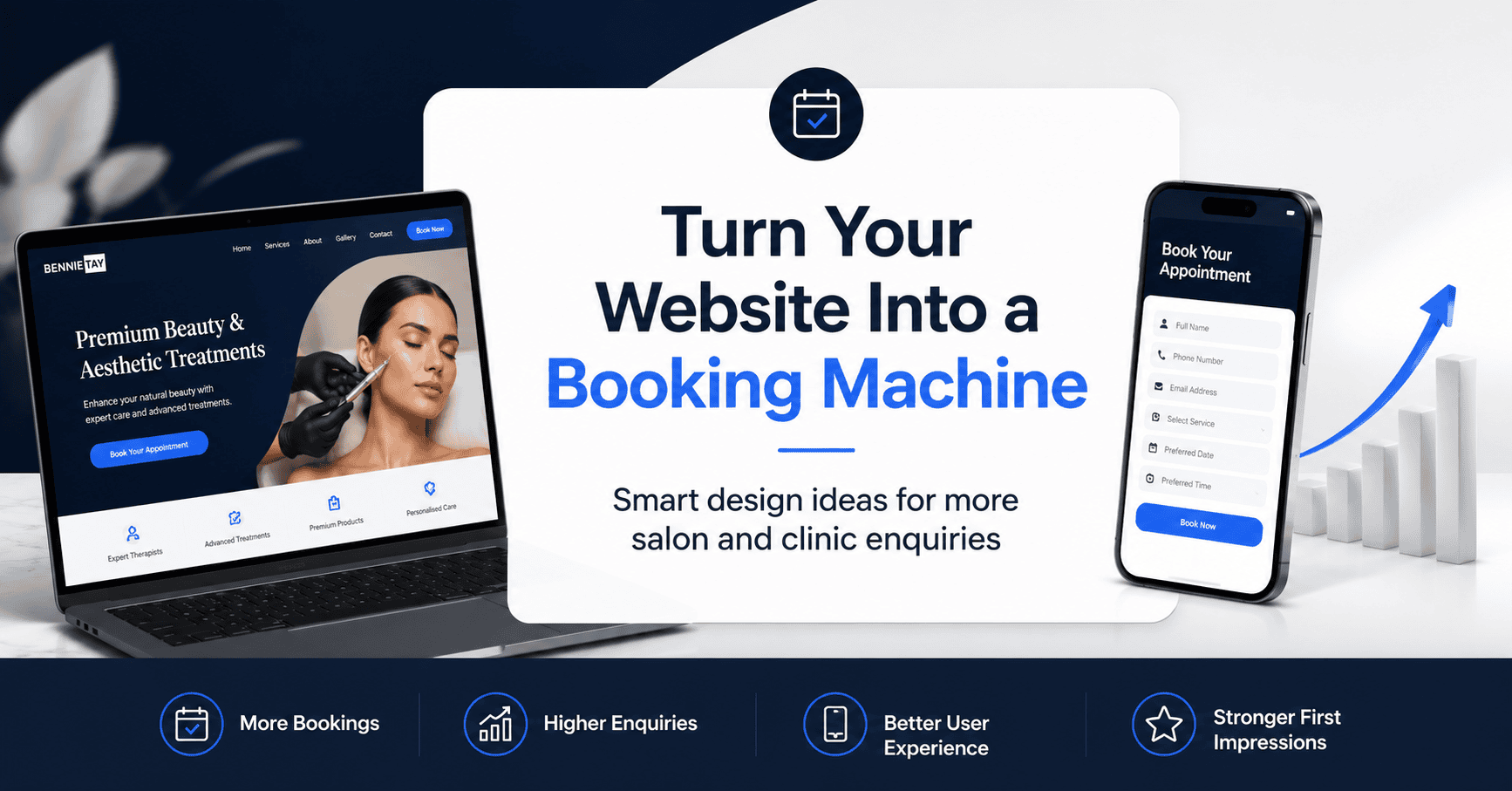
Make WhatsApp Booking Easy and Specific
For many beauty businesses in Malaysia, WhatsApp is one of the most important booking channels.
Visitors may not want to fill in a form. They may prefer to ask about availability, price, service suitability, or appointment slots directly. That makes WhatsApp useful, but only if the website guides the visitor properly.
A generic “WhatsApp Us” button is better than nothing, but a specific CTA is stronger.
For example, a beauty salon can use “WhatsApp Us to Book Your Appointment.” A hair salon can use “WhatsApp Us to Check Available Slots.” A facial centre can use “WhatsApp Us for Service Recommendation.” An aesthetic clinic can use “WhatsApp Us to Arrange a Consultation.”
The CTA should match the customer’s likely intention. Someone may not be ready to book immediately, but they may be willing to ask a question. A softer CTA such as “Ask Us Which Service Fits You” can work well for first-time visitors.
You can also explain what information customers should send. For example, ask them to share their preferred date, service of interest, location, and whether they are a first-time customer. This helps your team respond faster and improves lead quality.
The website should not just create more messages. It should create better messages.
Add Pricing Guidance Without Overcomplicating the Page
Pricing is sensitive for beauty and aesthetic businesses.
Some customers want exact prices before booking. Some services depend on consultation, condition, package, product choice, or session type. This makes pricing difficult to show clearly.
Still, giving no pricing guidance at all can create hesitation.
For beauty salons, it is often useful to show starting prices or service ranges. For example, facial treatments may start from a certain price, hair services may depend on hair length, and lash services may vary by style.
For aesthetic clinics, pricing should be handled carefully and reviewed based on relevant requirements. In some cases, it may be better to provide consultation-based guidance rather than aggressive promotional pricing.
The main goal is to reduce uncertainty. Visitors do not always need full pricing details, but they need enough context to know whether the service may fit their budget.
If you do not want to display full prices, you can use CTAs like “WhatsApp Us for Pricing Guidance” or “Book a Consultation to Understand Suitable Options.”
Pricing content should feel clear, not pushy.
Show Trust Signals Close to the Booking CTA
Trust signals should appear before visitors are asked to book.
For beauty salons, trust signals can include customer reviews, real service photos, treatment room photos, team introductions, years of experience, hygiene practices, product brands used, customer FAQs, and clear location details.
For aesthetic clinics, trust signals may include doctor or practitioner profiles, clinic registration-related information where appropriate, professional consultation process, clinic location, appointment flow, and responsible service explanations.
The important thing is placement. Do not hide all your trust signals on a separate testimonial page. Visitors may not click there.
If your homepage has a booking CTA, place trust signals near it. If your service page asks visitors to book, include relevant reassurance on that page. If your pricing section leads to WhatsApp, include a short note about consultation or service guidance nearby.
Trust works best when it appears close to the moment of decision.
Explain the Appointment Experience
Many visitors hesitate because they do not know what happens after booking.
Your website should explain the appointment journey in simple language.
For a beauty salon, this could include choosing a service, confirming an appointment slot, arriving for consultation or service, receiving the treatment, and getting aftercare guidance. For a hair salon, the journey may include style consultation, service confirmation, treatment or styling, and maintenance advice. For an aesthetic clinic, the journey should usually include consultation first, followed by professional advice on suitable options.
This explanation does not need to be long. It just needs to make the process feel clear and less intimidating.
First-time customers especially appreciate knowing what to expect. If they are unsure about the service, they may not want to book immediately. A simple process section can reduce that hesitation.
The more familiar the process feels, the easier it is for visitors to take the first step.
Mobile Experience Can Make or Break Bookings
Beauty and aesthetic customers often browse from their phones. They may find you through Instagram, TikTok, Google, Facebook, Pinterest, WhatsApp referrals, or ads. If they land on your website from mobile, the experience must be smooth.
The homepage should load quickly. Text should be readable. Photos should not slow everything down. The booking button should be easy to tap. The WhatsApp link should work properly. Location and opening hours should be simple to find.
A beautiful desktop website that becomes painful on mobile is a conversion problem waiting to happen.
Your mobile homepage should show the main service, location, and booking CTA early. Visitors should not need to scroll forever before finding how to book. They should also be able to navigate service pages easily.
In beauty and aesthetic businesses, impulse and interest matter. If someone is ready to enquire, do not make them fight the website first.
Use Blog Content to Answer Pre-Booking Questions
A blog or resource section can help beauty and aesthetic businesses attract visitors and answer common questions.
For beauty salons, blog topics can explain how to choose the right facial, what to expect during a first appointment, how often to book certain services, or how to prepare for a hair colouring session.
For aesthetic clinics, blog content should be more responsible and should avoid giving personalized medical advice. It can explain general consultation flow, how to prepare questions before visiting, why professional assessment matters, or what patients should consider before choosing a service.
The blog should support the booking journey. A post about choosing a facial should link to your facial service page. A post about first-time appointments should link to your booking CTA. A post about consultation should guide visitors to arrange an appointment.
A blog should not exist just to decorate the website with articles. The internet has enough decoration pretending to be strategy.
Avoid Overpromising in Beauty and Aesthetic Copy
Beauty marketing often becomes too aggressive.
Phrases like “instant flawless results,” “guaranteed transformation,” or “perfect skin forever” may sound exciting, but they can damage trust. For aesthetic clinics, they may also create compliance concerns.
Better copy is confident but responsible.
Instead of promising perfection, explain the service, consultation process, suitability, experience, and next step. Instead of using pressure-heavy language, focus on clarity and professionalism. Instead of saying everyone needs the service, help visitors understand whether it may be suitable for their goals.
Strong website copy does not need to exaggerate. It needs to make the business feel credible, helpful, and easy to contact.
For beauty salons, the tone can still be warm and appealing. For aesthetic clinics, the tone should be more professional and careful.
The right tone depends on the type of business, but trust should always come before hype.
Final Thoughts
A good website for beauty salons and aesthetic businesses should help visitors move from interest to booking.
It should explain your services clearly, show your location, build trust, answer common questions, and make WhatsApp or appointment booking easy. It should use visuals well, but not depend on visuals alone.
For beauty salons, the website should feel warm, clear, and easy to book. For aesthetic clinics, the website should feel professional, responsible, and trust-first, with content reviewed carefully before publishing.
If your website gets visitors but not enough bookings, the issue may not be traffic. It may be unclear service descriptions, weak trust signals, poor mobile layout, vague WhatsApp CTAs, lack of pricing guidance, or an appointment flow that feels uncertain.
Your website should not only show that your business exists. It should help the right customers understand your services, feel confident, and take the next step.
A beauty or aesthetic website that looks good but does not generate bookings is not doing enough.
CTA: Request a Free Website Growth Audit and find out how to improve your beauty salon or aesthetic business website for more enquiries and appointment bookings.