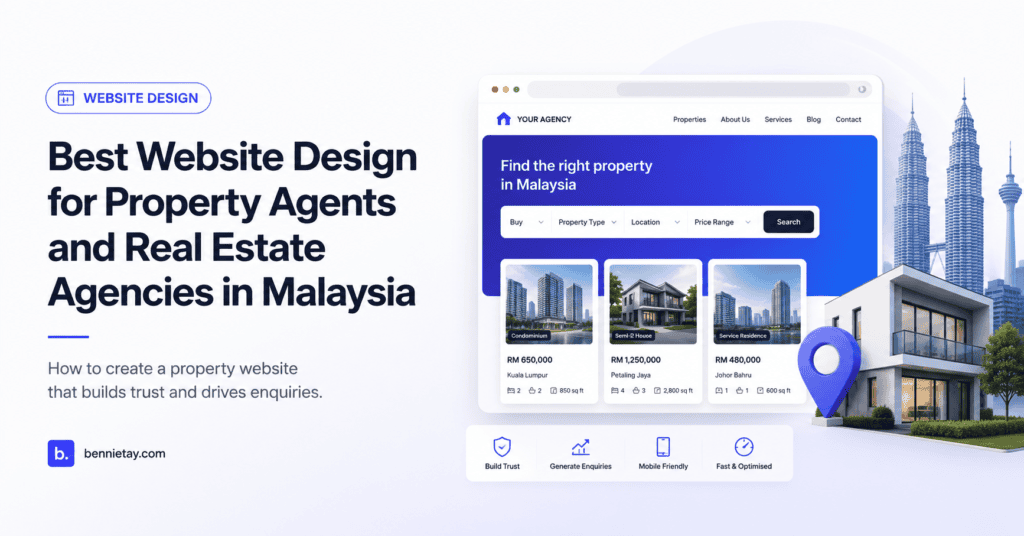
Property buyers and tenants rarely begin by calling an agent they have never heard of. They search. They compare. They look at listings. They check whether the agent appears credible.
They may visit social media, property portals and Google before eventually deciding whether to send a WhatsApp message. That means a property agent’s website should not simply be an online business card.
It should help potential clients answer several important questions:
- Can this agent help with the type of property I need?
- Do they understand the area?
- Are they active and credible?
- Can I see relevant properties?
- How do I contact them quickly?
For real estate agencies, the website has an additional job.
It needs to present:
- agents
- services
- listings
- locations
- credibility
- enquiry paths
without becoming a confusing directory.
A good property website should make it easier for people to move from:
searching to shortlisting to contacting an agent.
Here is how I would structure a property agent or real estate agency website in Malaysia.
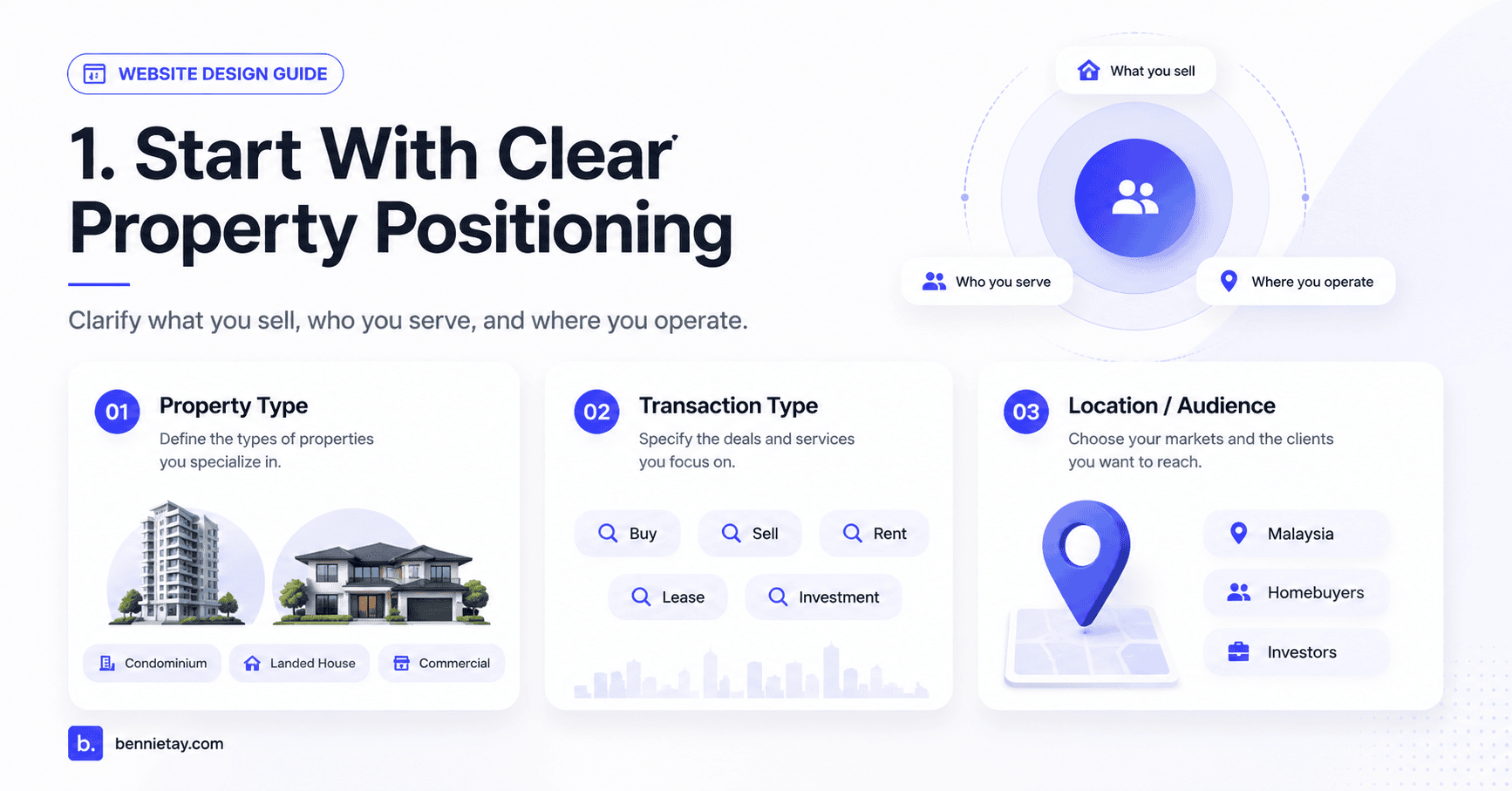
1. Start With a Clear Property Positioning
The homepage should immediately explain what you specialise in.
Weak:
Your Trusted Real Estate Partner
This could describe almost every property agency in existence.
Stronger:
Residential Property Agent for Kuala Lumpur & Petaling Jaya
Or:
Helping Homeowners Sell Condominiums Across Mont Kiara and Bangsar
Or:
Commercial Property Agency for Offices and Industrial Properties in Klang Valley
Specific positioning helps customers understand whether you are relevant.
You can specialise by:
- property type
- transaction type
- location
- customer type
For example:
Property Type
- condominium
- landed home
- office
- industrial
- retail
- new development
Transaction Type
- buy
- sell
- rent
- lease
Location
- Mont Kiara
- Bangsar
- Petaling Jaya
- Subang Jaya
- Kuala Lumpur
Customer
- homebuyers
- investors
- landlords
- corporate tenants
- property owners
You do not have to narrow the entire business to one category. But the website should make your strongest positioning obvious.
2. Decide the Main Website Goal
What action matters most?
For an individual property agent, it might be:
WhatsApp the Agent
For an agency:
Search Properties
or:
Talk to an Agent
For a seller-focused website:
Request a Property Valuation
The homepage should be built around that goal.
Do not give equal importance to:
- Buy
- Sell
- Rent
- Careers
- Join Our Team
- News
- About
- Contact
- Download App
- Newsletter
all in the first screen. Decide what the website should generate first.
3. Make WhatsApp Easy to Use
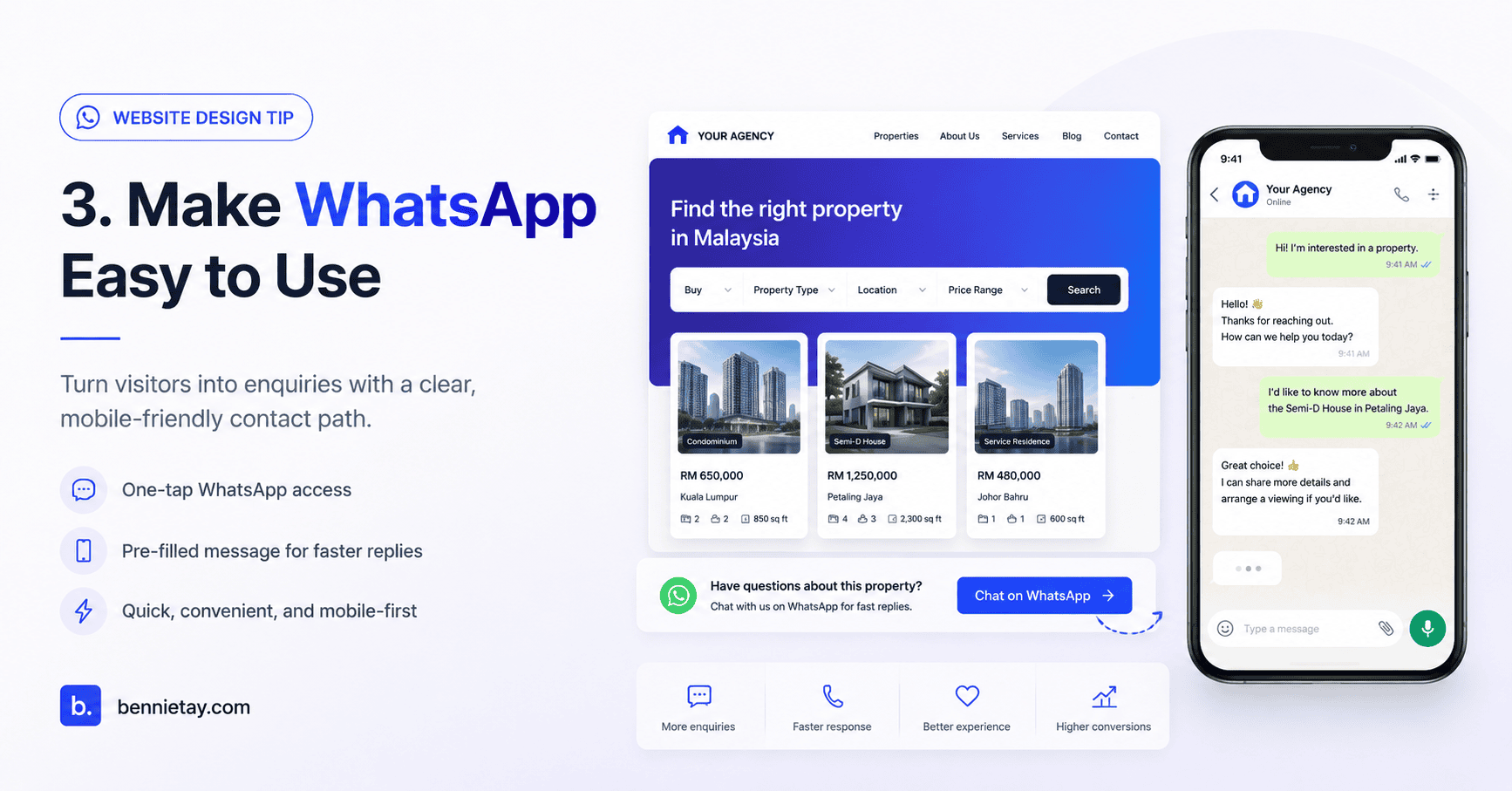
For Malaysian property enquiries, WhatsApp is often one of the most natural ways for prospects to contact an agent.
Use clear buttons such as:
WhatsApp About This Property
or:
Ask About Availability
A pre-filled message can improve the enquiry.
For example:
Hi, I’m interested in the 3-bedroom condominium at Mont Kiara listed on your website. Is it still available?
Now the agent knows immediately which property the person is asking about.
This is much better than receiving:
Hi.
and beginning an archaeological investigation into the visitor’s intentions.
4. Build Proper Property Listing Pages
If you publish properties on your own website, each listing should have a proper dedicated page.
A useful property page may include:
- property name
- location
- asking price
- sale or rental status
- property type
- bedrooms
- bathrooms
- built-up area
- tenure where relevant
- parking
- furnishing
- photographs
- description
- key facilities
- nearby amenities
- map or area information
- agent contact
The visitor should not need to WhatsApp simply to discover basic property information. Give them enough information to decide whether the property is worth discussing.
5. Use High-Quality Property Photography
Property is visual. Poor photographs can immediately reduce interest.
Use images that are:
- bright
- sharp
- current
- correctly oriented
- large enough to inspect
Show the actual:
- living spaces
- bedrooms
- kitchen
- bathrooms
- views
- facilities
- building exterior
Avoid uploading 40 nearly identical photos. Select the images that help someone understand the property.
Also optimise image size for web performance. A property page containing twenty enormous image files may eventually look beautiful after the visitor has aged several years waiting for it to load.
6. Make Property Search Simple
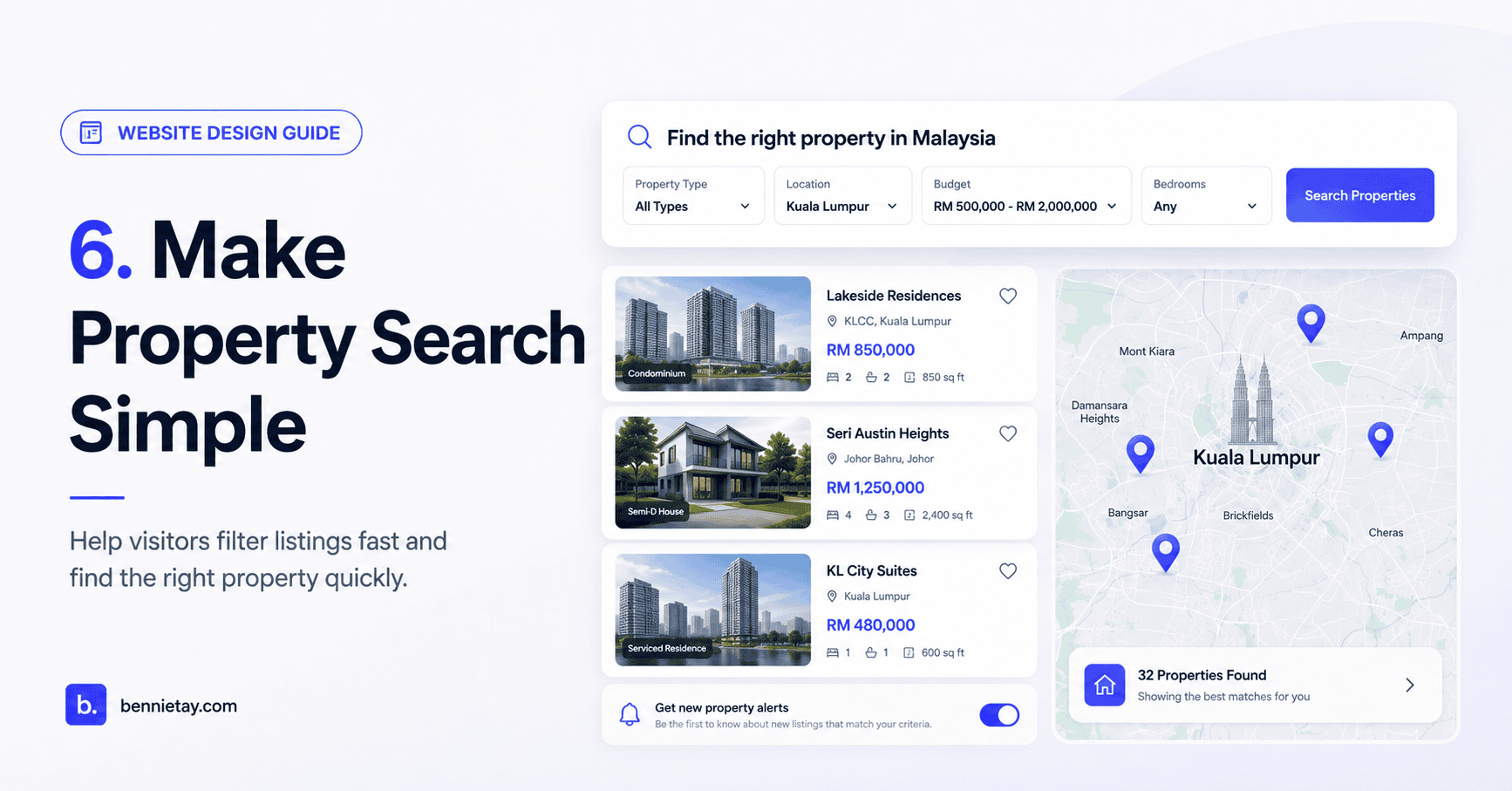
Large real estate websites may need filtering.
Useful filters could include:
- location
- property type
- sale or rent
- price range
- bedrooms
Do not add filters nobody uses merely because your system allows them. A smaller agent website may not even need a complicated search engine.
You might instead use simple categories:
- Properties for Sale
- Properties for Rent
- Mont Kiara Properties
- Petaling Jaya Properties
Choose the structure based on the number of active listings. The website should remain easy to manage.
7. Create Area Pages
Location knowledge is a major part of real estate. If you specialise in particular areas, create useful pages about them.
For example:
- Mont Kiara Property Guide
- Bangsar Property Guide
- Petaling Jaya Property Guide
A strong area page could include:
- overview
- property types
- neighbourhood character
- accessibility
- nearby amenities
- schools
- shopping
- transport
- active listings
- enquiry CTA
This can help both prospective buyers and local SEO. But make the pages genuinely useful.
Do not create fifty pages that say:
Looking for property in [LOCATION]? We are the best property agent in [LOCATION].
That contributes impressively little to civilisation.
8. Create Separate Pages for Buyers, Sellers and Landlords
Different customers have different concerns.
A buyer may ask:
- What properties are available?
- Which areas suit my budget?
- What is the buying process?
A seller may ask:
- What is my property worth?
- How will you market it?
- How long might it take?
A landlord may ask:
- Can you find tenants?
- Do you handle viewings?
- How do you market rentals?
Do not force all three audiences through one generic service page.
Create dedicated pages such as:
Buy a Property
Sell Your Property
Rent Your Property
Landlord Services
Each page can have a different CTA.
9. Build a Strong Seller Page
Seller leads can be extremely valuable.
A seller page should explain:
- how you assess the property
- how listings are marketed
- photography approach
- property portal exposure
- viewing coordination
- negotiation
- transaction support
Then use a clear CTA:
Request a Property Valuation
A simple seller enquiry form might ask:
- name
- phone
- property type
- location
- sale or rent
- brief details
Do not ask the owner to complete a full property database before you are willing to speak to them. The website should start the conversation.
10. Create Strong Agent Profiles
If customers are choosing a specific agent, show who that person is.
A useful profile can include:
- name
- professional photograph
- role
- areas covered
- property specialisation
- languages
- experience
- contact buttons
- active listings
- testimonials
Avoid profile pages consisting only of:
John is passionate about property and always goes the extra mile.
That tells the visitor almost nothing. Instead, explain what John actually does.
For example:
John focuses on residential sales and rentals in Mont Kiara, Hartamas and Bangsar, with particular experience in condominium transactions.
Now the visitor can understand whether he is relevant.
11. Show Real Reviews and Testimonials
Property transactions involve significant financial decisions. Trust matters.
Use customer feedback around:
- responsiveness
- negotiation
- local knowledge
- communication
- professionalism
- transaction support
For example:
“We were relocating from overseas and needed someone to coordinate viewings before we arrived. The entire process was handled clearly and efficiently.”
That tells future customers something meaningful.
Use genuine testimonials only. Where possible, place them near the relevant service. A landlord review works well on the landlord page. A seller review belongs near seller services.
12. Show Successful Transactions
Completed transactions provide another type of proof.
You might show:
Recently Sold
Recently Rented
or:
Completed Transactions
Include appropriate information such as:
- property type
- area
- transaction type
You do not necessarily need to disclose confidential client information. The purpose is to show activity and experience. A website with ten years of claimed experience but no visible evidence of recent work can feel strangely frozen in time.
13. Use Local Expertise as Content
Property agents have a natural content advantage.
You already answer questions about:
- neighbourhoods
- pricing
- property types
- buying
- selling
- rental demand
Turn those questions into useful website content.
For example:
- Buying a Condo in Mont Kiara: What Should You Consider?
- Bangsar vs Mont Kiara: Which Area Suits Your Lifestyle?
- What Should Sellers Prepare Before Listing a Property?
- How to Prepare Your Condo for Rental Viewings
- Questions to Ask Before Renting an Office in Kuala Lumpur
Good content attracts people earlier in the decision process. It also allows you to demonstrate real knowledge.
14. Keep Listings Current
An outdated property website creates frustration quickly. Someone finds a listing. They contact the agent.
The response:
Sorry, rented six months ago.
Repeat this several times and visitors stop trusting the website.
Develop a process for:
- adding listings
- updating price
- changing status
- removing unavailable properties
You can also show:
Sold
or:
Rented
where appropriate rather than immediately deleting every page. This may preserve useful content while making the status clear. The important part is accuracy.
15. Make the Website Mobile-First
Property searches often happen on phones.
The mobile experience should make it easy to:
- browse photos
- read property information
- search listings
- WhatsApp agent
- call
- submit enquiry
Check:
- button sizes
- gallery usability
- page speed
- forms
- sticky CTA buttons
A giant desktop property portal squeezed into a phone screen does not count as mobile optimisation. Design around how someone actually browses.
16. Use Strong Calls to Action
Generic:
Contact Us
Better:
- WhatsApp About This Property
- Request a Viewing
- Ask About Availability
- Request a Property Valuation
- Talk to an Agent
The CTA should match the page.
On a property listing:
Request a Viewing
On a seller page:
Request a Valuation
On an area guide:
See Available Properties in Mont Kiara
Specific CTAs reduce uncertainty.
17. Show the Next Step
Property transactions can feel complicated. Explain what happens after enquiry.
For a buyer:
- Tell us what you are looking for
- We shortlist suitable properties
- Arrange viewings
- Discuss next steps
For a seller:
- Submit property details
- Agent reviews property
- Discuss pricing and marketing
- Prepare listing
- Begin buyer enquiries and viewings
A clear process builds trust. Customers do not have to guess what contacting you commits them to.
18. Create an FAQ Section
Useful questions could include:
Buyers
- How do I arrange a viewing?
- Can you help me find properties not shown online?
- Which areas do you cover?
Sellers
- How do you market my property?
- What information should I prepare?
- How do I request a valuation?
Landlords
- Can you help find tenants?
- Do you handle viewings?
- Which areas do you cover?
Real questions make useful website content. Avoid adding FAQs purely because someone told you FAQ sections are good for SEO. They are useful because customers have questions.
19. Create SEO Pages Around Genuine Search Intent
A property website can target several types of searches.
Service Searches
- property agent Kuala Lumpur
- real estate agency Petaling Jaya
Location Searches
Mont Kiara property agent
Property Searches
condo for rent Mont Kiara
Informational Searches
best areas to live in Kuala Lumpur
Seller Searches
how to sell condo Malaysia
Build content around the types of customers you actually want. Do not attempt to rank for every property-related keyword in Malaysia simply because a keyword tool produced a large number. Commercial relevance matters.
20. Build Internal Links Between Areas, Listings and Services
Property websites naturally contain related content.
For example:
Mont Kiara Area Guide
→ Properties for Sale in Mont Kiara → Properties for Rent in Mont Kiara → Agent Profile → Request Viewing
A blog article:
Guide to Buying a Condo in Mont Kiara
can link to:
Mont Kiara Listings
and:
Buyer Services
This helps visitors move through the site logically. It also prevents valuable content from being isolated.
A Recommended Property Agent Website Structure
For an individual agent:
Home
Clear positioning and main CTA.
Properties
Sale and rental listings.
Areas
Neighbourhood guides.
Buy
Buyer services.
Sell
Seller services and valuation CTA.
About
Agent experience and expertise.
Reviews
Customer proof.
Resources
Property guides.
Contact
WhatsApp, phone and form.
For a larger agency, add:
- Agents
- Branches
- Commercial Property
- Projects / Developments
- Careers
Keep the navigation focused on what customers actually use.
What Should the Homepage Include?
A strong property homepage might follow this structure.
Hero
Property Agent for Mont Kiara, Bangsar & Kuala Lumpur
Helping buyers, sellers and landlords navigate residential property with clear local guidance.
Buttons:
View Properties
WhatsApp an Agent
Featured Properties
Show selected current listings.
Areas Covered
Highlight core locations.
Services
Buy, sell, rent, landlord.
Why Work With Us
Specific proof and positioning.
Recently Sold / Rented
Activity.
Testimonials
Real customer experiences.
Local Guides
Useful content.
Final CTA
Looking to Buy, Sell or Rent? Talk to an Agent →
This keeps the journey commercial and clear.
Common Property Website Mistakes
Mistake 1: Homepage Is Just a Listing Feed
The visitor cannot understand the agency itself.
Mistake 2: No Agent Information
Customers want to know who they are contacting.
Mistake 3: Old Listings
This destroys trust quickly.
Mistake 4: Weak Photography
Property is visual. Treat images accordingly.
Mistake 5: Generic Location Pages
Create useful neighbourhood content instead.
Mistake 6: No Seller Lead Strategy
Do not focus entirely on buyers and ignore property owners.
Mistake 7: Only One CTA
Different customers need different next steps.
Property Portals vs Your Own Website
Property portals are valuable because they already have an audience. But they should not necessarily replace your own website.
A portal controls:
- layout
- competitor visibility
- listing format
- customer journey
Your website lets you build:
- your brand
- agent credibility
- neighbourhood expertise
- seller lead generation
- content
- case studies
- direct enquiries
Think of property portals as distribution channels.
Your website is your owned digital platform.
They can work together. You do not have to choose one.
Frequently Asked Questions
Does a property agent need a website?
A website can help property agents build credibility, publish listings, create local area content, attract seller enquiries and provide a direct contact channel outside third-party property portals.
Should every property listing have its own page?
If you publish listings on your website, dedicated pages make it easier to display complete information, photography and direct enquiry options.
Is WhatsApp important for property websites?
For many Malaysian property prospects, WhatsApp provides a convenient low-friction way to enquire about listings, viewings or property services.
Should property agents create location pages?
Yes, when they genuinely specialise in those areas and can provide useful local property information rather than generic copied pages.
What should an agent profile include?
Include a professional photograph, areas covered, specialisation, relevant experience, languages, listings, testimonials and clear contact options.
Should an agency website show sold properties?
Recently sold or rented properties can provide useful proof of activity, provided the information is accurate and presented appropriately.
A Property Website Should Sell Your Expertise, Not Just Properties
Listings are important. But properties change constantly. Your expertise remains.
A strong real estate website should therefore communicate:
- where you specialise
- what kind of property work you do
- who you help
- what you know about the area
- why customers should trust you
- how easily they can contact you
The property listing may attract the visitor. Your credibility determines whether they contact you. And your local expertise can bring them back even when the original property is no longer available.
At Bennie Studio, property and real estate websites can be structured around listings, local SEO, agent credibility and clear lead-generation paths rather than functioning as another generic property catalogue.
Explore Website Design for Property Businesses →
Getting property enquiries from portals and social media but not building enough direct website leads?
Get a Free Website Growth Audit →