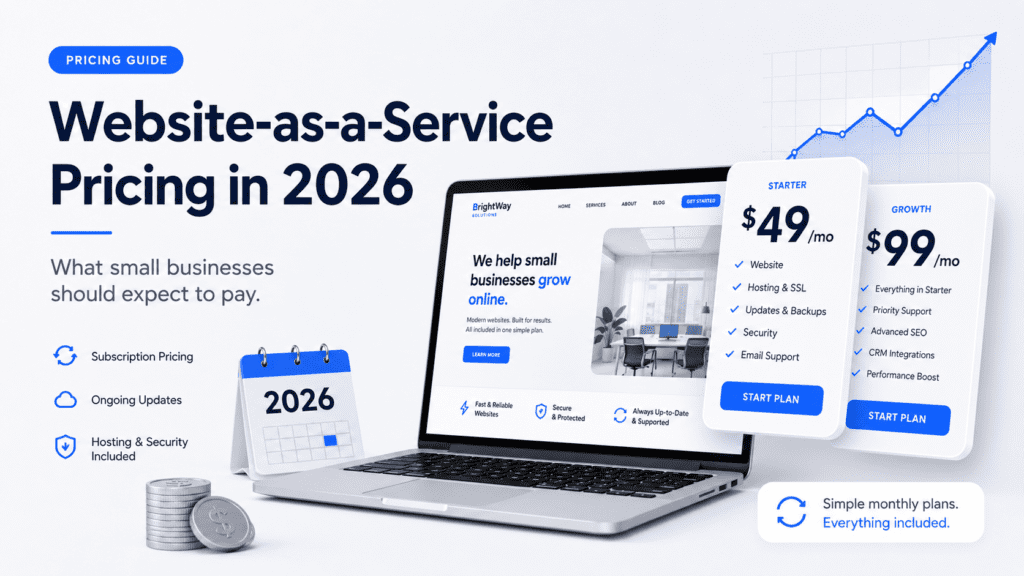
When building a business website, one of the biggest decisions is not just what the website should look like. It is how you should pay for it. Should you choose a monthly website plan where design, hosting, maintenance, and support are bundled into one subscription? Or should you pay once for a one-time website build and manage everything separately after launch?
Both options can work. The right choice depends on your budget, timeline, business stage, technical needs, and how much ongoing support you want.
For many small businesses, the monthly website plan is becoming more attractive because it lowers upfront cost and removes technical headaches. But for businesses that need full ownership, deep customization, or advanced functionality, a one-time custom website build may still be the better investment.
This guide compares monthly website plans vs one-time website builds, including pros, cons, pricing, hidden costs, and how to choose the best option for your business.
What Is a Monthly Website Plan?
A monthly website plan is a subscription-based website service where you pay a recurring monthly fee for your business website.
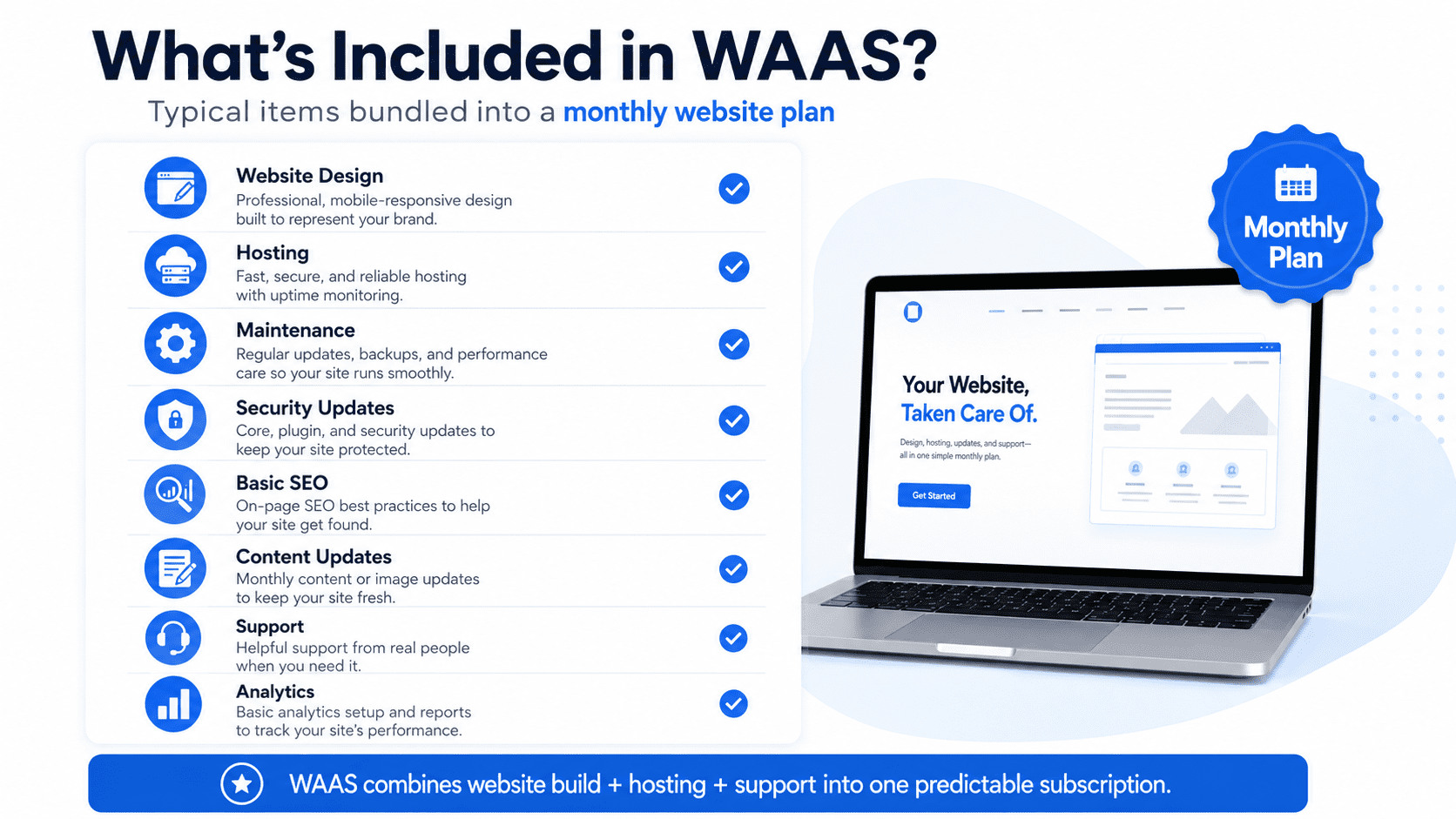
Instead of paying a large amount upfront, your website is provided as an ongoing service. This type of model is often called Website-as-a-Service, WAAS, website subscription service, or managed website plan.
A monthly website plan may include:
- Website design
- Website setup
- Hosting
- Security updates
- Website maintenance
- Technical support
- Basic SEO setup
- Content updates
- Contact forms
- Mobile-friendly design
- Performance optimization
- Ongoing improvements
The exact features depend on the provider and plan.
This model is ideal for business owners who want a professional website without managing hosting, plugins, backups, technical issues, or ongoing maintenance themselves.
What Is a One-Time Website Build?
A one-time website build is the traditional website development model.
You pay a freelancer, agency, or developer to design and build your website as a project. Once the website is completed and launched, the project is usually considered finished.
After launch, you may need to pay separately for:
- Hosting
- Domain renewal
- Website maintenance
- Security updates
- Plugin updates
- Bug fixes
- Content changes
- SEO work
- New pages
- Design improvements
- Technical support
A one-time website build can give you more control and customization, but it usually requires a higher upfront investment.
This model is commonly used for custom websites, advanced business websites, e-commerce stores, and companies that want more ownership over their website assets.
Monthly Website Plan vs One-Time Website Build: Quick Comparison
| Feature | Monthly Website Plan | One-Time Website Build |
|---|---|---|
| Payment model | Monthly subscription | Upfront project fee |
| Upfront cost | Lower | Higher |
| Ongoing cost | Predictable monthly fee | Separate maintenance, hosting, and support |
| Launch speed | Usually faster | Usually slower |
| Maintenance | Often included | Usually separate |
| Hosting | Often included | Usually separate |
| Support | Usually ongoing | Depends on agreement |
| Customization | Based on plan or template system | More flexible |
| Ownership | Depends on provider | Usually more control |
| Best for | Small businesses, startups, service providers | Custom projects, advanced websites, established brands |
Monthly Website Plan Pricing
The monthly website plans are usually priced as a recurring subscription.
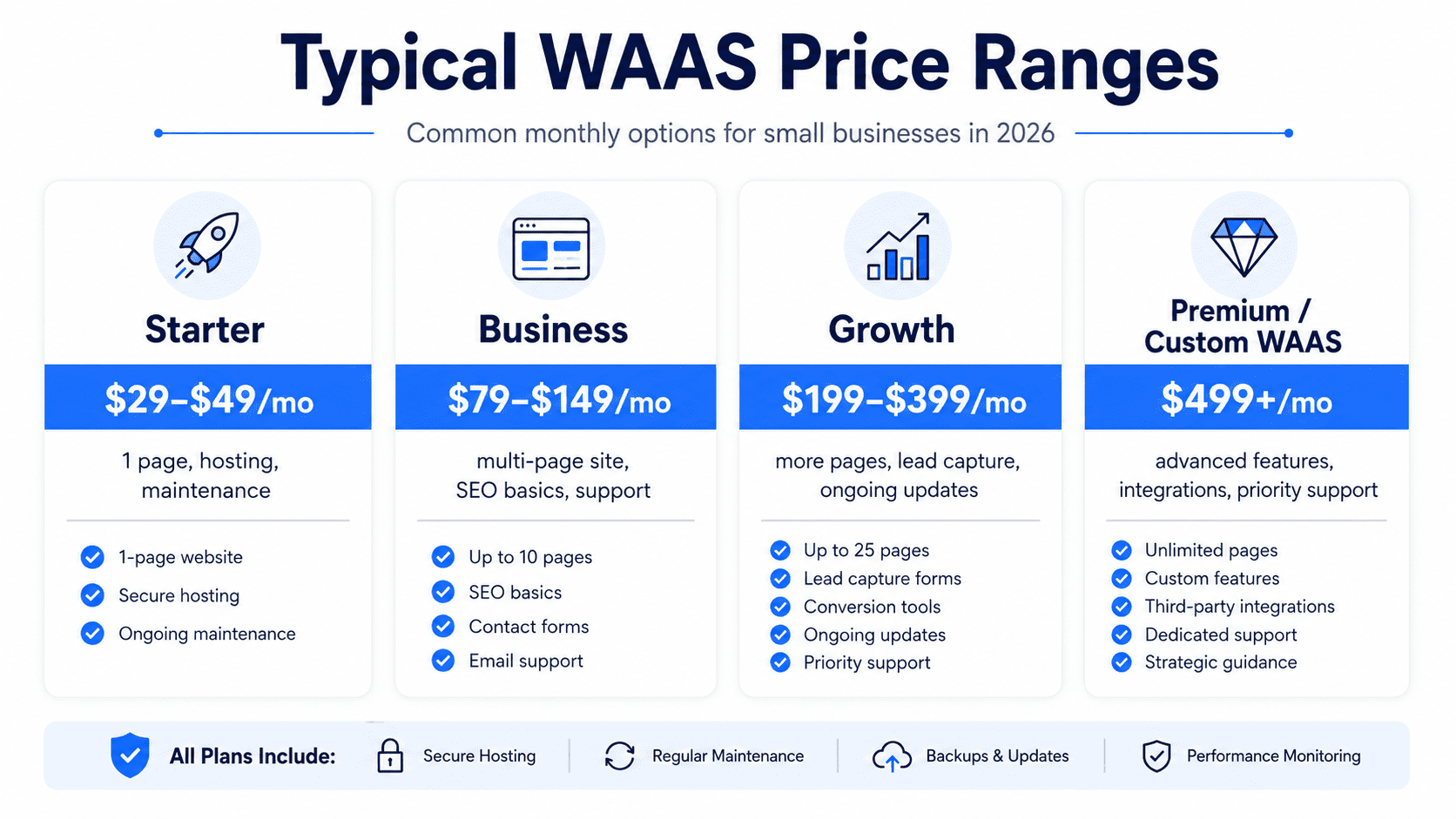
Compare the commercial structure as well as the monthly fee:
- Managed Website pricing combines a monthly service with a clearly stated setup fee
- Website Growth is an upgrade, with the total monthly price stated before you decide
- Growth Partner and Custom Website projects need a scope conversation, not a page-count-only comparison
Some providers may also charge a setup fee, especially if the website requires custom design, copywriting, migration, or extra pages.
Example Monthly Website Plan Structure
| Service | Suitable For | Commercial Model |
|---|---|---|
| Managed Website | A professionally built and managed business website | Monthly service and setup fee |
| Website Growth | Additional ongoing website improvement | Upgrade with a total monthly price |
| Growth Partner | Consultant-led strategic involvement | Consultation before engagement |
| Custom Website | WordPress or bespoke functionality | Quotation based on scope |
See current Bennie Studio pricing for your currency, setup fees and agreed scope. Page counts and support should be confirmed for the service you choose.
Monthly plans are attractive because they reduce the upfront cost and make website expenses easier to budget.
Instead of paying thousands before launch, a business can get started with a smaller monthly payment.
One-Time Website Build Pricing
A one-time website build usually costs more upfront.
Compare the commercial structure as well as the monthly fee:
- $500–$2,500 for a basic freelancer-built website
- $2,500–$8,000 for a professional small business website
- $8,000–$15,000+ for an agency-built website with strategy, design, and copywriting
- $10,000–$30,000+ for a custom website with advanced features
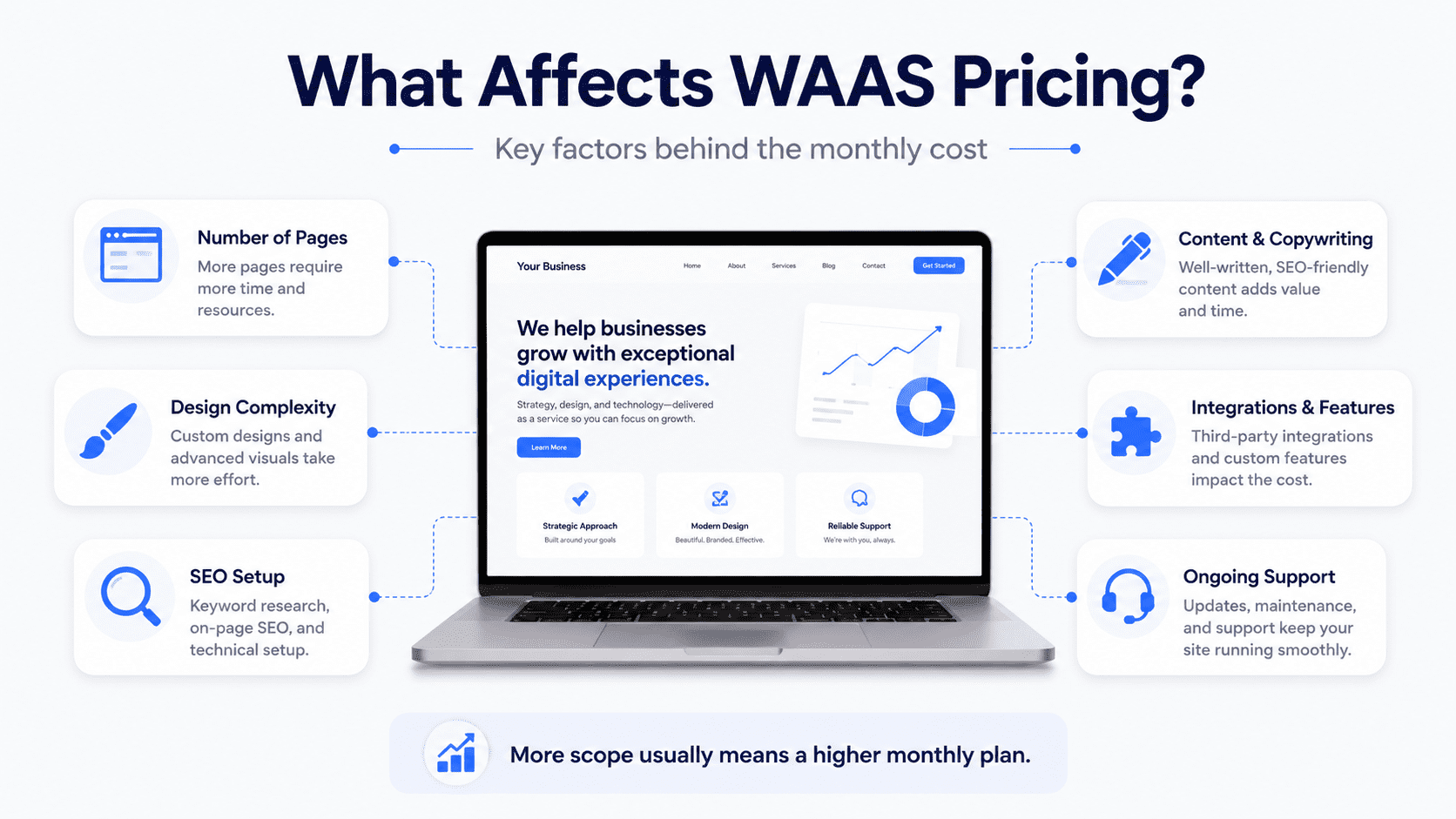
The price depends on the number of pages, design quality, platform, copywriting, SEO requirements, integrations, and complexity.
Example One-Time Website Build Pricing
| Website Type | Typical Upfront Cost | Best For |
|---|---|---|
| Basic Website | $500–$2,500 | Simple business presence |
| Professional Website | $2,500–$8,000 | Small businesses needing stronger design and credibility |
| Agency Website | $8,000–$15,000+ | Businesses needing strategy, copywriting, SEO, and conversion planning |
| Custom Website | $10,000–$30,000+ | Advanced features, integrations, custom design, unique systems |
A one-time build can be a good investment if your business has clear requirements, a strong budget, and a plan for ongoing maintenance after launch.
Hidden Costs to Consider
The upfront or monthly website price is not the only cost to think about. Many businesses underestimate the ongoing costs of running a website.
1. Hosting
Hosting keeps your website online. With a monthly website plan, hosting is often included. With a one-time website build, hosting may be separate.
Typical hosting cost: $5–$100+/month, depending on performance, storage, traffic, and support level.
2. Domain Name
Your domain is your website address. Typical domain cost: $10–$30/year. However, premium domains can cost significantly more.
3. Maintenance
Maintenance includes software updates, backups, security monitoring, plugin checks, bug fixes, and technical troubleshooting. With a monthly website plan, maintenance is usually included. With a one-time website build, it may cost extra.
Typical maintenance cost: $50–$500+/month.
4. Content Updates
Your website will need updates over time. You may need to change services, pricing, photos, team members, testimonials, offers, or contact information.
Some monthly plans include a limited number of updates. With a one-time build, updates are often charged separately.
5. SEO
A website needs SEO if you want customers to find it on Google. Basic SEO may include page titles, meta descriptions, headings, image alt text, and clean URLs.
Ongoing SEO may include blog posts, service pages, location pages, technical SEO, link building, and content optimization. SEO can cost anywhere from a few hundred dollars for setup to thousands per month for competitive campaigns.
6. Copywriting
Website copy is the text that explains your offer and persuades visitors to take action. Many one-time website quotes do not include professional copywriting. That means you may need to write the content yourself or hire a copywriter.
Monthly website plans may include basic copy assistance, depending on the provider.
7. Future Redesigns
A one-time website may need a redesign after a few years if the design becomes outdated or the business changes. A monthly website plan may include ongoing improvements, which can help keep the website fresh over time.
Pros of a Monthly Website Plan
1. Lower Upfront Cost
The biggest benefit of a monthly website plan is that it reduces the initial cost. Instead of paying thousands upfront, you can launch with a manageable monthly payment.
This is useful for startups, local businesses, freelancers, consultants, and small businesses that want to protect cash flow.
2. Predictable Monthly Budget
Monthly website plans make budgeting easier. You know what you are paying every month, and the plan often includes hosting, maintenance, updates, and support.
This avoids surprise costs when something breaks or needs updating.
3. Maintenance Is Usually Included
Many business owners do not want to deal with website maintenance. With a monthly plan, technical support is usually part of the service. That means you do not need to worry about plugin updates, hosting issues, downtime, or security checks.
4. Faster Launch
Monthly website providers often use proven templates, structured onboarding, and repeatable systems. This helps businesses launch faster compared to fully custom projects.
If you need a website quickly, this can be a major advantage.
5. Easier to Improve Over Time
A website should not remain unchanged forever. With a monthly website plan, you may be able to request updates, improve sections, add pages, adjust calls to action, and refine your content as your business grows.
This makes the website feel like an ongoing business asset instead of a one-time project.
6. Great for Small Businesses
Most small businesses do not need a complicated custom website at the beginning. They need a clean, professional, mobile-friendly website that explains their offer, builds trust, and generates enquiries.
A monthly website plan can provide exactly that without a large upfront investment.
Cons of a Monthly Website Plan
1. Long-Term Subscription Cost
A monthly plan is more affordable upfront, but the payments continue over time. After several years, the total subscription cost may be higher than a one-time build.
However, this depends on what is included. If the plan includes hosting, maintenance, support, and updates, the ongoing value may still make sense.
2. Less Customization
Monthly plans are often based on templates or structured systems. This makes them faster and more affordable, but it may limit full design freedom.
If your business needs a highly unique design or complex custom functionality, a monthly website plan may not be enough.
3. Ownership Terms Vary
Not all providers handle ownership the same way.
Before signing up, ask:
- Do I own the content?
- Can I use my own domain?
- Can I export the website?
- What happens if I cancel?
- Is there a minimum contract?
- Can I move the website elsewhere?
A good provider should explain these terms clearly.
4. Feature Limits by Plan
Some monthly plans limit the number of pages, updates, users, blog posts, forms, or integrations.
This is not always a problem, but you should choose a plan that matches your business needs.
Pros of a One-Time Website Build
1. More Control
A one-time website build usually gives you more control over the design, platform, hosting, and future development. This is useful if you want full ownership and flexibility.
2. Greater Customization
Custom website builds can be designed around your exact brand, user journey, and technical requirements. This is valuable for businesses that need advanced layouts, unique interactions, complex integrations, or custom features.
3. No Ongoing Website Subscription
Once the website is paid for, you do not have to keep paying a website subscription fee. However, you may still need to pay for hosting, maintenance, support, tools, and future updates.
4. Better for Complex Projects
A one-time custom build may be the better option if your website needs:
- E-commerce
- Custom booking systems
- Membership features
- Customer portals
- CRM integrations
- Advanced SEO structure
- Multi-location pages
- Custom calculators
- Web application features
Cons of a One-Time Website Build
1. Higher Upfront Cost
A one-time build usually requires a bigger initial investment. This can be difficult for small businesses, especially if they are just starting or still testing their offer.
2. Maintenance Is Often Separate
Many business owners assume that once a website is built, it is finished. In reality, websites need ongoing maintenance.
If maintenance is not included, you may need to hire someone later for updates, fixes, backups, and security checks.
3. Slower Launch Timeline
A custom website project usually takes longer because more planning, design, development, revisions, and testing are involved.
If you need to launch quickly, this may be a disadvantage.
4. Future Changes Can Be Expensive
With a one-time website build, future updates may be charged hourly or as separate projects. Adding new pages, changing layouts, improving SEO, or fixing issues can become expensive over time.
5. Risk of an Outdated Website
If no one maintains or improves the website after launch, it may become outdated. Design trends, customer expectations, SEO requirements, and business offers change over time.
A website that looked good three years ago may no longer perform well today.
Which Option Is Cheaper?
A monthly website plan is usually cheaper at the beginning. A one-time website build may be cheaper over the long term if you keep the website for many years and do not need much support.
However, the comparison is not always that simple.
For example, a one-time website might cost $5,000 upfront. But if you also pay $100 per month for hosting, maintenance, and updates, your total cost continues to grow.
As a hypothetical budgeting example, a service costing $100 per month totals $3,600 over three years before setup fees and extras. This is not a Bennie Studio quotation. Compare the agreed hosting, maintenance, updates and support against a one-time build plus its ongoing costs.
The cheapest option is not always the best option. The better question is: which option gives you the best return for your business stage?
When Should You Choose a Monthly Website Plan?
Choose a monthly website plan if:
- You want to launch quickly
- You have a limited upfront budget
- You want predictable monthly pricing
- You do not want to manage technical maintenance
- You need a professional website but not a fully custom system
- You want hosting and support included
- You are a small business, consultant, freelancer, startup, or service provider
- You want to improve the website over time
- You mainly need enquiries, bookings, calls, or leads
A monthly website plan is a strong choice for businesses that want a practical, affordable, and managed website solution.
When Should You Choose a One-Time Website Build?
Choose a one-time website build if:
- You have a larger upfront budget
- You need full design control
- You need advanced features
- You want stronger ownership and portability
- You have technical support available after launch
- You need complex integrations
- Your website is central to your business operations
- You want a highly custom brand experience
- You are building an e-commerce store, portal, platform, or advanced website
A one-time build is better when your website needs to go beyond a standard business website.
Monthly Website Plan vs One-Time Build: Which Is Better for SEO?
Both options can be good for SEO if they are built correctly.
A monthly website plan can include strong SEO basics such as:
- Optimized page titles
- Meta descriptions
- Clean headings
- Fast loading speed
- Mobile-friendly design
- Image alt text
- Contact information
- Service pages
- Local SEO structure
- Internal links
A one-time custom build can also be excellent for SEO, especially if it includes deeper technical SEO, custom content architecture, schema markup, location pages, blog strategy, and advanced optimization.
The real issue is not whether the website is monthly or one-time. The issue is whether SEO is included in the planning and execution. A beautiful website with poor SEO may struggle to attract visitors.
Monthly Website Plan vs One-Time Build: Which Is Better for Lead Generation?
For lead generation, both models can work.
A monthly website plan can be effective if it includes:
- Strong homepage messaging
- Clear calls to action
- Contact forms
- WhatsApp or phone buttons
- Booking links
- Trust elements
- Service sections
- FAQs
- Testimonials
- Fast mobile experience
A one-time custom website may be better if your lead generation process is more advanced, such as:
- Custom quote forms
- Lead scoring
- CRM integration
- Multi-step funnels
- Landing pages for paid ads
- Personalization
- Advanced analytics
- Automated follow-up flows
For most small businesses, a well-structured monthly website plan can generate leads effectively. For more complex sales systems, a custom build may be better.
The Best Choice for New Businesses
For new businesses, a monthly website plan is often the smarter starting point. At the beginning, your offer, pricing, target audience, and messaging may still change. Spending thousands on a custom website too early can be risky.
A monthly website plan lets you launch quickly, look professional, and start testing your market without a large upfront cost. Once your business grows and your website needs become clearer, you can upgrade later.
The Best Choice for Growing Businesses
For growing businesses, the right choice depends on your next stage. If your website mainly needs better design, better messaging, more trust, and more enquiries, a monthly website plan may still be enough.
If your website needs advanced functionality, deeper SEO architecture, custom integrations, or a unique customer experience, a one-time custom build may be worth considering.
Final Verdict: Monthly Website Plan or One-Time Website Build?
Choose a monthly website plan if you want a lower upfront cost, faster launch, predictable pricing, ongoing maintenance, and a managed website experience. Choose a one-time website build if you need full customization, advanced functionality, stronger ownership, and have the budget to invest upfront.
For most small businesses, a monthly website plan is the better starting point because it is affordable, convenient, and easier to manage. For established businesses with complex needs, a one-time custom website build can be a better long-term investment.
The best choice depends on your business stage, not just the price.
If your goal is to launch quickly, build trust, and start generating leads, a monthly website plan may be the right move. If your website needs to become a custom digital system, a one-time build may be the better choice.
Before comparing delivery models, understand what website as a service means, including ongoing hosting, maintenance and support.