One of the first questions business owners ask before building a website is simple: how much does a small business website cost in 2026?
The honest answer is: it depends on what you need.
A simple one-page website will cost much less than a custom website with booking systems, e-commerce, automation, SEO content, and advanced design. A DIY website builder can cost only a monthly subscription, while a professionally built website can cost thousands upfront.
For small businesses, the real question is not just “How much does a website cost?” It is “What type of website do I need, and what should I expect to pay for a website that actually helps my business grow?”
This guide breaks down the average cost of a small business website in 2026, what affects the price, hidden costs to watch for, and how to choose the right website option for your budget.
Average Small Business Website Cost in 2026
In 2026, a small business website can cost anywhere from under $50 per month to $10,000 or more upfront, depending on how the website is built.
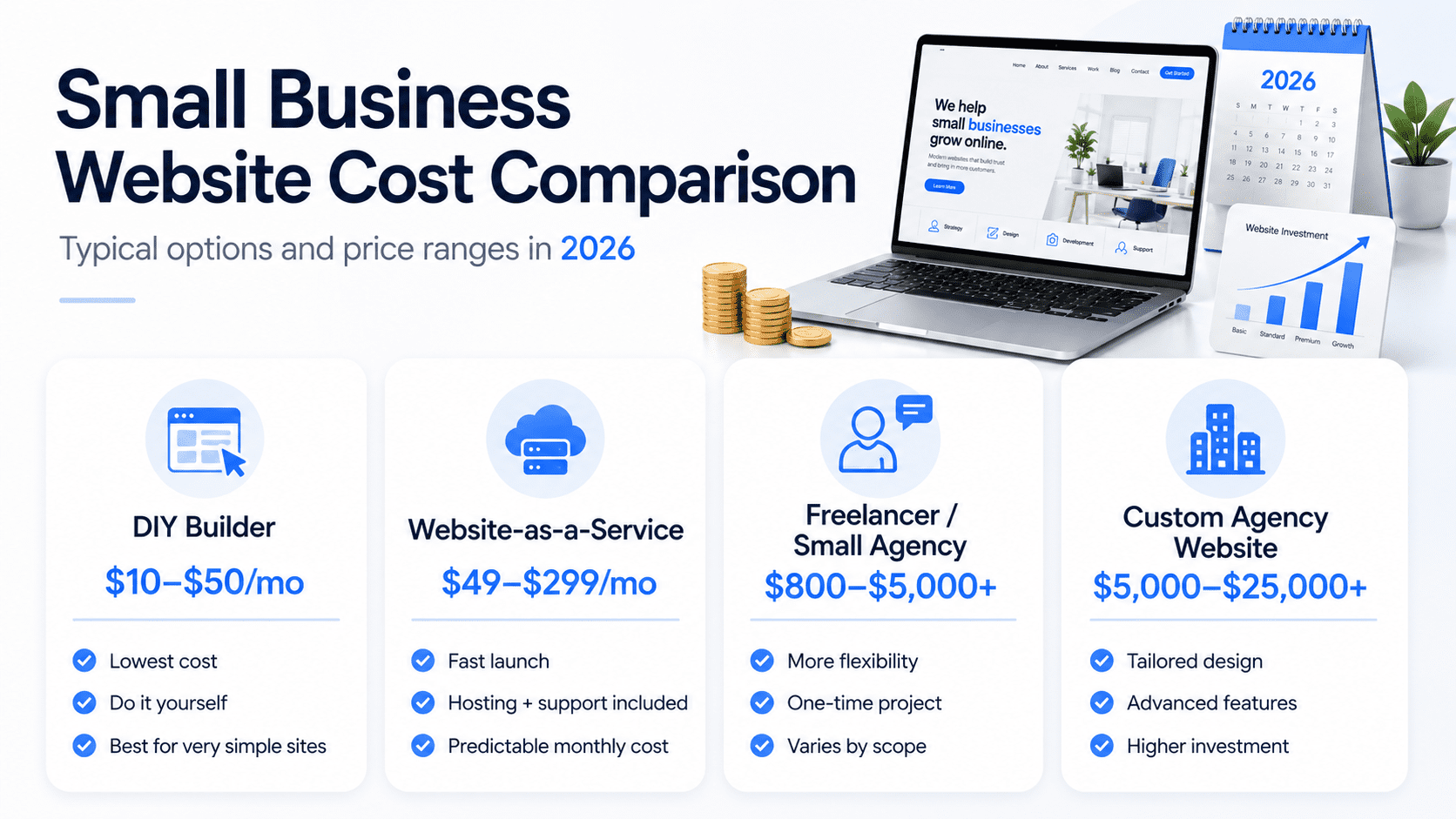
Here is a simple breakdown:
| Website Type | Typical Cost Range | Best For |
|---|---|---|
| DIY website builder | $10–$60/month | Very small businesses, personal brands, basic online presence |
| Website-as-a-Service | Provider-specific monthly price and any setup fee | Small businesses that want a managed website without high upfront cost |
| Freelancer-built website | $500–$5,000+ | Businesses that need a simple custom website |
| Agency-built website | $3,000–$15,000+ | Businesses that need strategy, design, copywriting, and support |
| Fully custom website | $10,000–$30,000+ | Complex projects, advanced features, custom systems |
| E-commerce website | $2,000–$40,000+ | Online stores, product catalogs, checkout systems |
For most small businesses, a professional website usually falls into one of three categories: DIY, subscription-based, or custom-built.
Each option has a different cost structure.
Why Website Costs Vary So Much
Website pricing can feel confusing because not all websites are built the same way.
A website for a local cleaning business may only need a homepage, services page, about page, and contact form. A website for a clinic may need appointment booking, service pages, staff profiles, reviews, compliance content, and location SEO. An online store may need product pages, payment processing, shipping settings, inventory management, and email automation.
The more strategy, design, content, functionality, and support you need, the more the website will cost.
The final price usually depends on:
- Number of pages
- Design complexity
- Copywriting requirements
- SEO setup
- Website platform
- Hosting and maintenance
- E-commerce functionality
- Booking or payment integrations
- Custom forms
- Blog setup
- Speed optimization
- Ongoing support
- Whether the site is template-based or custom-built
A cheap website is usually cheaper because it includes less strategy, less customization, less support, or less long-term flexibility.
Option 1: DIY Website Builder Cost
A DIY website builder is usually the cheapest way to launch a website.
Platforms like Wix, Squarespace, Shopify, WordPress.com, and similar tools allow business owners to build websites using templates and drag-and-drop editors. You pay a monthly subscription, choose a template, add your content, connect your domain, and publish the website.
Typical DIY Website Builder Cost
A DIY website builder usually costs around:
- $10–$60 per month for a basic business website
- $25–$100+ per month for e-commerce or advanced features
- $10–$30 per year for a domain name
- Extra fees for premium apps, email, booking tools, or marketing features
This option is affordable, but it requires your time.
You will need to write the content, choose the layout, upload images, structure the pages, optimize for mobile, set up SEO, and make sure everything works properly.
Best For
DIY website builders are best for:
- New businesses with very limited budgets
- Personal brands
- Simple portfolios
- Side projects
- Businesses that only need a basic online presence
Main Limitation
The biggest issue with DIY websites is not the software. It is the execution.
Many DIY websites look unfinished because the business owner is not a web designer, copywriter, SEO specialist, or conversion strategist. A DIY site can save money upfront, but it may cost you leads if the messaging, layout, speed, or mobile experience is weak.
Option 2: Website-as-a-Service Cost
Website-as-a-Service, also known as WAAS, is becoming a popular option for small businesses in 2026.
Instead of paying a large upfront fee for a website, you pay a monthly subscription for a managed website package. The service may include design, hosting, maintenance, updates, support, basic SEO, and ongoing improvements.
Typical Website-as-a-Service Cost
Managed website subscription costs depend on the provider and scope:
- The monthly fee should cover the agreed website scope and ongoing service
- Higher monthly pricing for advanced support, more pages, SEO content, or custom features
- Sometimes a small setup fee, depending on the provider
This model is useful because it reduces the upfront cost. Instead of paying thousands before launch, you can spread the cost monthly.
Best For
Website-as-a-Service is best for:
- Small businesses that want a professional website without a large upfront payment
- Local service businesses
- Consultants and freelancers
- Coaches and agencies
- Startups testing a new offer
- Business owners who do not want to manage hosting or maintenance
Main Advantage
The main benefit of WAAS is convenience.
You are not just paying for a website. You are paying for a managed service that keeps the website online, updated, supported, and easier to improve over time.
For many small businesses, this is more practical than building a website once and then having no one maintain it.
Option 3: Freelancer Website Cost
Hiring a freelance web designer or developer is another common option.
Freelancers can be more affordable than agencies, especially for smaller projects. They can help you create a more professional website than a DIY builder, while still keeping costs relatively controlled.
Typical Freelancer Website Cost
A freelance-built small business website may cost around:
- $500–$2,500 for a basic website
- $2,500–$5,000+ for a more polished business website
- Additional monthly cost for hosting, maintenance, edits, or support
Pricing depends on the freelancer’s experience, location, portfolio, and scope of work.
Best For
Freelancers are best for:
- Small businesses with a defined project scope
- Businesses that want some customization
- Simple websites with a limited number of pages
- Owners who are comfortable managing some parts after launch
Main Limitation
The quality can vary a lot.
Some freelancers are excellent. Others may only provide basic design without strong copywriting, SEO, performance optimization, or long-term support.
Before hiring a freelancer, review their portfolio, ask what is included, and clarify who will maintain the website after launch.
Option 4: Agency Website Cost
A web design agency usually costs more than a freelancer, but it may provide a more complete service.
An agency may include strategy, branding, web design, development, copywriting, SEO setup, analytics, conversion planning, and project management.
Typical Agency Website Cost
An agency-built small business website may cost around:
- $3,000–$8,000 for a standard small business website
- $8,000–$15,000+ for a more strategic or custom website
- Monthly maintenance plans may cost extra
Agency pricing is higher because you are usually paying for a team, not just one person.
Best For
Agencies are best for:
- Businesses that need a more professional brand presence
- Companies with a higher marketing budget
- Businesses that need copywriting, SEO, and design strategy
- Teams that want a more structured project process
- Businesses that want a website built for lead generation
Main Advantage
A good agency does more than make the website look nice.
It should help you structure the website around your offer, audience, user journey, and conversion goals. This can make the website more useful as a sales and marketing asset.
Option 5: Custom Website Cost
A custom website is designed and developed specifically for your business.
This option gives you the highest level of flexibility, but it also costs the most. A custom website may include unique design, advanced functionality, custom integrations, animations, dashboards, portals, booking flows, or complex content structures.
Typical Custom Website Cost
A custom website may cost around:
- $10,000–$30,000+ for advanced custom design and development
- More for web applications, marketplaces, portals, enterprise features, or complex integrations
Best For
Custom websites are best for:
- Established businesses
- Companies with advanced requirements
- Businesses that need custom functionality
- Brands that want a unique digital experience
- Companies where the website is central to operations
Main Limitation
A custom website is not always necessary for a small business.
If your business only needs a professional website to explain services, build trust, and collect leads, a fully custom build may be more than you need at the beginning.
E-Commerce Website Cost in 2026
An e-commerce website usually costs more than a standard business website because it needs more functionality.
You need product pages, a shopping cart, a checkout, a payment gateway, shipping settings, tax settings, order management, email notifications, and security.
Typical E-Commerce Website Cost
A small e-commerce website may cost around:
- $30–$300+ per month using an e-commerce website builder
- $2,000–$10,000+ for a professionally built online store
- $10,000–$40,000+ for a custom e-commerce website
Costs increase when you need product filters, subscriptions, memberships, wholesale pricing, custom checkout, abandoned cart automation, or integrations with inventory and accounting systems.
Hidden Website Costs Small Businesses Should Know
The website build is not the only cost.
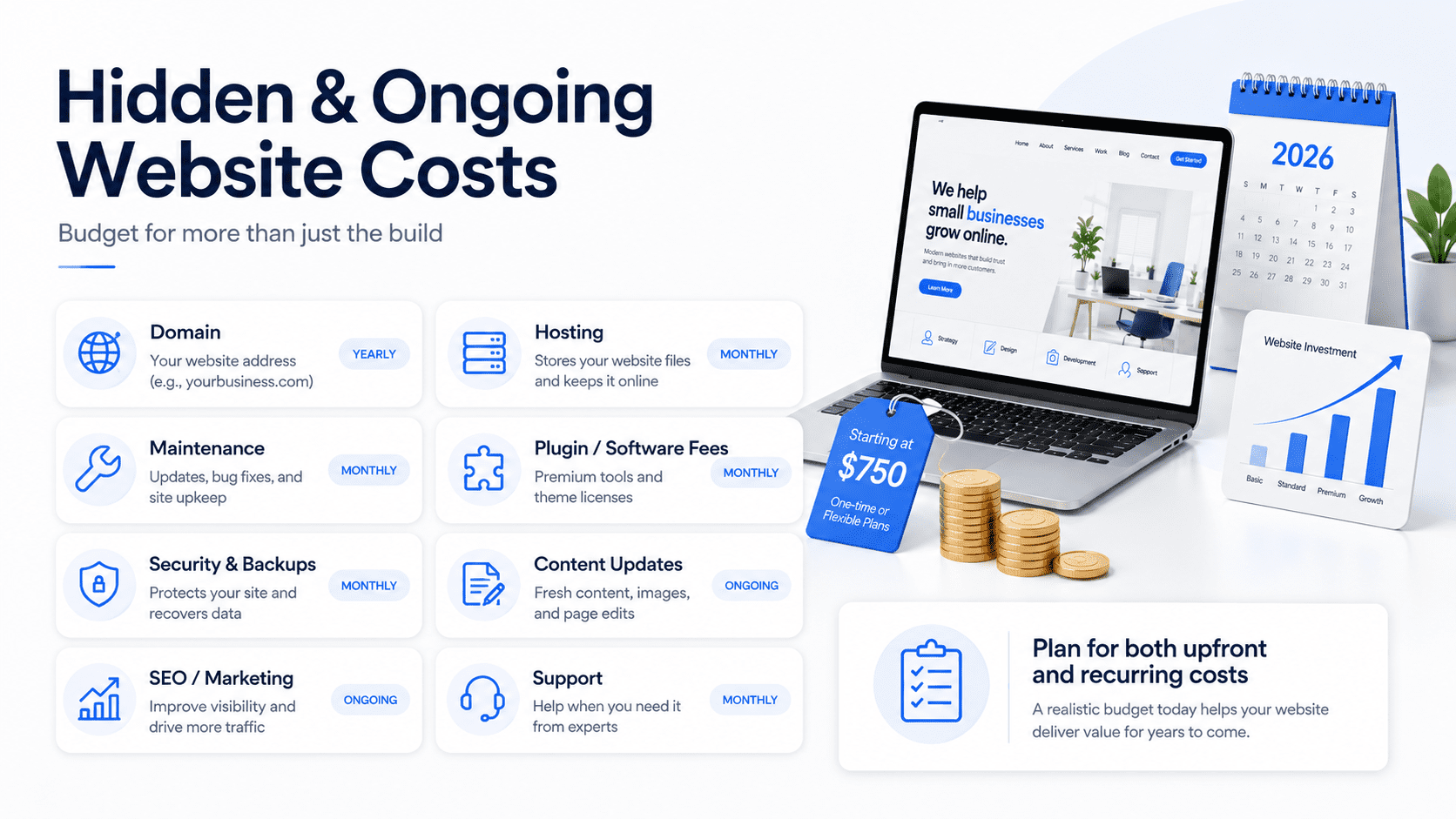
Many business owners only budget for design and development, but there are other costs involved in launching and maintaining a website.
1. Domain Name
Your domain is your website address.
Typical cost: $10–$30 per year
Premium domain names can cost much more.
2. Website Hosting
Hosting keeps your website online.
Typical cost: $5–$100+ per month, depending on the platform, traffic, performance, and support level.
Some website builders and WAAS providers include hosting in the monthly fee.
3. Website Maintenance
Maintenance may include software updates, backups, security checks, bug fixes, uptime monitoring, and small content changes.
Typical cost: $50–$500+ per month, depending on support level.
4. Copywriting
Website copy is the text on your pages.
Good copy explains your offer clearly, builds trust, and encourages visitors to take action.
Typical cost: $300–$3,000+, depending on the number of pages and quality of writing.
5. SEO Setup
Basic SEO helps search engines understand your website.
This may include page titles, meta descriptions, heading structure, keyword research, image alt text, internal links, and technical checks.
Typical cost: $300–$3,000+ for setup, with ongoing SEO costing more.
6. Images and Branding
You may need professional images, stock photos, icons, logo design, or brand assets.
Typical cost: $0–$2,000+, depending on what you already have.
7. Plugins, Apps, and Integrations
Many websites need extra tools for forms, bookings, live chat, analytics, email marketing, CRM, security, or e-commerce.
Typical cost: $10–$300+ per month, depending on the tools used.
8. Future Updates
Your business will change over time. You may need new pages, revised services, updated pricing, landing pages, blog content, or design improvements.
These updates may be included in your plan or charged separately.
What Affects the Cost of a Small Business Website?
Several factors influence how much your website will cost.
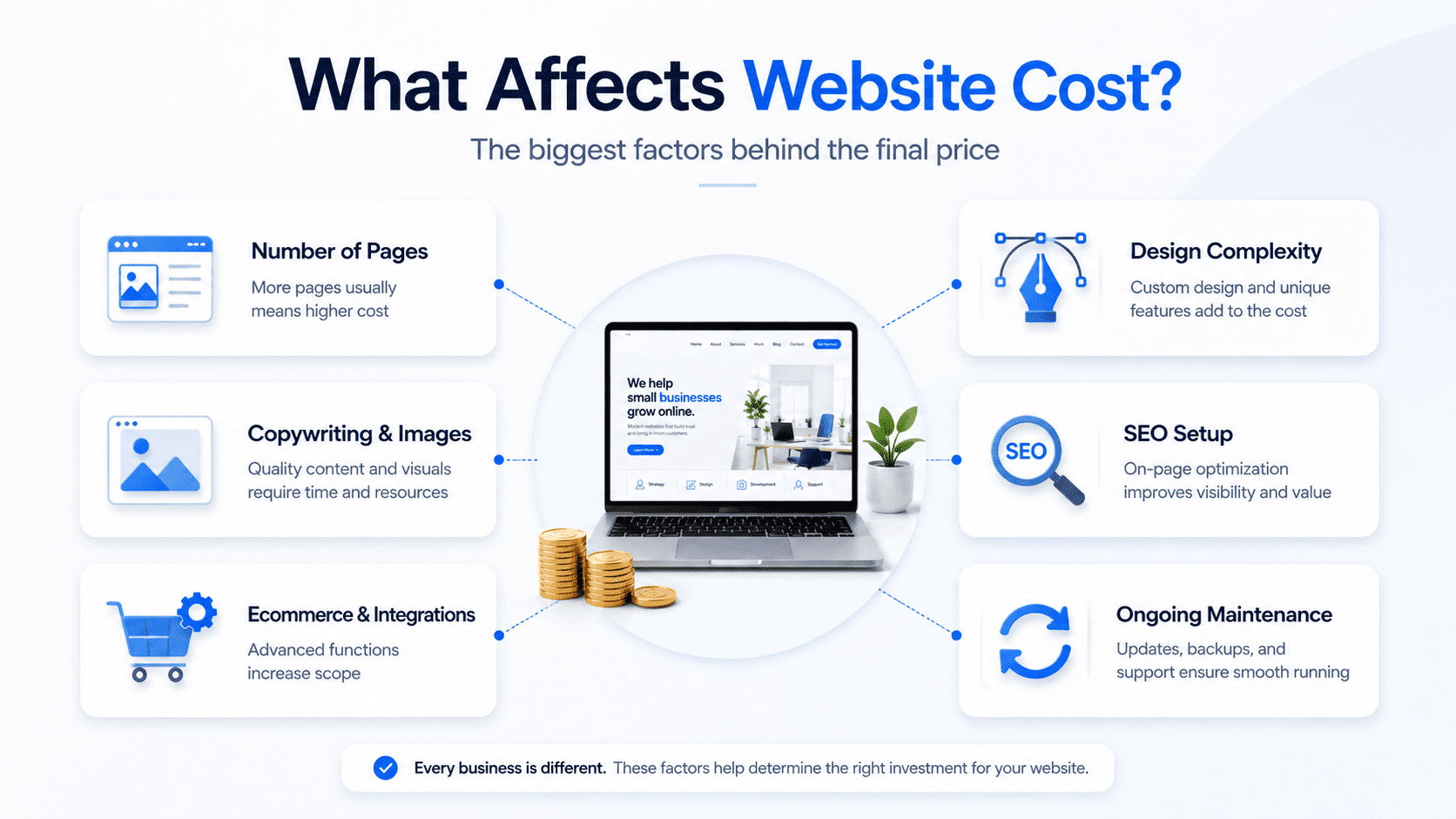
1. Number of Pages
A one-page website is cheaper than a five-page or ten-page website.
Common small business pages include:
- Homepage
- About page
- Services page
- Individual service pages
- Pricing page
- Contact page
- Blog
- FAQ page
- Location pages
- Testimonials or case studies
More pages mean more design, writing, editing, SEO setup, and testing.
2. Design Quality
A basic template design costs less than a custom-designed brand experience.
However, cheaper design is not always better. Your website needs to look credible, especially if customers compare you with competitors before contacting you.
3. Content and Copywriting
Many website projects are delayed because the business owner does not have content ready.
If you need the provider to write professional website copy, the cost will increase. But strong copy can also make your website perform much better.
4. SEO Requirements
Basic SEO is usually simple. Advanced SEO takes more planning.
A local business may need service pages, location pages, Google Business Profile optimization, blog content, schema markup, and internal linking.
The more competitive your industry, the more SEO work your website may need.
5. Functionality
A simple brochure website costs less than a website with booking, payment, automation, membership, customer login, or CRM integration.
Functionality is one of the biggest reasons website costs increase.
6. Platform
The platform also affects cost.
Common platforms include:
- WordPress
- Wix
- Squarespace
- Shopify
- Webflow
- Custom-coded websites
- Website-as-a-Service platforms
Each has different pricing, flexibility, maintenance needs, and long-term costs.
7. Ongoing Support
A website without support may be cheaper upfront, but it can become stressful later.
If you want someone to handle updates, fixes, content changes, and improvements, you should budget for ongoing support.
Cheap Website vs Professional Website: What Is the Difference?
A cheap website may be fine if you only need a basic online presence.
But if your website needs to generate leads, build trust, and support your marketing, you should think beyond the lowest price.
A professional website usually includes:
- Clear messaging
- Mobile-friendly design
- Strong calls to action
- Fast loading speed
- SEO setup
- Trust elements
- Contact forms
- Analytics
- Clean navigation
- Good user experience
- Ongoing support
A cheap website often misses some of these elements. The danger is that you may save money upfront but lose potential customers because the website does not look trustworthy or does not guide visitors to take action.
How Much Should a Small Business Spend on a Website?
There is no single perfect amount, but here is a practical guide:
Spend less if:
- You are just starting
- You have not validated your offer yet
- You only need a simple online presence
- You have time to manage the website yourself
- You do not need advanced features
Invest more if:
- Your website is your main source of leads
- You run paid ads
- You need strong SEO
- You sell high-value services
- Your competitors have professional websites
- You need booking, payment, or automation
- Your brand credibility matters
For many small businesses, the best starting point is not the cheapest website or the most expensive website. It is the website that fits your current stage and gives you room to grow.
Website Cost by Business Stage
New Business
Recommended option: DIY website builder or Website-as-a-Service
Estimated cost: $10–$300/month
A new business may not need a fully custom website yet. The priority is to launch quickly, look credible, and start collecting leads.
Growing Small Business
Recommended option: Website-as-a-Service, freelancer, or agency
Budgeting approach: compare a managed subscription with an itemised project quotation, then include ongoing costs
At this stage, your website should support lead generation, SEO, and clear positioning.
Established Business
Recommended option: Agency or custom website
Estimated cost: $5,000–$30,000+
An established business may need stronger branding, advanced SEO, custom functionality, content strategy, integrations, and performance optimization.
How to Avoid Overpaying for a Website
Before hiring anyone or choosing a website plan, define what your website actually needs to do.
Ask yourself:
- Do I need a simple website or a sales-focused website?
- How many pages do I need?
- Do I need online payments?
- Do I need appointment booking?
- Do I need SEO content?
- Do I need blog posts?
- Do I need ongoing support?
- Who will update the website after launch?
- What is included in the price?
- Are there any monthly fees?
- Can the website grow later?
A clear scope helps you avoid paying for features you do not need.
How to Avoid Underpaying for a Website
Underpaying can also be a problem.
If the website is too cheap, it may come with weak design, poor mobile layout, no SEO setup, slow loading speed, bad copy, limited support, or unclear ownership.
Before choosing the lowest price, ask:
- Will this website make my business look professional?
- Will it help visitors understand my offer?
- Will it work well on mobile?
- Will it load quickly?
- Will it be easy for customers to contact me?
- Will it be optimized for Google?
- Will I get support after launch?
A website should not be treated as just an expense. It should be a business asset.
Is Website-as-a-Service a Good Option in 2026?
For many small businesses, yes.
Website-as-a-Service is a strong option if you want a professional website without a large upfront cost. It gives you a more predictable monthly expense and can include hosting, maintenance, updates, and support.
This is especially useful for business owners who want to focus on running their business instead of managing website technology.
WAAS may not be the best fit if you need complex custom functionality, full ownership of every technical layer, or a highly unique digital experience. But for many small business websites, it offers a practical balance between cost, quality, and convenience.
Final Answer: How Much Does a Small Business Website Cost in 2026?
A small business website in 2026 can cost anywhere from $10 per month for a basic DIY website to $30,000+ for a fully custom website.
Most small businesses should expect one of these ranges:
- DIY website: $10–$60/month
- Website-as-a-Service: Provider-specific monthly price and any setup fee
- Freelancer website: $500–$5,000+
- Agency website: $3,000–$15,000+
- Custom website: $10,000–$30,000+
- E-commerce website: $2,000–$40,000+
The right choice depends on your budget, timeline, goals, and how important the website is to your business growth.
If you only need a simple online presence, a DIY builder may be enough.
If you want a professional, managed website without a large upfront cost, Website-as-a-Service may be the best option.
And if you need advanced design, custom features, or complex integrations, a custom website may be worth the investment.
The best website is not always the cheapest or the most expensive. It is the one that helps your business look credible, communicate clearly, and turn visitors into customers.