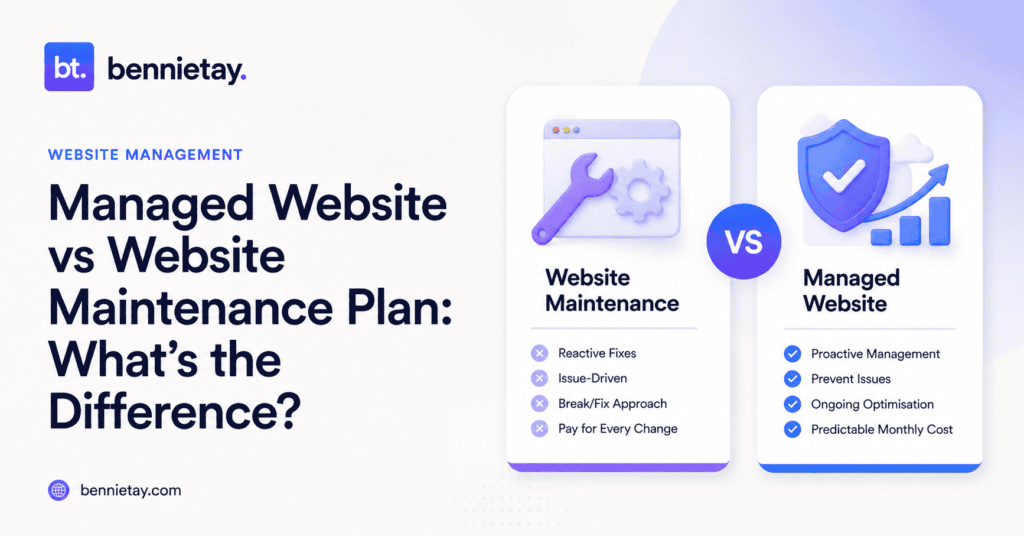
A website maintenance plan and a managed website service may sound like the same thing.
Both usually involve a monthly fee. Both may include updates, backups and technical support. And both are designed to prevent your website from becoming something nobody touches until it breaks.
But they solve different problems.
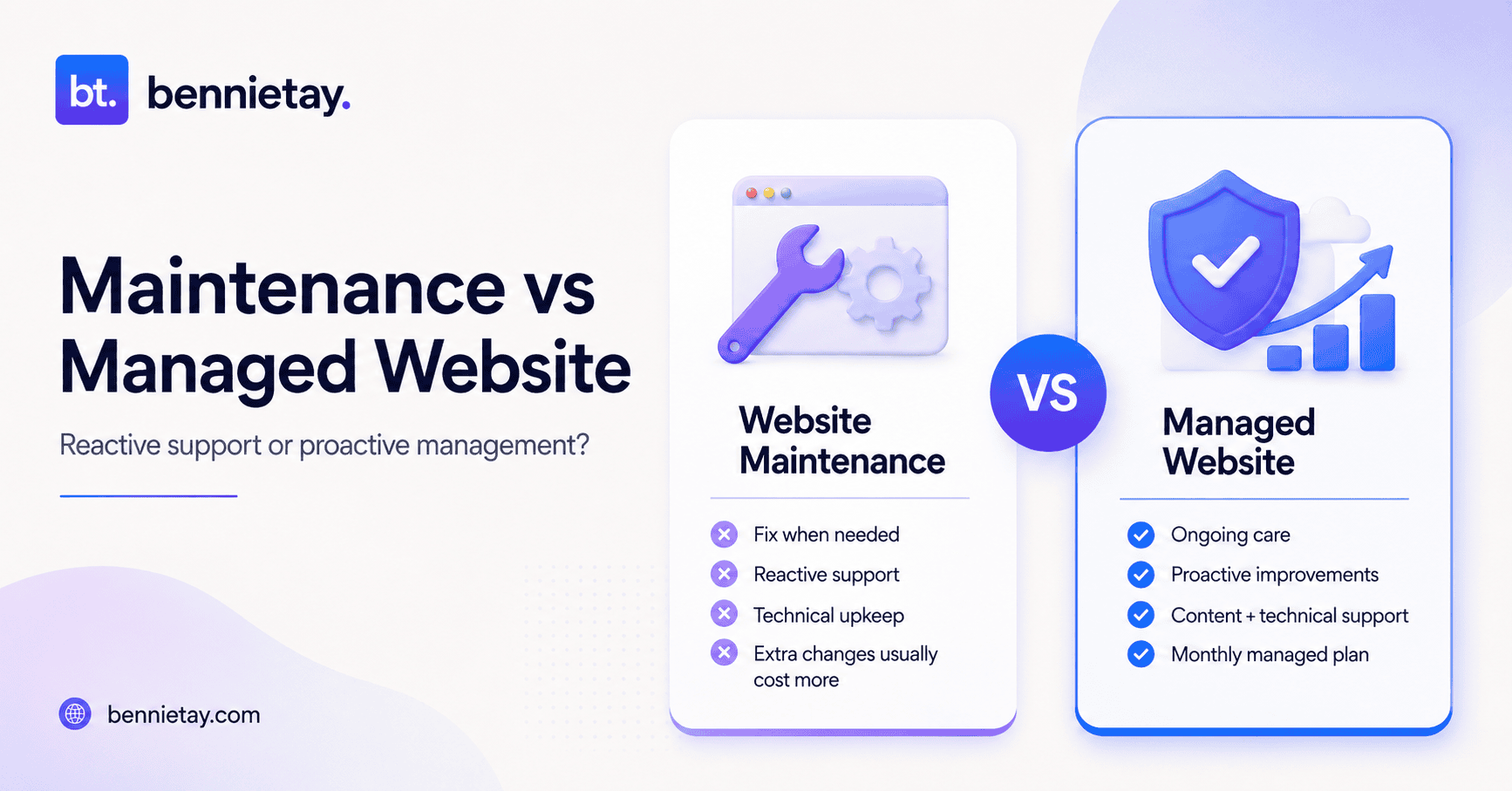
A website maintenance plan is mainly about keeping an existing website secure, functional and technically healthy.
A managed website service goes further. It treats the website as an ongoing business asset that should be maintained, updated and improved over time.
That distinction matters if your website is expected to do more than simply stay online.
If your business relies on the website to generate enquiries, support marketing campaigns, explain services or convert visitors into customers, technical maintenance alone may not be enough.
Here is how the two models differ, what each normally includes and which one makes more sense for different types of businesses.
Quick Answer: Maintenance vs Managed Website
The simplest way to understand the difference is this:
Website maintenance asks:
Is the website working properly?
Managed website service asks:
Is the website working properly, and is it still helping the business?
A maintenance plan typically focuses on:
- software updates
- backups
- security
- uptime
- technical fixes
A managed website service may include all of those things, plus:
- content changes
- landing pages
- conversion improvements
- analytics
- SEO improvements
- design updates
- ongoing business support
The right choice depends on how important your website is to your business.
Software updates
If your website runs on WordPress or another content management system, the software requires regular updates. Themes, plugins and the core platform may all receive bug fixes, compatibility improvements and security patches.
Website backups
Regular backups help protect the website if something goes wrong. If a bad update, accidental deletion or security incident damages the site, a recent backup makes recovery much easier.
Security monitoring
Maintenance may include malware scans, login protection, firewall checks and security updates.
Uptime monitoring
Monitoring tools can alert the maintenance provider if the website becomes unavailable.
Technical fixes
If a plugin breaks, a form stops working or a minor technical issue appears, the provider may fix it as part of the plan.
The overall objective is straightforward:
Keep the existing website running properly.
For many businesses, that is exactly what they need. But maintenance normally does not automatically mean the website is being actively improved.
1. Your Website Generates Leads
If potential customers use the website to:
- request quotations
- send WhatsApp enquiries
- make bookings
- submit contact forms
- call your team
then the website is part of your sales process. At that point, you should care about more than whether WordPress is updated.
You should also care about:
- whether the CTA is clear
- whether forms are working
- whether mobile visitors can contact you easily
- whether service pages explain the offer properly
- whether important pages are converting
A managed website model is usually better suited to this.
2. Your Services Change Regularly
Businesses rarely stay exactly the same.
You may:
- add a new service
- stop offering something
- change pricing
- expand into a new location
- introduce a promotion
- update your team
- change your business positioning
If your website cannot keep up with these changes, it gradually becomes less accurate. And an outdated website is often worse than a simple one. A managed approach makes ongoing changes easier because the website is expected to evolve.
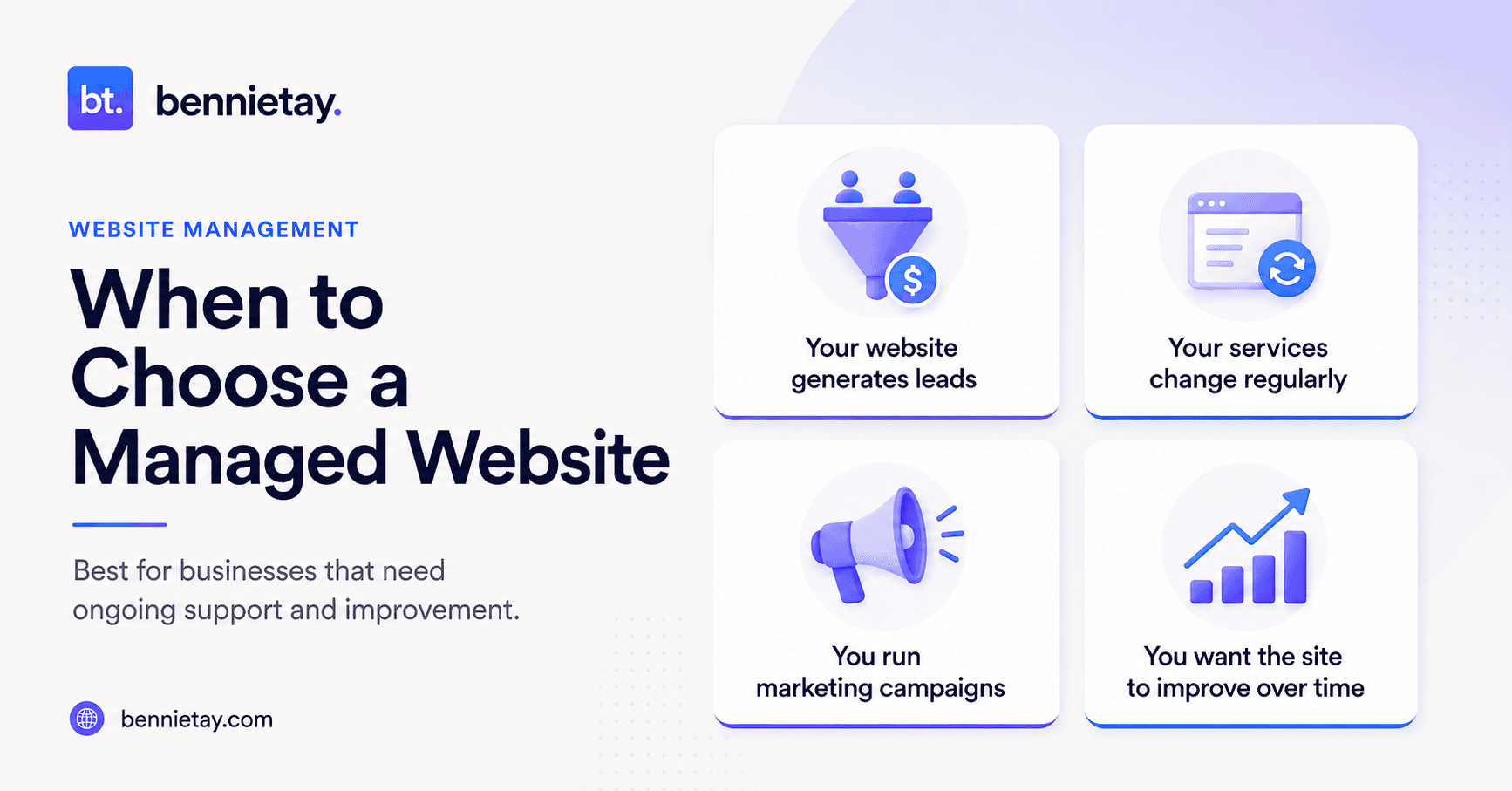
3. You Run Marketing Campaigns
If you run:
- Google Ads
- Meta Ads
- email campaigns
- social media campaigns
- seasonal promotions
you may regularly need new landing pages or changes to existing pages.
A maintenance-only plan usually does not cover this type of work. You either pay separately for every campaign or coordinate with another freelancer. A managed website arrangement can reduce that friction.
4. You Want the Website to Improve Over Time
Many websites are launched and then left almost untouched. The problem is that the first version is rarely perfect.
You may discover that visitors:
- are not clicking your CTA
- leave important pages quickly
- struggle to find pricing
- do not understand your services
- prefer WhatsApp over forms
These insights should influence future improvements. A managed website service can support this ongoing optimisation.
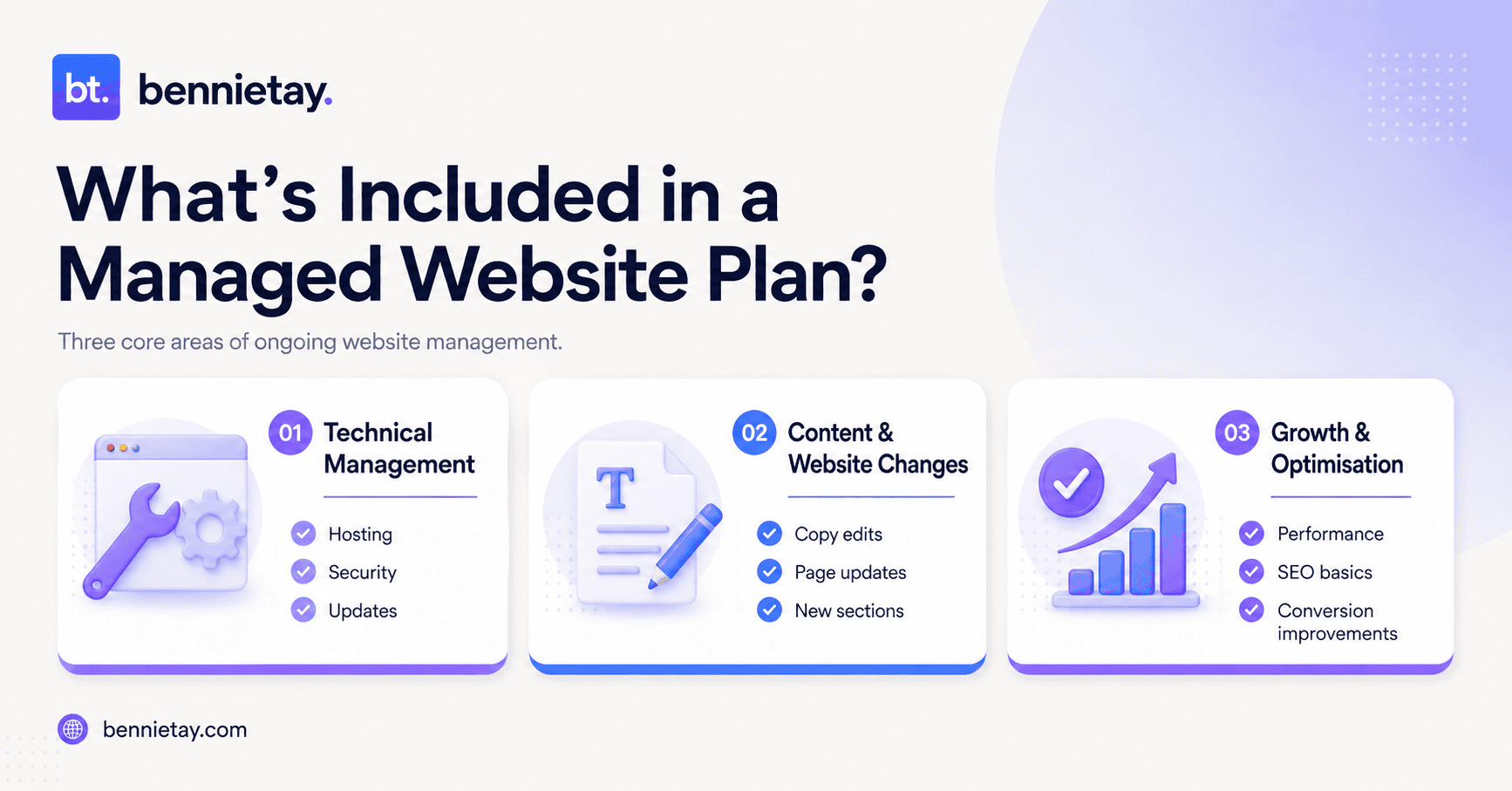
1. Technical Management
This may include:
- hosting
- backups
- software updates
- security
- uptime monitoring
- technical fixes
These are the foundations. Without them, the website is not really being managed.
2. Content and Website Changes
A managed plan may include:
- text changes
- image updates
- service-page changes
- new sections
- new pages
- promotions
- campaign landing pages
The exact allowance should be clearly defined. “Unlimited changes” can sound attractive, but businesses should still understand what counts as a normal update and what counts as a major development project.
3. Growth and Optimisation
More comprehensive plans may include:
- analytics reviews
- conversion improvements
- technical SEO
- local SEO updates
- content publishing
- internal linking
- page optimisation
- lead tracking
This is where website management starts becoming part of the marketing function.
What exactly is included every month?
Avoid vague promises such as “full support”. Ask for the actual scope.
Are website changes included?
Find out how much content editing is covered.
Can new pages be added?
Some plans cover only existing pages.
Is hosting included?
Do not assume it is.
Are backups automatic?
Ask how often they happen and how long they are retained.
Is security monitoring included?
Software updates alone are not the same as active security monitoring.
What happens if the website goes down?
Understand the support process and response time.
Are analytics reviewed?
This matters if you expect the website to generate enquiries.
Are SEO improvements included?
Full SEO is usually a separate service, but some technical or on-page improvements may be part of a managed plan.
What happens if I need something outside the plan?
You should understand any additional hourly or project charges. Clear scope prevents unpleasant surprises later.
Is a managed website the same as website maintenance?
Not usually.
Maintenance focuses mainly on technical stability, security, updates and backups. A managed website service usually adds ongoing content changes, optimisation and support for business growth.
Does a managed website include hosting?
Often, but not always. Check the scope of the service before assuming hosting, domain renewal or email hosting are included.
Can I keep my existing website and add a managed plan?
In many cases, yes. The provider may first need to review the existing website, hosting setup, platform and technical condition.
Do managed website plans include SEO?
Some include basic or technical SEO improvements. Full SEO campaigns involving content strategy, extensive keyword research and link building may still be separate.
Is website management worth it for a small business?
It can be, especially if the website generates enquiries and the business does not have internal staff responsible for updating and improving it. If the website is mainly a static brochure, traditional maintenance may be enough.
Can I manage my own website?
Yes.
If you are comfortable with hosting, backups, software updates, content changes and troubleshooting, you can manage the website internally. The trade-off is time and responsibility.
Your Website Should Not Stop Improving After Launch
A business changes. Services change. Customer expectations change. Marketing campaigns change. Your website should be able to change with them.
At Bennie Studio, managed website plans are designed for businesses that want more than technical maintenance. The goal is to keep the website secure and functional while also supporting ongoing updates, content changes and improvements as the business develops.
You do not need to coordinate separate hosting providers, designers and developers every time something needs changing.
Explore Managed Website Plans →
Already have a website and unsure whether you need maintenance or full management?
Get a Free Website Growth Audit →