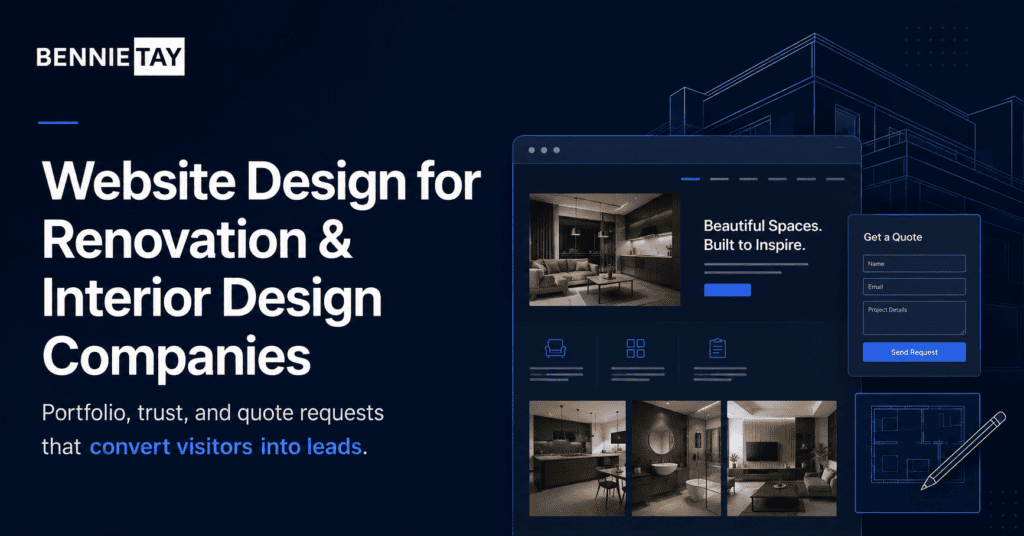
A renovation or interior design company website has one very important job: it must help potential customers trust you before they contact you.
The goal is not to add more words for the sake of length. The goal is to answer the questions a serious buyer is already asking, remove uncertainty, and make the next step feel obvious, useful, and worth taking.
When writing this section, use concrete details instead of broad claims. Replace vague lines such as “we provide quality service” with details about the offer, timeline, deliverables, target customer, common problems solved, and what makes the experience easier for the buyer.
Why Renovation Websites Need More Trust Than Normal Service Websites
Renovation and interior design are high-consideration services. Customers usually do not make a decision after seeing one photo or reading one sentence. They compare, research, save references, ask family members, check reviews, and look for signs that the company is reliable.
Trust signals work best when they are specific. Use real project examples, before-and-after context, client outcomes, reviews, certifications, process details, and clear expectations so visitors can judge whether your business is credible before they contact you.
Place proof close to the claim it supports. If you say you deliver fast turnaround, show the timeline. If you say you improve enquiries, show the result. If you say your process is organised, show the steps, documents, or examples that prove it.
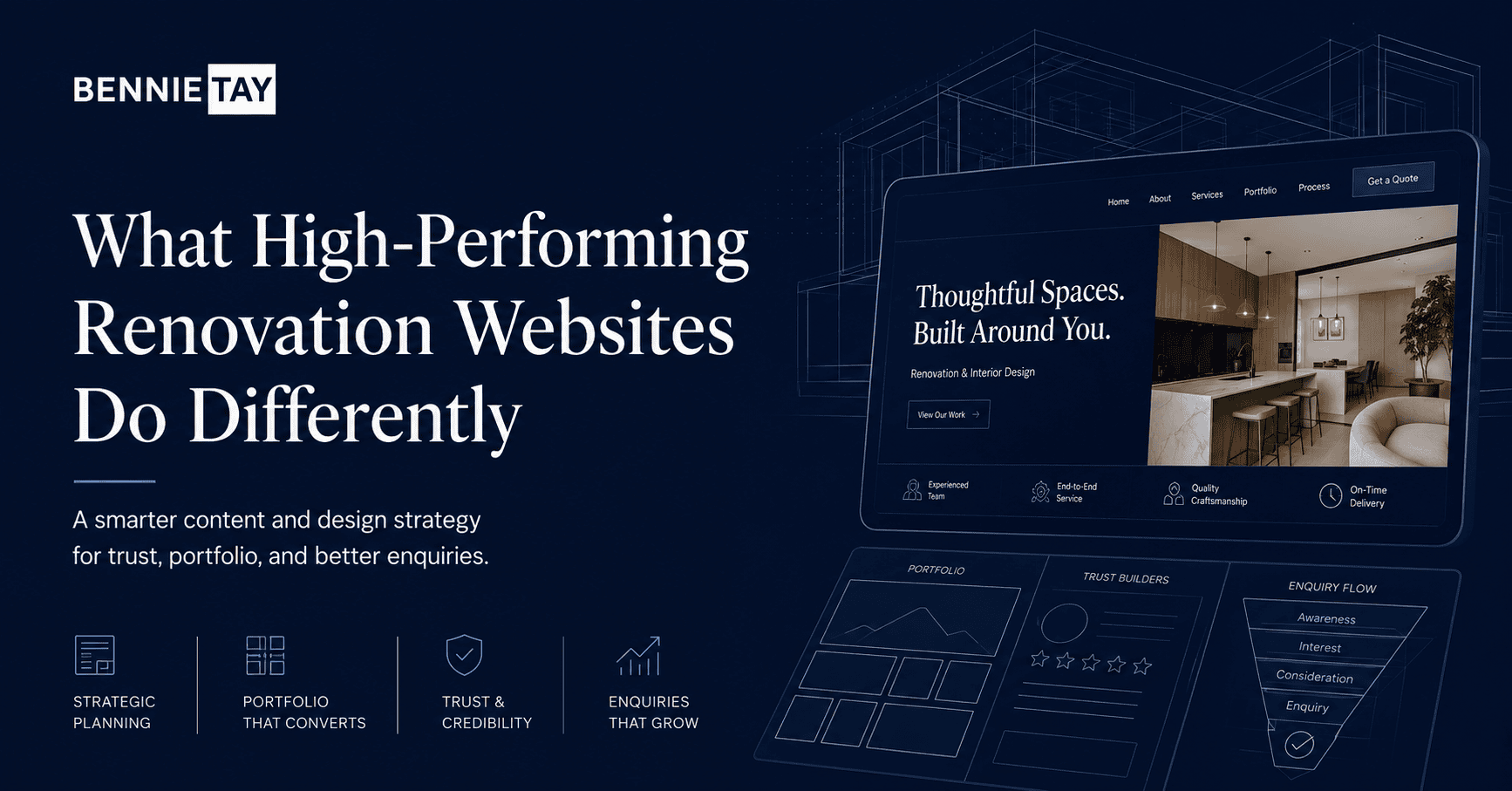
The Homepage Should Show What You Specialise In
The homepage should immediately tell visitors what kind of renovation or interior design work you provide.
A strong page structure helps both people and search engines. Each page should have one clear purpose, a focused headline, supporting sections, internal links to related pages, and a next step that matches the visitor’s stage of decision-making.
For readability, keep each section focused. Use one idea per section, short paragraphs, direct headings, and clear transitions. Visitors should be able to scan the page and still understand what you do, who it is for, and why it matters.
Your Portfolio Is the Most Important Sales Asset
For renovation and interior design companies, the portfolio is one of the most important parts of the website.
Visual presentation should support clarity, not distract from it. Use images that show real work, compress them properly, keep layouts mobile-friendly, and place important proof near the sections where visitors are deciding whether to continue.
On mobile, reduce anything that slows the decision. Check image sizes, button spacing, form length, sticky elements, and headline wrapping. Most paid-ad and local-search visitors will judge the page from a small screen before they ever see the desktop layout.
Case Studies Are Stronger Than Simple Galleries
A gallery shows what the project looked like. A case study explains what happened.
Trust signals work best when they are specific. Use real project examples, before-and-after context, client outcomes, reviews, certifications, process details, and clear expectations so visitors can judge whether your business is credible before they contact you.
Place proof close to the claim it supports. If you say you deliver fast turnaround, show the timeline. If you say you improve enquiries, show the result. If you say your process is organised, show the steps, documents, or examples that prove it.
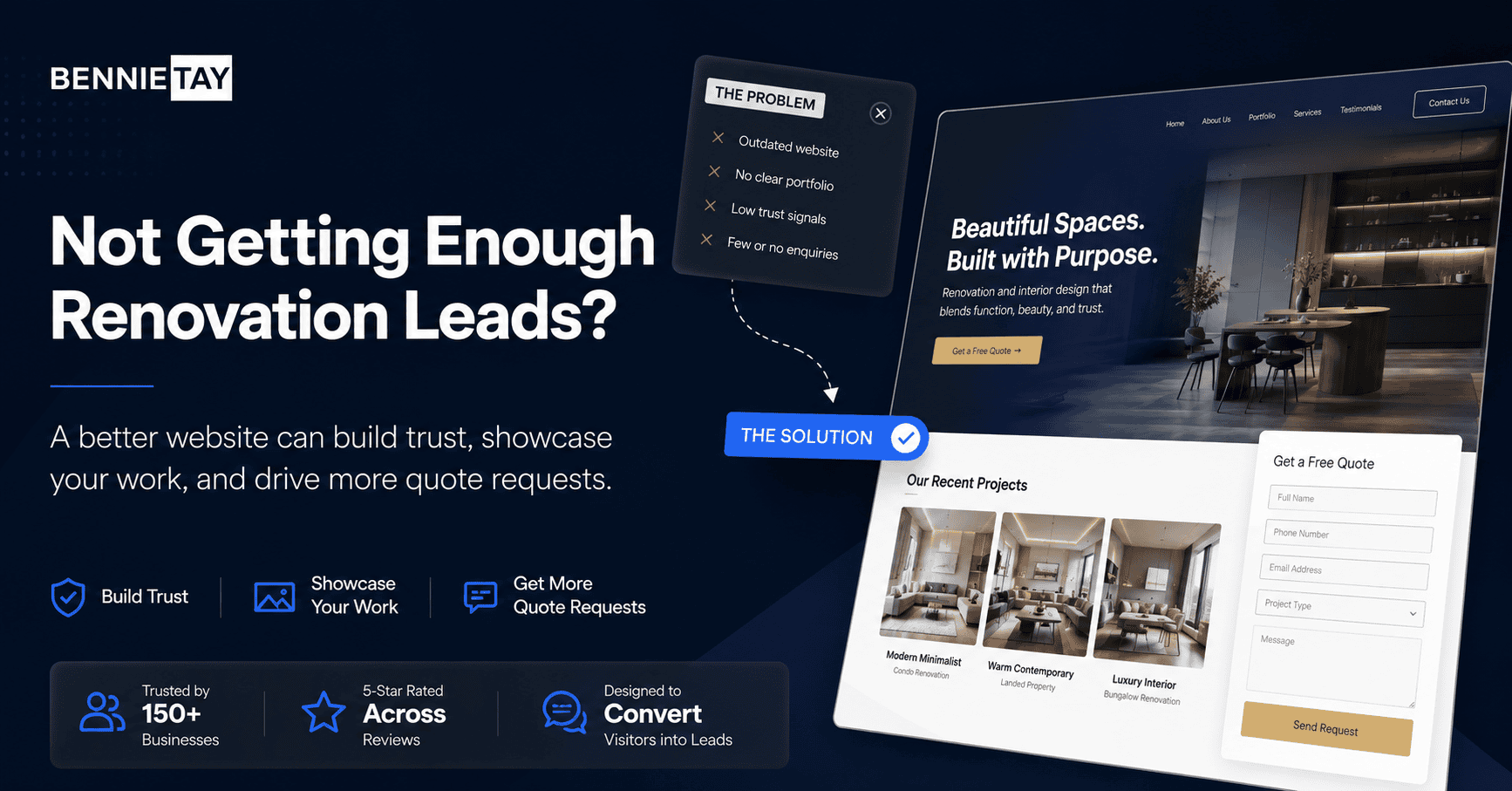
Service Pages Should Match How Customers Search
A renovation or interior design company should not rely on one general “Services” page if it offers multiple types of work.
A strong page structure helps both people and search engines. Each page should have one clear purpose, a focused headline, supporting sections, internal links to related pages, and a next step that matches the visitor’s stage of decision-making.
For readability, keep each section focused. Use one idea per section, short paragraphs, direct headings, and clear transitions. Visitors should be able to scan the page and still understand what you do, who it is for, and why it matters.
The Website Should Explain Your Process Clearly
Renovation customers often hesitate because they do not know what happens after they contact you.
The goal is not to add more words for the sake of length. The goal is to answer the questions a serious buyer is already asking, remove uncertainty, and make the next step feel obvious, useful, and worth taking.
When writing this section, use concrete details instead of broad claims. Replace vague lines such as “we provide quality service” with details about the offer, timeline, deliverables, target customer, common problems solved, and what makes the experience easier for the buyer.
Quote Request Forms Should Be Designed Carefully
A renovation quote request form should collect enough information without becoming too long or intimidating.
The conversion step should feel simple and low-friction. Make the button easy to find, tell visitors what happens after they enquire, and avoid asking for unnecessary information before they understand the value of speaking with you.
Do not hide the next step at the bottom only. Repeat the call-to-action after major decision points, especially after the offer, proof, FAQ, pricing guidance, or portfolio section. This helps interested visitors act at the moment they feel ready.
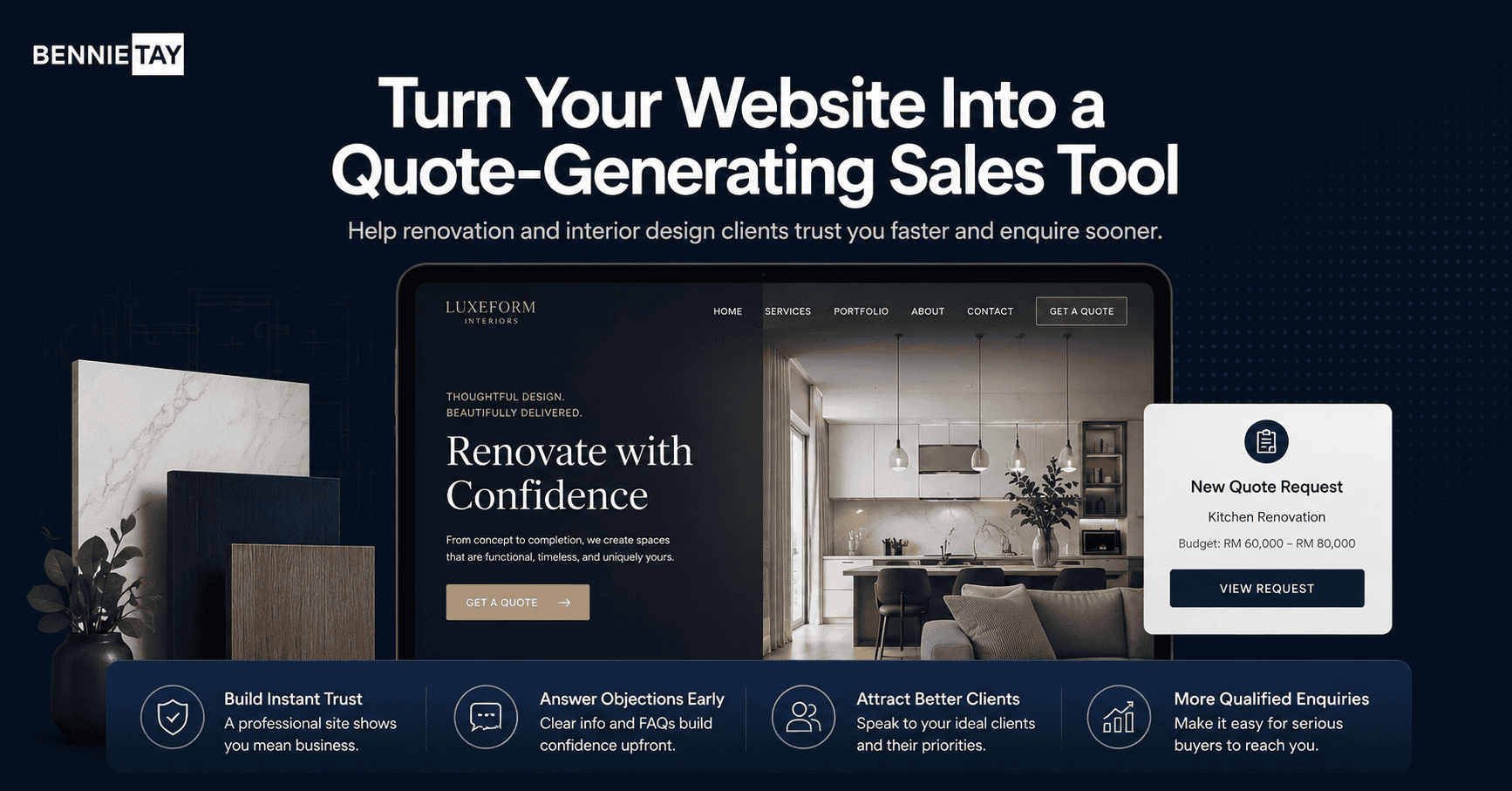
Use WhatsApp Without Making the Website Lazy
WhatsApp is important for renovation and interior design businesses in Malaysia. Many customers prefer to ask questions, send photos, share floor plans, or check availability through WhatsApp.
The conversion step should feel simple and low-friction. Make the button easy to find, tell visitors what happens after they enquire, and avoid asking for unnecessary information before they understand the value of speaking with you.
Do not hide the next step at the bottom only. Repeat the call-to-action after major decision points, especially after the offer, proof, FAQ, pricing guidance, or portfolio section. This helps interested visitors act at the moment they feel ready.
Show Reviews and Testimonials With Context
Testimonials can help build trust, especially in renovation and interior design.
Trust signals work best when they are specific. Use real project examples, before-and-after context, client outcomes, reviews, certifications, process details, and clear expectations so visitors can judge whether your business is credible before they contact you.
Place proof close to the claim it supports. If you say you deliver fast turnaround, show the timeline. If you say you improve enquiries, show the result. If you say your process is organised, show the steps, documents, or examples that prove it.
Before-and-After Content Can Be Powerful
Before-and-after content works very well for renovation and interior design because it makes transformation visible.
The goal is not to add more words for the sake of length. The goal is to answer the questions a serious buyer is already asking, remove uncertainty, and make the next step feel obvious, useful, and worth taking.
When writing this section, use concrete details instead of broad claims. Replace vague lines such as “we provide quality service” with details about the offer, timeline, deliverables, target customer, common problems solved, and what makes the experience easier for the buyer.
Local SEO Is Important for Renovation Companies
Renovation and interior design customers often search locally.
For SEO, keep the language natural and specific. Mention renovation company website design where it genuinely fits, then support it with related terms, service details, locations, buyer questions, and internal links so the page feels useful rather than forced.
A useful rule is to assign one main keyword theme to one page. Avoid making several pages compete for the same phrase. Instead, use supporting articles and service pages to answer related questions, then link them back to the most important conversion page.
The Website Should Help Filter Better Leads
A good renovation website should not only generate more enquiries. It should generate better enquiries.
The goal is not to add more words for the sake of length. The goal is to answer the questions a serious buyer is already asking, remove uncertainty, and make the next step feel obvious, useful, and worth taking.
When writing this section, use concrete details instead of broad claims. Replace vague lines such as “we provide quality service” with details about the offer, timeline, deliverables, target customer, common problems solved, and what makes the experience easier for the buyer.
Final Thoughts
A website for a renovation or interior design company should be built around proof, trust, and quote requests.
Use this as a practical checklist before redesigning or publishing the page. When the structure, copy, proof, and call-to-action are clear, the website becomes easier to rank, easier to read, and more likely to turn visitors into real enquiries.
Before publishing, read the page as if you were a new customer with limited time. If the promise, proof, process, and enquiry step are clear within a few minutes, the page is already doing more strategic work than most small business websites.