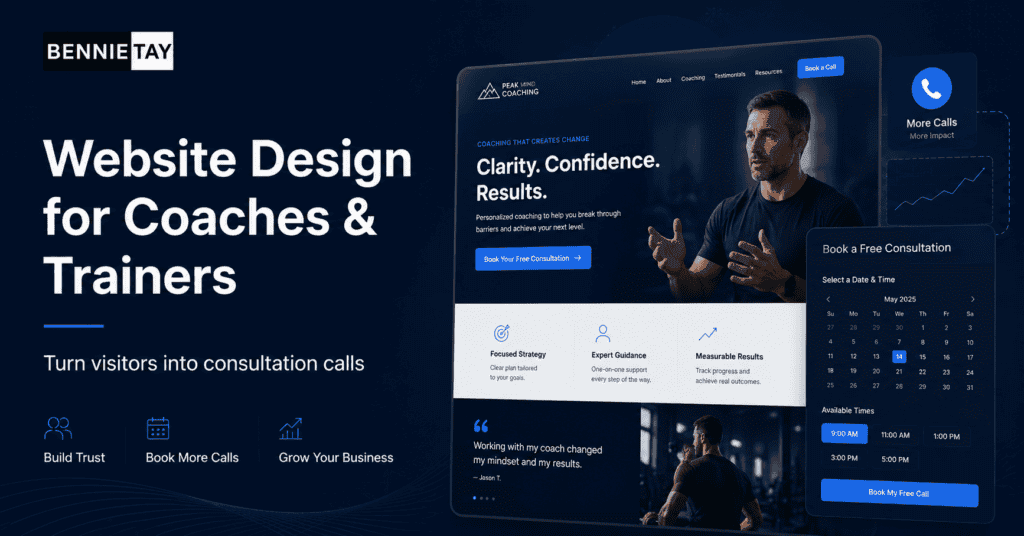
A coach or trainer website should do more than introduce who you are.
The goal is not to add more words for the sake of length. The goal is to answer the questions a serious buyer is already asking, remove uncertainty, and make the next step feel obvious, useful, and worth taking.
When writing this section, use concrete details instead of broad claims. Replace vague lines such as “we provide quality service” with details about the offer, timeline, deliverables, target customer, common problems solved, and what makes the experience easier for the buyer.
Your Website Must Make Your Positioning Clear
The first job of a coach or trainer website is positioning.
The goal is not to add more words for the sake of length. The goal is to answer the questions a serious buyer is already asking, remove uncertainty, and make the next step feel obvious, useful, and worth taking.
When writing this section, use concrete details instead of broad claims. Replace vague lines such as “we provide quality service” with details about the offer, timeline, deliverables, target customer, common problems solved, and what makes the experience easier for the buyer.
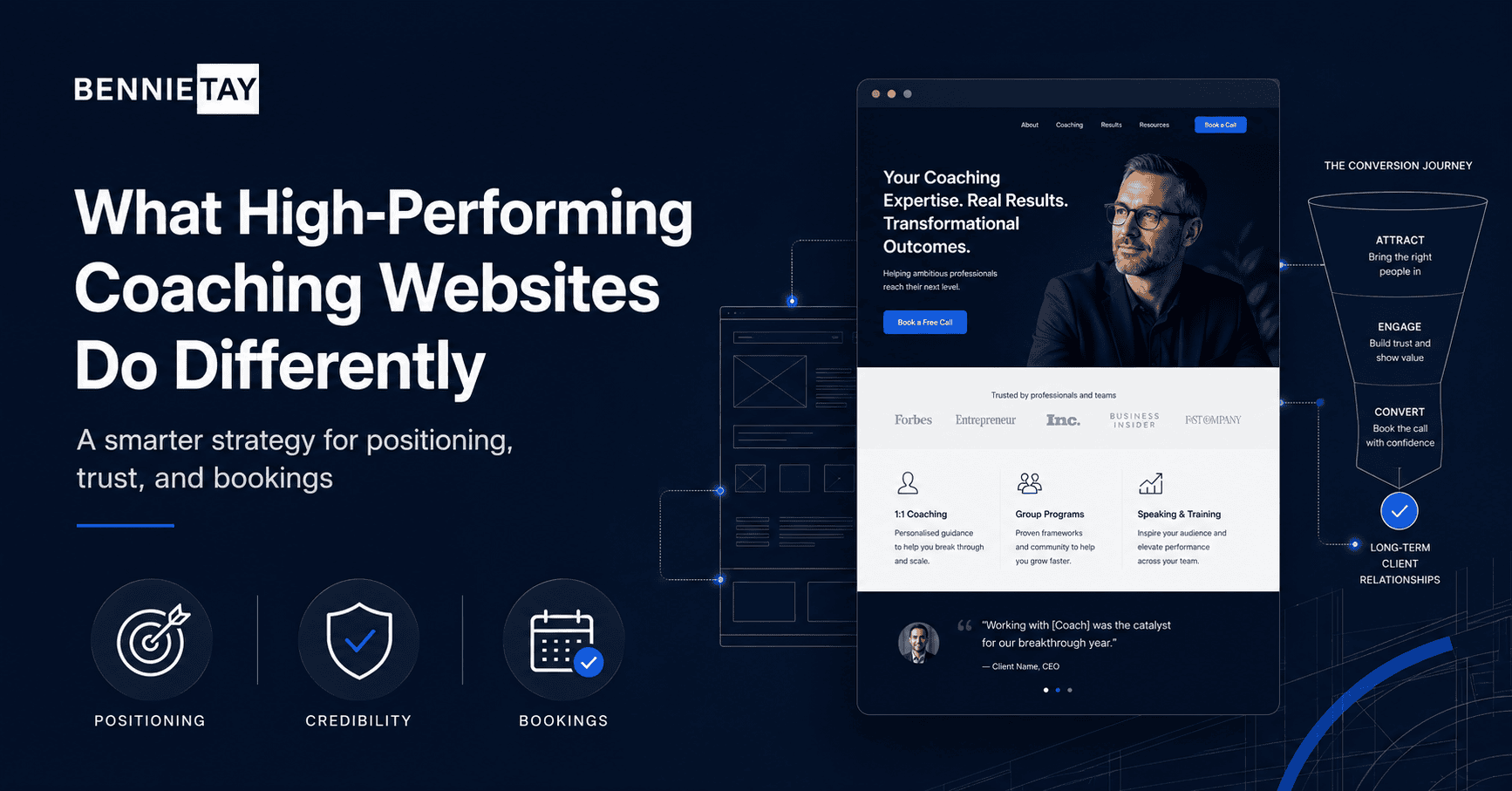
The Homepage Should Start With the Visitor’s Problem
A coach or trainer website should not begin with a long biography.
A strong page structure helps both people and search engines. Each page should have one clear purpose, a focused headline, supporting sections, internal links to related pages, and a next step that matches the visitor’s stage of decision-making.
For readability, keep each section focused. Use one idea per section, short paragraphs, direct headings, and clear transitions. Visitors should be able to scan the page and still understand what you do, who it is for, and why it matters.
Explain Your Offer in Simple Language
Many coaching websites are difficult to understand because the offer is too abstract.
The goal is not to add more words for the sake of length. The goal is to answer the questions a serious buyer is already asking, remove uncertainty, and make the next step feel obvious, useful, and worth taking.
When writing this section, use concrete details instead of broad claims. Replace vague lines such as “we provide quality service” with details about the offer, timeline, deliverables, target customer, common problems solved, and what makes the experience easier for the buyer.
Build Trust Before Asking for the Call
A consultation call is a commitment of time and attention. Visitors need enough confidence before booking one.
Trust signals work best when they are specific. Use real project examples, before-and-after context, client outcomes, reviews, certifications, process details, and clear expectations so visitors can judge whether your business is credible before they contact you.
Place proof close to the claim it supports. If you say you deliver fast turnaround, show the timeline. If you say you improve enquiries, show the result. If you say your process is organised, show the steps, documents, or examples that prove it.
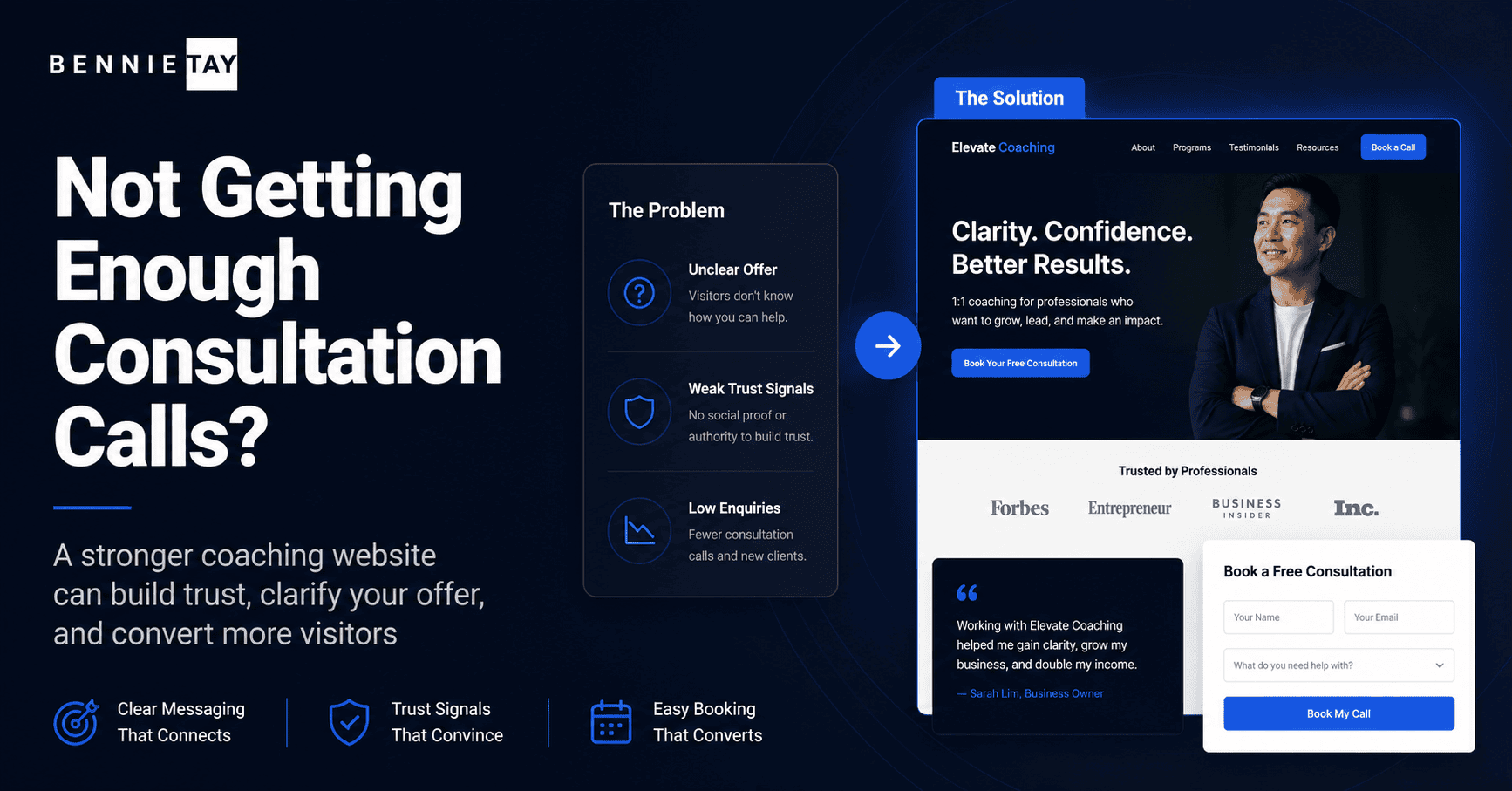
Your About Page Should Support the Buyer’s Decision
For coaches and trainers, the About page is important because people are partly buying into you.
A strong page structure helps both people and search engines. Each page should have one clear purpose, a focused headline, supporting sections, internal links to related pages, and a next step that matches the visitor’s stage of decision-making.
For readability, keep each section focused. Use one idea per section, short paragraphs, direct headings, and clear transitions. Visitors should be able to scan the page and still understand what you do, who it is for, and why it matters.
Use Case Studies and Testimonials Properly
Testimonials are powerful for coaching and training websites, but only when they are specific.
Trust signals work best when they are specific. Use real project examples, before-and-after context, client outcomes, reviews, certifications, process details, and clear expectations so visitors can judge whether your business is credible before they contact you.
Place proof close to the claim it supports. If you say you deliver fast turnaround, show the timeline. If you say you improve enquiries, show the result. If you say your process is organised, show the steps, documents, or examples that prove it.
Create a Clear Consultation Call Page
If consultation calls are important to your sales process, you should consider having a dedicated page for them.
The conversion step should feel simple and low-friction. Make the button easy to find, tell visitors what happens after they enquire, and avoid asking for unnecessary information before they understand the value of speaking with you.
Do not hide the next step at the bottom only. Repeat the call-to-action after major decision points, especially after the offer, proof, FAQ, pricing guidance, or portfolio section. This helps interested visitors act at the moment they feel ready.
Make Booking Simple
Your booking flow should be easy.
The conversion step should feel simple and low-friction. Make the button easy to find, tell visitors what happens after they enquire, and avoid asking for unnecessary information before they understand the value of speaking with you.
Do not hide the next step at the bottom only. Repeat the call-to-action after major decision points, especially after the offer, proof, FAQ, pricing guidance, or portfolio section. This helps interested visitors act at the moment they feel ready.
Use Content to Prove Expertise
For coaches and trainers, content is one of the best ways to build trust before a consultation call.
The goal is not to add more words for the sake of length. The goal is to answer the questions a serious buyer is already asking, remove uncertainty, and make the next step feel obvious, useful, and worth taking.
When writing this section, use concrete details instead of broad claims. Replace vague lines such as “we provide quality service” with details about the offer, timeline, deliverables, target customer, common problems solved, and what makes the experience easier for the buyer.
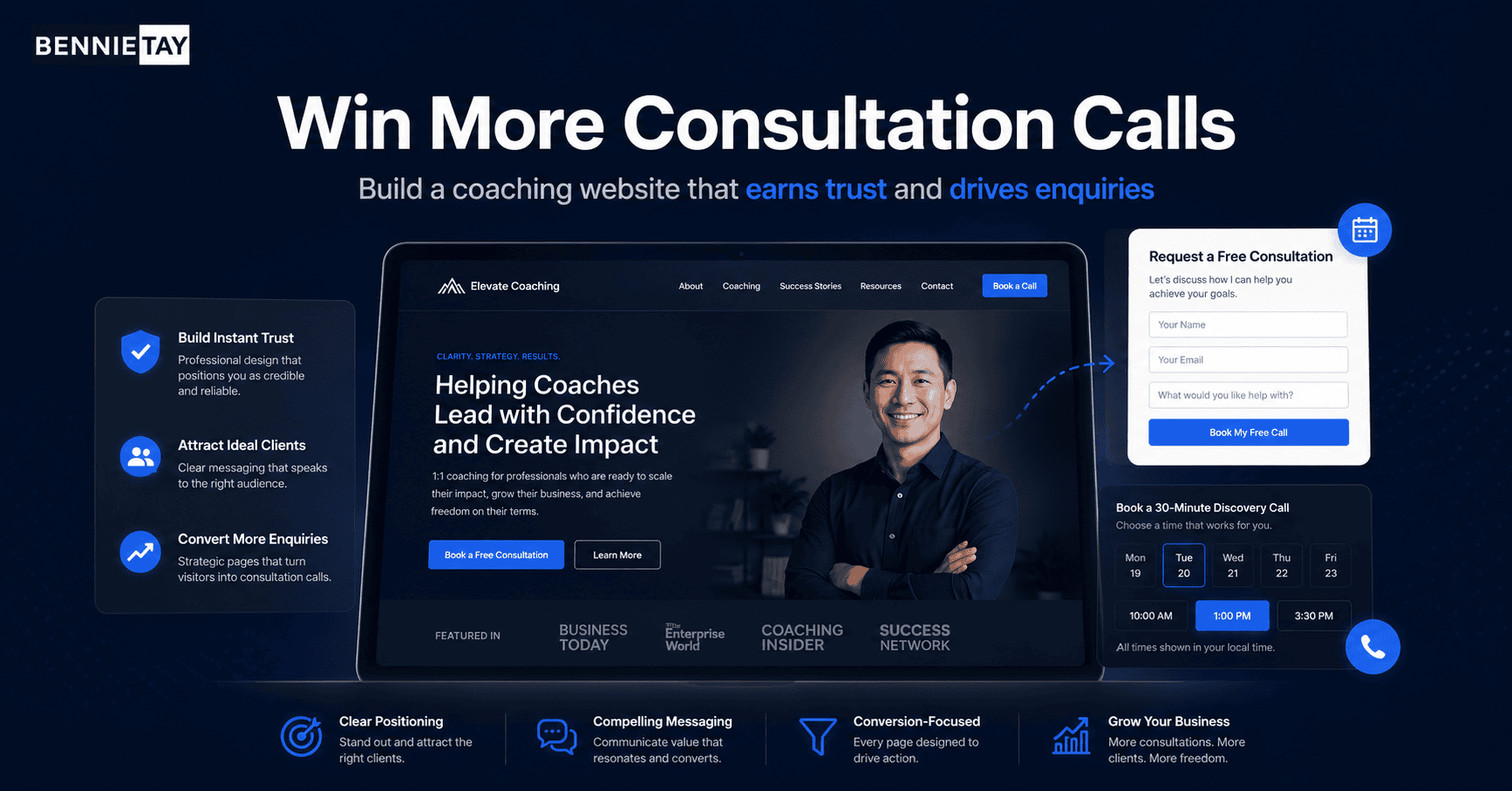
Address Objections Before the Call
Visitors may hesitate to book because they have doubts.
The conversion step should feel simple and low-friction. Make the button easy to find, tell visitors what happens after they enquire, and avoid asking for unnecessary information before they understand the value of speaking with you.
Do not hide the next step at the bottom only. Repeat the call-to-action after major decision points, especially after the offer, proof, FAQ, pricing guidance, or portfolio section. This helps interested visitors act at the moment they feel ready.
Pricing Guidance Can Improve Lead Quality
Many coaches and trainers avoid mentioning price because packages vary.
The goal is not to add more words for the sake of length. The goal is to answer the questions a serious buyer is already asking, remove uncertainty, and make the next step feel obvious, useful, and worth taking.
When writing this section, use concrete details instead of broad claims. Replace vague lines such as “we provide quality service” with details about the offer, timeline, deliverables, target customer, common problems solved, and what makes the experience easier for the buyer.
Your Website Should Feel Personal but Professional
Coaching and training websites need a careful balance.
The goal is not to add more words for the sake of length. The goal is to answer the questions a serious buyer is already asking, remove uncertainty, and make the next step feel obvious, useful, and worth taking.
When writing this section, use concrete details instead of broad claims. Replace vague lines such as “we provide quality service” with details about the offer, timeline, deliverables, target customer, common problems solved, and what makes the experience easier for the buyer.
Final Thoughts
A coach or trainer website should be designed to turn trust into consultation calls.
Use this as a practical checklist before redesigning or publishing the page. When the structure, copy, proof, and call-to-action are clear, the website becomes easier to rank, easier to read, and more likely to turn visitors into real enquiries.
Before publishing, read the page as if you were a new customer with limited time. If the promise, proof, process, and enquiry step are clear within a few minutes, the page is already doing more strategic work than most small business websites.