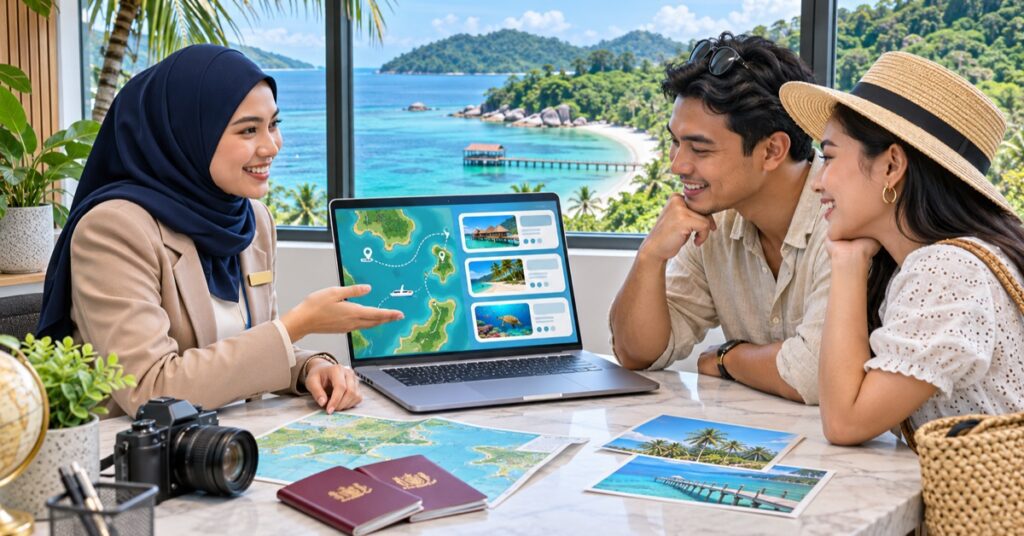
A travel agency website has one job at each stage: help a visitor understand the trip, decide whether the offer fits, and take the next booking step without confusion. The page should make the important details easy to check on mobile, especially when a traveller is comparing dates, inclusions, and departure points.
Show the trip before asking for an enquiry
Give each tour or package its own page. Start with the destination, trip length, travel style, and the dates or departure windows currently available. Add an itinerary in a readable day-by-day format, then list what is included and excluded. Explain meeting points, group size where known, accessibility limitations, and the pace of the trip where relevant. Avoid leaving key conditions hidden in a brochure download.
Use photographs that reflect the actual destination and experience. If an image is illustrative, label it. Avoid implying that a particular hotel, attraction, or activity is guaranteed when suppliers or schedules may change.
Make booking status clear
Decide whether the main action is “Request a quote,” “Check availability,” or “Book and pay.” Those actions create different expectations. If staff must confirm inventory or price, explain that a submitted form is a request rather than a confirmed reservation. Tell visitors when they should expect a reply and what information helps the team respond accurately.
For direct payment, display the booking terms, cancellation and amendment process, payment stages, and contact route before checkout. Keep the terms consistent across the trip page, form, and confirmation message. Ask a qualified reviewer to verify any legal or package-tour wording before publication.
Answer practical questions
Give clear information about what travellers need to bring, where the tour starts, what happens if a departure changes, and how to contact the agency while travelling. Link to official travel or immigration information when a traveller needs current entry requirements; do not present an agency’s general blog as authoritative visa advice.
Build useful destination pages
A destination guide should help a visitor plan: seasons, transport options, sample trip lengths, and the types of experience available. Add original local knowledge from the agency’s actual itinerary planning. Do not publish near-identical pages that merely swap destination names. Link each guide to the relevant tours and let visitors return to the main destination overview.
Launch checklist
- Test enquiry, availability, payment, and confirmation flows on a phone.
- Check dates, inclusions, exclusions, and prices with the operations team.
- Show how changes and cancellations are handled.
- Make contact details visible before and after booking.
- Measure completed enquiries and bookings, not just button clicks.
For Google visibility, keep each page focused on one real trip or destination and write titles that describe its content. Google’s SEO Starter Guide explains the basics of making pages discoverable and useful. For the cost side of building a new site, see our Malaysia website design price guide.