If you’ve ever poured thousands into a beautifully designed website only to watch it sit online like a digital billboard no one notices, you’re definitely not alone. In fact, this has become one of the biggest frustrations business owners deal with. As traffic slowly trickles in, nothing meaningful happens, and before long, the site you spent months polishing ends up producing little to no sales at all. Meanwhile, your leaner competitors are rolling out a simple sales funnel in a matter of days and turning small ad budgets into real revenue. And the surprising part? The difference isn’t luck. It’s a strategy.
Once you look at the numbers, the gap becomes almost impossible to ignore.
Traditional websites average around a 2–3% conversion rate. Sales funnel, on the other hand, typically convert at 3–10%, and high-performing ones can reach an impressive 15–30% or more. To put that into perspective, if your business brings in 10,000 monthly visitors, your website might turn only a couple of hundred into leads or customers.
But a sales funnel?
You could see five to fifteen times more conversions from the exact same traffic.
This isn’t just another marketing trend. It’s a clear shift in how people buy online, and understanding this shift could completely reshape the way you build your online presence moving forward.

The Hidden Problem With Most Websites (And Why They Don’t Convert)
Here’s a truth many business owners don’t hear enough:
Most websites aren’t built for conversions. They’re built for looking “professional.”
But a professional-looking website isn’t the same as a revenue-generating one.
The average small business site gets about 1,111 monthly visitors, and most of them stay for less than three minutes. If your homepage doesn’t instantly communicate value and guide someone toward an action, that visitor is usually gone within seconds.
And it’s not because your business is uninteresting.
It’s because your site is asking people to figure out what to do.
Typical websites are structured like this:
- Home
- About
- Services
- Shop
- Blog
- Contact
- “Learn More” everywhere
To a visitor, that menu feels like a fork in the road with seven different paths. The brain freezes, wondering which one is “correct,” and this triggers choice overload, a well-documented psychological barrier where too many options cause people to choose nothing.
What happens next?
They wander, skim, maybe skim another page, and eventually exit without taking action.
Websites spread attention thin. Funnels focus it.
Why Sales Funnel Win: The Psychology Behind Their Higher Conversion Rates
Sales funnel outperforms website not because it’s fancy, but because it matches the way people naturally make decisions. Instead of overwhelming visitors with dozens of links and options, a funnel presents one clear step at a time. One action, one decision, one path forward.
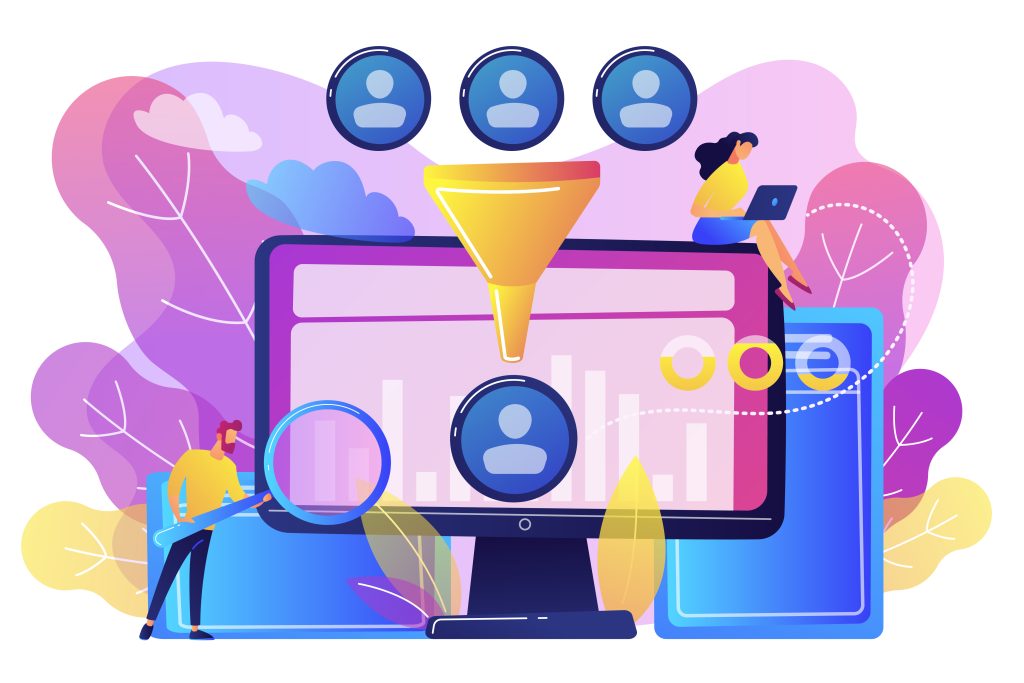
This is the foundation of progressive commitment: guiding someone from a small “yes,” such as entering their email, to a bigger “yes,” like making a purchase. As they move through each step, friction decreases, distractions fade, and a sense of forward momentum begins to build.
In fact, every page in a sales funnel has a single, focused job. It might capture a lead, sell one product, encourage someone to book a call, or present an upsell or downsell. Because of this singular purpose, there are no blog links, no busy navigation menus, and no social icons pulling people away. The experience stays clean and intentional, ensuring that visitors remain exactly where you want them.
To put it into perspective, think of it like driving at night. A traditional website is a road filled with exits, turnoffs, and signs competing for your attention. With so many options, one wrong move sends your visitor in a completely different direction.
A funnel, on the other hand, is like a single, well-lit road with no detours. You just keep moving forward because there’s only one direction to go, and that clarity is what helps more people finish the journey.
What It Actually Costs to Develop a Website
Data from GoodFirms and The Web Factory show the current pricing landscape for professional websites, and the numbers add up fast:
- Small business custom site: $3,000–$10,000
- Advanced or e-commerce builds: $10,000–$50,000+
- Template-based or simple portfolio sites: $300–$1,500
- Monthly maintenance: $50–$500+
- Time to launch: 1–6 months
- Required skill level: High or expensive help
Between design, development, revisions, copywriting, SEO setup, plugins, hosting, security, and ongoing fixes, websites quickly become a long-term project. And long-term doesn’t always mean profitable.
Many business owners find themselves stuck in “website limbo,” waiting for everything to be perfect before they hit publish, and perfection takes time.
Meanwhile, Funnel Development Is Fast, Simple, and Designed for Revenue
Platforms like ClickFunnels, Leadpages, GoHighLevel, and other no-code builders have completely transformed what it takes to launch a high-converting sales funnel. In the past, you needed a developer, complicated software, and real technical skills, but now, none of that is necessary.
Today, the process is far more streamlined:
- Template-based funnel: $0–$500
- Custom-designed funnel: $500–$10,000+
- Time to launch: 1–7 days
- Tech skills needed: None, just drag, drop, and hit publish
Because of this shift, funnels are intentionally built to be simple. You’re not trying to create a full digital ecosystem or a massive website. Instead, you’re creating one clear path to a sale. As a result, you deal with fewer pages, fewer revisions, and significantly less time wasted.
The Real Cost Difference: Time and Momentum
The highest cost most business owners overlook isn’t money. It’s lost time and missed opportunities. A website can take three to six months before it starts producing real results. You’re waiting on SEO, publishing blog posts, hoping Google sends traffic, and crossing your fingers that momentum eventually builds.
A funnel, on the other hand, can start generating revenue the same day you launch it. Funnels are built to work immediately with paid ads, social traffic, or email campaigns. While you’re still fine-tuning padding and adjusting section spacing on your website, your competitors are already running ads, testing headlines, refining their offers, building their email list, and learning exactly what their audience responds to.
One business is gathering data and improving. The other is tweaking colors and margins. It’s not hard to guess which one grows faster.
Your website may serve as your digital storefront, but your funnel is the engine that drives sales. The longer you wait to launch it, the longer you delay your revenue.
The New Online Buyer: Fast, Distracted, and Decision-Driven
Buying behavior doesn’t look anything like it did a decade ago. The shift has been massive, and most business owners are still building online experiences for a world that no longer exists.
Here’s what’s changed:
1. Social media is the new homepage
Consumers don’t really browse the internet anymore; they scroll. They stumble across new businesses on TikTok, Instagram Reels, or YouTube Shorts, usually while flying through content at full speed. And if something happens to catch their attention, they might tap the link in your bio… but once they do, you only have a few seconds to convince them to stay.
2. Attention spans are brutally short
Studies estimate the average attention span is now around eight seconds.
Websites require exploration and patience. Funnels give clarity in an instant.
Modern buyers want:
- The problem
- The solution
- The price
- The next step
Right now. Not after reading seven pages.
3. People expect guided experiences, not digital scavenger hunts
The more someone has to think, the faster they drop off. That’s why browsing a traditional website feels tiring, but walking through a funnel feels effortless. The funnel removes decision fatigue by guiding visitors step-by-step.
4. Distraction is your biggest competitor
You’re not just competing with other businesses; you’re also competing with everything that’s fighting for your audience’s attention. Their phones are constantly lighting up with notifications, DMs stack up, and feeds move at lightning speed. Meanwhile, viral videos appear out of nowhere, and a new piece of content is always just a second away.
Because of that, funnels work so well. They cut through the chaos, capture attention quickly, and guide people toward taking action before the next distraction pulls them away.
The Seven Core Differences Between the Sales Funnel and Website
Now that we’ve explored why funnels outperform traditional sites, let’s break down the seven fundamental differences that separate the two. These distinctions explain why funnels consistently deliver higher conversions, stronger customer relationships, and dramatically better ROI.
1. Clarity of Direction vs. Overwhelm
Traditional websites try to accomplish everything at once: explain your brand, showcase your services, display testimonials, host your blog, link to social media, and present multiple navigation paths. While this may look comprehensive, it creates a major problem: the visitor has to decide what to do next.
And in a world where attention spans are shrinking, that’s the quickest way to lose a potential customer.
Sales funnels, however, operate on the opposite principle. Instead of presenting seven different choices, they offer one clear path with one clear objective. Think of a funnel like a direct flight; it takes someone from point A to point B with no detours, no distractions, and no confusion.
This level of simplicity cuts down on decision fatigue, which has become one of the biggest conversion killers. People don’t want to “explore” your brand anymore; they want to know what’s in it for them right now. Funnels meet that psychological need instantly.
2. Relationship Building vs. One-Off Interactions
Websites function like digital brochures. People drop in, skim a few pages, maybe sign up or make a purchase, and then they’re gone. There’s usually no guided path and no built-in way to continue the relationship after that first visit.
Funnels work differently. They’re designed to take someone through a process, not just a single action. Every funnel comes with intentional steps that keep nurturing the relationship, such as automated email sequences, follow-up messages, value-driven touchpoints, and strategic upsells or downsells.
This kind of structure matters more now than ever. Customer acquisition costs keep rising, retargeting options are tighter, and people take longer to make buying decisions. You need a system that keeps building trust even after someone clicks away.
That’s exactly what funnels are engineered to do.
3. Strategic Structure vs. Scattered Components
A website is a wide-open digital landscape with pages scattered across multiple intentions. A funnel, by contrast, is a precision-built machine, with each step designed to serve a specific purpose.
Different types of funnels exist for different goals:
- Lead generation funnels with compelling offers
- Application funnels that qualify prospects for high-ticket programs
- Tripwire funnels that transform cold leads into first-time customers
- Webinar funnels designed to sell premium offers through value-driven presentations
- Two-step order forms with built-in order bumps and upsells
Every funnel element is intentional. Nothing is random or “just there because.” This level of structure is why funnels convert so much higher than wide-open websites. They’re built to move people, step by step, toward one outcome.
4. Performance That’s Easy to Measure (and Easy to Improve)
One of the biggest advantages of a funnel is that every step is trackable and measurable. You can see:
- How many people saw each step
- Where they dropped off
- Which version performed better
- What offer resonated most
- How much revenue was generated per visitor
Websites rarely produce this level of clarity, because people bounce all over the place. There’s no straight path to measure.
Funnels, on the other hand, consistently outperform websites across industries. Some software platforms report that their users generate millions using a single optimized funnel. This isn’t luck. It’s the result of a system designed to eliminate confusion and encourage action.
With a funnel, the customer is always moving forward or deciding not to. There’s no getting lost in menus, blogs, or random pages.
5. Revenue Models Built for Growth
Most websites are built for a single transaction; someone buys once, and you hope they come back someday. But hope isn’t a strategy.
Funnels, on the other hand, are designed to maximize the lifetime value of every customer. Instead of stopping at one sale, they guide buyers through upsells, downsells, cross-sells, bundles, subscriptions, continuity programs, and premium upgrades. That’s why funnels can generate far more revenue from the same traffic.
Webinar funnels and application funnels are great examples. They educate the audience, build authority, and warm prospects up before the pitch. By the time someone gets on a sales call, they already understand the offer and are aligned with the solution, so conversion rates jump significantly.
Modern funnels are all about creating long-term relationships, not one-and-done orders.
6. Offers That Drive Action, Not Just Information
Most websites “present” information. Funnels present offers.
And the offer is the beating heart of every successful funnel.
Funnels work because they pair the right offer with the right messaging and the right moment in the customer journey. Whether it’s a lead magnet, a mini-course, a special bundle, or a low-ticket entry offer, the value proposition is clear and compelling.
A strong offer does three things:
- Solves a specific problem
- Reduces friction or risk
- Feels too valuable to ignore
Poor offers are the top reason funnels fail. But when your offer hits the mark, the funnel becomes a predictable revenue-generating asset.
Websites rarely create this level of urgency or desirability because they’re built for browsing, but not buying.
7. Built-In Psychology and Ethical Persuasion
Funnels don’t rely on random psychological tricks. Instead, they’re built on proven principles of human behavior, from the first click to the final conversion.
Some of the key psychological drivers woven into funnels include:
- Consistency: When someone takes a small action (entering their email, clicking a button), they’re more likely to take the next action. Funnels leverage this momentum.
- Commitment: Survey funnels and application funnels increase investment by having people articulate their needs and goals, making them more likely to follow through.
- Urgency: Deadlines, expiring bonuses, or limited enrollment windows encourage people to make decisions more quickly.
- Scarcity: Authentic limits, such as limited coaching spots or capped enrollments, create natural demand.
These techniques are not manipulative when used properly. They’re simply aligned with how humans make decisions. Funnels give people a guided experience that feels logical, fluid, and emotionally compelling.
When You Actually Need Both: The Smart Strategy Most Businesses Overlook
A lot of advice treats the “funnel vs. website” debate like a boxing match: pick one and forget the other. But in the real world, the most successful brands use both, and they use them for different strategic purposes. The key is understanding how these two assets complement each other rather than forcing them into the same role.
Start With Revenue (Funnel First)
Before you spend months designing a website, writing ten pages of copy, and tweaking every section to perfection, you need one thing: proof of demand. A funnel validates your offer quickly. It generates cash flow, gives you real data, and helps you understand your audience long before you invest in a big build-out.
Once money is coming in consistently, and you know customers actually want what you’re selling, that’s when a website becomes useful.
Use Your Website as a Long-Term Growth Engine
Websites excel at SEO, evergreen content, and authority building. Your blog, resources, case studies, and brand storytelling all belong here. Over time, these assets strengthen your online presence and bring in organic traffic, which is far more cost-effective than ads.
But instead of leaving visitors to wander around aimlessly, your website can strategically channel readers into your highest-performing funnels.
Let Funnels Handle What They Do Best: Conversions
Funnels aren’t just for selling. They’re for guiding people through purposeful steps, one action at a time:
- Funnel for your lead magnet
- One for your tripwire
- One for your webinar
- And, one for your high-ticket application
Each funnel serves a specific goal, and because it’s optimized for that one goal, it converts significantly higher than a traditional webpage ever could.
Build a Traffic Ecosystem That Actually Makes Sense
Picture your marketing system like a wheel. Your website is the hub, the home base that showcases your brand and builds credibility. Funnels act as the spokes, each designed to drive a specific action, whether that’s generating leads, making sales, or nurturing prospects. Social media becomes the energy that keeps the wheel moving, sending traffic into the right funnel at the right time. The funnels then generate revenue, which allows you to reinvest in more marketing. The website, in turn, supports your long-term authority and trust.
When your website and funnels work together, you create a complete ecosystem that not only captures attention but also converts visitors and continues nurturing them long after their first touchpoint.
Most businesses need revenue before they can focus on authority. That’s why the smart move is to launch with a funnel, validate your offer, and then introduce a website once the income and data are in place. This approach gives you both momentum and stability.
Your 5-Step Funnel Framework for Creating a High-Converting System
Ready to build a sales funnel that brings in customers long before your website is finished? Use this simple, repeatable framework.
Step 1: Define One Clear Promise
A sales funnel is only as strong as its focus. Pick one problem you solve for one audience, and build everything around that. Vagueness kills conversions; clarity multiplies them.
Instead of “helping businesses grow,” get specific:
- “Helping personal trainers get their first 20 online clients”
- “Helping e-commerce stores increase average order value by 30%”
A clear promise is magnetic, and it sets the stage for your entire sales funnel.
Step 2: Remove Every Distraction
A sales funnel works because it removes all the noise. There are no menus to wander through, no blog links to get lost in, no social icons pulling people away, no sidebars, and no unnecessary exit routes.
If something on the page doesn’t move a visitor closer to your call-to-action, it simply doesn’t make the cut.
And when the layout is that focused, visitors understand what to do almost instantly, which is exactly why your conversions start to rise.
Step 3: Build a Straight-Line Journey
High-converting funnels are built around a simple, natural flow that mirrors how people make decisions in real life. You begin by identifying the visitor’s problem, then introduce your solution in a way that feels relevant and easy to understand. After that, you reinforce your message with proof so the visitor feels confident moving forward.
Once trust is established, you present your offer and end with a clear, unmistakable next step.
This structured progression removes friction, builds momentum, and taps into the psychology behind why people buy, ultimately leading to significantly higher conversion rates.
Step 4: Make Mobile the Priority
With more than 63% of all internet activity happening on mobile devices, your funnel needs to feel smooth and effortless on a smaller screen. That means using large, easy-to-tap buttons, keeping forms short, making sure your text is scannable with plenty of breathing room, and ensuring pages load quickly. Your layout should be designed for thumb, not a mouse cursor.
Don’t create everything for desktop and then “fix mobile later.” Start with mobile first, and let the desktop version adapt from there.
Step 5: Build a Follow-Up Engine That Closes the Sale
Most people don’t buy on their first visit, and that’s completely normal. In fact, the real magic happens after that initial click. Your follow-up is where trust grows, relationships form, and sales actually close.
A strong follow-up system usually includes email sequences, story-driven content, social proof, helpful education, time-sensitive offers, and gentle reminders or retargeting. This behind-the-scenes engine often generates more revenue than the funnel itself because it nurtures the much larger group of people who simply weren’t ready to buy on day one.
Without consistent follow-up, you’re essentially leaving most of your potential profit sitting on the table.
Common Sales Funnel Mistakes to Avoid (Before They Cost You Sales)
Even with the right strategy, many entrepreneurs unintentionally sabotage their funnels long before traffic ever hits the page. Avoiding these common mistakes can save you time, money, and frustration and dramatically improve your conversion rates.
1. Pushing Big Offers Too Soon
One of the fastest ways to lose a potential customer is by pitching a high-ticket program on the very first interaction. People need time to trust you. They need to see your value before they’re willing to spend $2,000, $5,000, or more.
Start small.
Lead with:
- A free resource
- A low-ticket offer
- A short trial
- A quick win that proves your expertise
The goal is to let prospects experience you before making a major commitment.
2. Trying to Make One Funnel Fit Everyone
A funnel that tries to speak to everyone ultimately ends up connecting with no one. After all, different segments of your audience have different motivations, fears, goals, and awareness levels, and your funnel needs to reflect those differences.
Instead of relying on one generic funnel, create variations tailored to specific audiences or specific problems. With this approach, personalization naturally increases conversions and helps every visitor feel understood.
3. Neglecting Mobile Optimization
More than half of your traffic will land on your sales funnel using a phone. If your layout breaks, loads slowly, or feels cramped, your conversions will tank instantly.
The solution?
Design for mobile first, then adjust for desktop, not the other way around.
4. Weak or Confusing Calls-to-Action
The CTA is the single most important part of any funnel page, yet it’s surprisingly the element that often gets overlooked. Many businesses bury it, soften the wording, or make it so vague that visitors aren’t even sure what they’re supposed to do next.
A strong CTA doesn’t leave any room for confusion. Instead, it stands out visually, communicates a clear benefit, and tells people exactly what the next step is. Someone should be able to land on your page and understand the action within seconds. After all, if they have to search for it or think too hard, they’ll usually end up doing nothing at all.
5. “Set It and Forget It” Syndrome
Even the strongest funnel will fall short if it isn’t optimized. Funnels aren’t meant to stay frozen in time; they should evolve as you collect real data and see how people actually behave.
Often, small tweaks make the biggest impact. Updating a headline, reshaping the offer, or shortening a form can lead to surprisingly large jumps in conversions. The highest-performing businesses understand this, which is why they treat their funnels as living systems rather than one-and-done projects.
Your Four-Week Roadmap to Launching a High-Converting Sales Funnel
If you’re starting from zero, this four-week plan will take you from idea to live funnel without getting overwhelmed or lost in the details.
Week 1: Audit & Analyze
Start by taking a close look at your current website, your content, and the path people follow when they first discover your brand. As you review everything, ask yourself:
- Where are visitors entering your world?
- At what point do they lose interest or drop off?
- What actions are they taking, and which ones are they skipping?
- Are there any clear patterns in how they navigate your pages?
By walking through these questions, you’ll start to spot the gaps in your existing process. And once you know where the leaks are, you’ll know exactly what your funnel needs to fix.
Week 2: Simplify Your Offer
Choose one primary offer. Not five, not three, just one.
From there, strip everything else away and build a simple page with a single objective. Then, resist the urge to stack on extra features or create multiple paths for people to wander down. For this week, your only focus should be clarity, nothing more, nothing less.
Week 3: Build & Test a Minimal Funnel
Use templates or proven frameworks to assemble your sales funnel fast:
- A landing page
- A thank-you or confirmation page
- (Optional) an order page
That’s it.
Perfection isn’t the goal: data is. You need a working sales funnel before you can collect feedback and optimize.
Week 4: Launch & Optimize
Drive traffic to your funnel using paid ads, TikTok or Instagram content, your email list, collaborations, or platforms like YouTube and Pinterest. Once the traffic starts flowing, keep a close eye on your key metrics: your conversion rate, cost per lead, abandonment rate, and average order value.
These numbers tell you exactly where to refine your pages, tighten your copy, strengthen your offer, and steadily improve your results over time.
Final Thoughts: Sales Funnel vs Website: Which Converts Better?
Websites on their own just don’t cut it anymore. They’re expensive, slow to build, and often fall short when it comes to actually generating sales. And with ad costs rising and consumer attention shrinking, businesses need something sharper and more efficient, something that guides visitors toward a clear action instead of letting them wander around.
Today’s buyers want simplicity. They want direction. They want the fastest, cleanest path to the solution they’re looking for. Not a maze of menus, dropdowns, and endless pages.
That’s why the businesses growing right now aren’t relying on luck. Instead, they’re using systems built for conversion:
- Funnels that match how people make decisions today
- Funnels that remove friction and speed up the buying process
- And, Funnels that turn cold strangers into warm leads and warm leads into paying customers
Sales funnels aren’t a fad; they’ve become the foundation of the modern online economy. The data backs it up. The case studies back it up. And real businesses prove it every single day.
So the real question is: how long will you wait before building yours?
Final Thoughts: Start Building Your First Funnel Today
If you’re ready to replace confusion with clarity and finally build a customer journey that actually works, tools like ClickFunnels make the entire process straightforward. You don’t need coding skills, design experience, or a team of developers. Instead, everything is built to be simple, intuitive, and beginner-friendly.
From there, you get drag-and-drop sales funnel building, proven templates, built-in email automation, analytics tracking, and tools for upsells and order bumps, all in one platform. With the right funnel in place, you can launch in hours instead of months and start converting traffic almost immediately.
Ultimately, the goal is to stop losing potential customers to complicated, distracting websites. By creating a clear, focused sales funnel that guides people step by step, you set yourself up for real, measurable results.