Choosing the right fulfillment model can, ultimately, shape the entire future of your online business. Whether you’re launching your first store or, alternatively, refining an existing one, the decision between Print on Demand (POD) and traditional inventory management directly affects your startup costs, scalability, cash flow, and day-to-day operations.
At first glance, both models are widely used in eCommerce; however, they cater to very different types of entrepreneurs. On one hand, one model prioritizes flexibility and low risk. On the other hand, the alternative offers full control and the potential for higher margins at scale. With that in mind, this guide will walk you through how each system works, then compare their advantages and drawbacks, and ultimately help you determine which model aligns best with your goals, resources, and long-term strategy.
What Is Print on Demand (POD)?
Print on Demand is an on-demand manufacturing model in which sellers create products only after a customer places an order. Instead of purchasing inventory upfront, sellers upload custom designs to items like T-shirts, hoodies, mugs, phone cases, or tote bags and list them in their online stores.
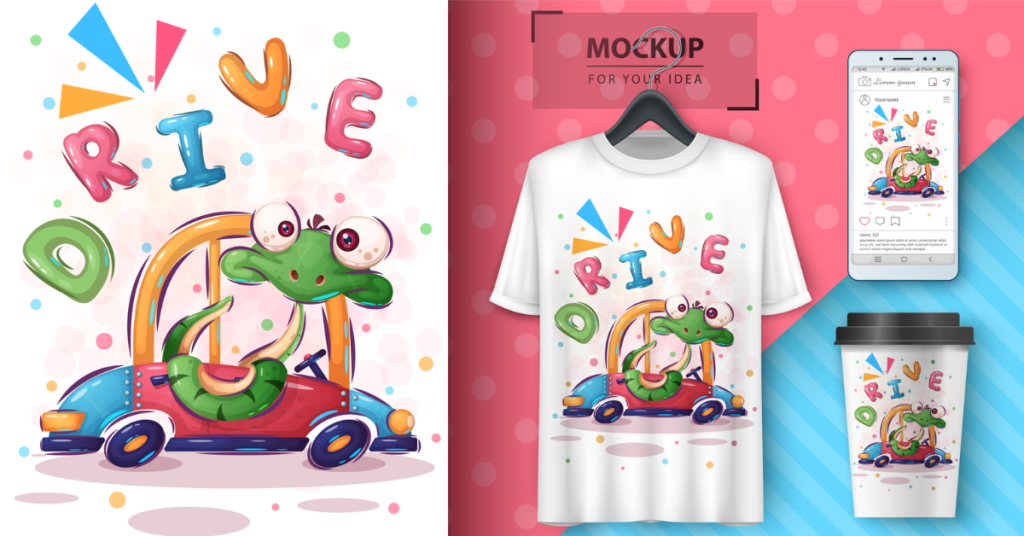
When a sale happens, a third-party provider prints, packages, and ships the product. You don’t store inventory, manage warehouses, or handle fulfillment, so you can focus on design, branding, and marketing.
The global print-on-demand industry is growing rapidly and is expected to reach tens of billions in market value over the next decade, driven by rising demand for personalization and low-barrier online businesses. This growth makes POD an increasingly attractive option for modern entrepreneurs.
How Print on Demand Works
The POD workflow is simple and beginner-friendly:
- You create original designs or artwork.
- Upload those designs to a print-on-demand platform.
- Sync your products with an online store (Shopify, Etsy, WooCommerce, etc.).
- A customer places an order.
- The POD provider prints and ships the item directly to the customer.
- You pay the base cost and keep the markup as profit.
This automated process allows you to operate a global business with minimal overhead and no physical handling of products.
Advantages of Print on Demand
Print on Demand offers several benefits that make it especially appealing for new sellers and creative entrepreneurs:
Low Startup Costs: You don’t need to invest in inventory, printing equipment, or storage. This dramatically lowers the barrier to entry and reduces financial risk.
No Unsold Inventory: Products are made only after purchase, so there’s no risk of leftover stock tying up your cash flow.
Fast Product Testing: You can launch new designs quickly, test different niches, and remove underperforming products without losses.
Scalable and Global: POD platforms often work with print providers around the world, making it easier to sell internationally without complex logistics.
Focus on Growth: Providers handle production and fulfillment, so you can spend more time on marketing, brand-building, and customer acquisition.
Disadvantages of Print on Demand
Despite its flexibility, POD isn’t perfect for every business model:
Higher Cost Per Unit: Producing items individually typically results in higher per-unit costs compared to bulk manufacturing.
Limited Fulfillment Control: Shipping times, packaging options, and branding elements may vary depending on the print provider.
Quality Consistency: Print quality and materials can differ between providers, making supplier selection and testing essential.
Who Print on Demand Is Best For
Print on Demand is ideal for:
- Creators, designers, and artists
- New entrepreneurs testing business ideas
- Side hustlers and solopreneurs
- Brands focused on customization and niche markets
- Sellers who want to launch quickly with minimal financial risk
If flexibility, creativity, and low upfront investment matter most, POD is often the smartest starting point.
What Is Traditional Inventory Management?
Traditional inventory-based eCommerce requires purchasing products in bulk before selling them. You store these items in a warehouse or fulfillment center and ship orders as customers buy.
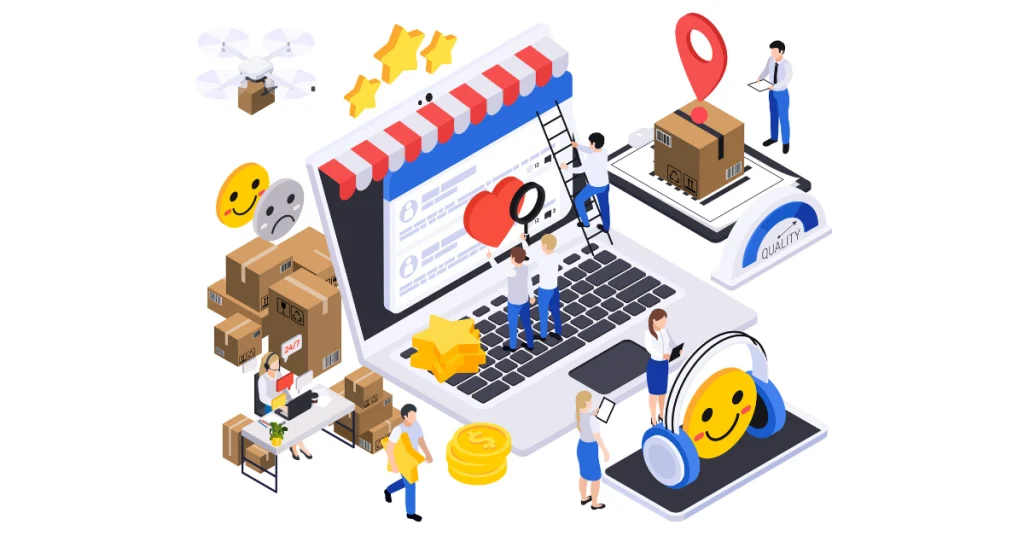
This model gives you full control over the product experience but requires more capital, planning, and operational involvement.
How Inventory-Based Selling Works
The inventory model typically follows this process:
- You source or manufacture products in bulk.
- Store inventory in a warehouse or fulfillment center.
- Manage stock levels and reorders.
- Handle packaging, shipping, and returns.
- Manage customer service and logistics.
Because businesses already make and store the products, they can fulfill orders faster and more consistently—assuming they manage inventory well.
Advantages of Traditional Inventory
Established brands often prefer this model for several reasons:
Full Brand Control: You control packaging, inserts, materials, quality, and presentation, which helps create a consistent customer experience.
Lower Per-Unit Costs: Bulk manufacturing significantly reduces the cost per item, increasing margins at higher sales volumes.
Faster Shipping: Products can be shipped immediately, improving delivery times and customer satisfaction.
Predictable Supply: For proven bestsellers, inventory makes forecasting and scaling more efficient.
Disadvantages of Traditional Inventory
However, inventory-based selling comes with higher risk:
High Upfront Investment: You must pay for products before making any sales, which can strain cash flow.
Storage and Fulfillment Costs: Warehousing, staff, and shipping expenses add ongoing overhead.
Risk of Unsold Stock: Trends change quickly, and unsold inventory can become dead stock that ties up capital.
Operational Complexity: Managing logistics, returns, and inventory levels requires time, systems, and expertise.
Who Traditional Inventory Is Best For
The inventory model works best for:
- Established brands with steady demand
- Businesses with proven products and predictable sales
- Sellers with access to larger budgets
- Companies prioritizing speed, branding, and operational control
If your business already has strong sales data and capital to invest, inventory can unlock higher margins and tighter brand control.
Print on Demand vs Inventory: A Practical Comparison for Online Businesses
When deciding how to run an online store, few choices matter more than your fulfillment model. Print on Demand (POD) and traditional inventory management both power successful eCommerce brands—but they operate in completely different ways.
One prioritizes speed, flexibility, and minimal financial risk. The other emphasizes control, bulk production, and operational investment. Understanding how each model performs in real-world scenarios can help you avoid costly mistakes and choose a setup that matches your resources, goals, and growth plans.
Let’s break down how these two business models compare across profitability, costs, platforms, logistics, sustainability, and scalability.
How These Business Models Work in Practice
At a high level, Print on Demand and inventory-based selling sit at opposite ends of the eCommerce spectrum.
- Print on Demand is built for adaptability. Products are created only after an order is placed, which eliminates the need for stock, warehouses, or upfront purchasing.
- Inventory-based selling relies on bulk production and storage. You invest upfront, manage stock levels, and fulfill orders from existing inventory.
Both approaches can generate profit—but the way they handle risk, cash flow, and growth is fundamentally different.
Performance Benchmarks and Profitability Comparison
Profitability in eCommerce isn’t just about margins. Fulfillment speed, return rates, inventory turnover, and your ability to respond quickly to market changes all influence it.
Print on Demand Performance
Print on Demand typically has a fulfillment time of about two to seven business days, depending on the print provider and the type of product. Because items are produced only after an order is placed, returns also tend to be lower—especially when products are customized or personalized.
When pricing is set strategically, profit margins can range from moderate to high. Since there’s no need to hold stock, you avoid losses from unsold inventory, which helps keep cash flow healthy. Although the cost per item is usually higher than bulk production, the lack of waste makes profitability more predictable over time.
In practice, this means POD lets you maintain stable margins without tying up capital in inventory. A useful tip is to rely on pricing tools like Printify’s calculator to balance production costs, shipping, and retail pricing. This makes it easier to protect your margins while staying competitive in the market.
Inventory-Based Model Performance
Fulfillment is generally faster with inventory-based selling because products are already in stock and ready to ship as soon as an order comes in. However, higher return rates often occur because the items aren’t personalized and packing or fulfillment mistakes can happen.
While profit margins per unit can be higher, those gains are often offset by the ongoing costs of warehousing, staffing, and logistics. These fixed expenses add pressure to keep products moving consistently.
In practical terms, inventory-based selling can be very profitable at scale, but it comes with more risk. If demand slows, trends change, or the stock doesn’t sell as expected, margins can shrink quickly. Because of the higher fixed costs, this model is less forgiving when sales fluctuate.
Cost Structure: Upfront Risk vs Long-Term Investment
The biggest difference between Print on Demand and inventory-based eCommerce lies in how costs are handled.
Print on Demand Costs
With Print on Demand, you only pay for a product after it’s been sold. There’s no need to buy in bulk, pay for storage, or tie up capital in inventory, which keeps financial risk to a minimum.
This setup makes it easy to test new designs or niches, launch products without added pressure, and pivot quickly when trends change. You’re free to experiment and adapt without worrying about unsold stock sitting on shelves.
With access to thousands of customizable products—from apparel to home décor—you can build and grow a brand without ever having to manage physical inventory yourself.
Inventory-Based Costs
Traditional inventory requires a much larger upfront commitment. You need to pay suppliers before any sales are made, then take on added expenses such as warehousing, shipping and packaging, as well as staffing and fulfillment operations.
Although buying in bulk can reduce per-unit costs over time, it also increases financial risk. This approach is best suited to businesses with predictable demand and enough capital to comfortably support inventory and restocking cycles.
Platform and Sales Channel Compatibility
Your fulfillment model directly affects where and how you can sell online.
Best Platforms for Print on Demand
Modern POD platforms integrate seamlessly with leading sales channels, making multichannel selling easier.
- Shopify: Ideal for building a branded store with automated fulfillment and order syncing
- Etsy: Perfect for custom, handmade-style, and personalized products
- TikTok Shop: Excellent for testing trending designs and selling through short-form video
- Amazon: Powerful for scaling, especially when paired with automated POD fulfillment
This flexibility allows sellers to experiment across platforms without operational complexity.
Best Platforms for Inventory-Based Selling
Inventory-based businesses perform well in environments where speed and consistency matter most.
- Amazon (FBA or FBM): Strong choice for high-volume sellers with steady demand and competitive pricing
- Shopify or WooCommerce: Best for established brands that want full control over packaging, shipping speed, and customer experience
These channels reward sellers who can maintain stock levels and meet strict fulfillment standards.
Fulfillment, Logistics, and Global Expansion
Shipping efficiency and logistics management often determine customer satisfaction—and long-term success.
Print on Demand Logistics
A global network of print providers handles orders, allowing products to be produced closer to the end customer. This reduces delivery times and helps create a smoother overall shipping experience.
Because fulfillment is distributed, there’s no need to manage international warehouses or deal directly with customs logistics. You can also expand into new countries without setting up additional infrastructure or operations.
Features such as automated order routing ensure each order is sent to the nearest fulfillment location. This not only lowers shipping costs but also improves delivery speed and reliability for customers.
Inventory-Based Logistics
This model requires upfront investment in warehouse space and inventory management systems. On top of that, shipping zones, returns, and restocking all demand ongoing attention and careful coordination.
Because of this added complexity, it’s best suited for businesses with dedicated operations teams in place. While the major advantage is having complete control over the process, that control also brings greater responsibility and operational workload.
Sustainability and Brand Perception
Sustainability has become a key factor in purchasing decisions, especially among younger consumers.
Print on Demand and Sustainability
Products are made only after a sale is completed, eliminating overproduction and excess waste. This on-demand approach operates more efficiently and aligns well with the values of eco-conscious buyers.
By producing only what’s needed, the model supports a more sustainable production cycle. Over time, this can help build stronger brand trust and appeal to customers who care about responsible consumption.
Inventory-Based Sustainability
Traditional production often leaves brands with unsold or discarded goods. Brands can succeed by adopting sustainable materials and ethical production, but they face higher costs and often pass those costs on to customers.
Whether your audience is willing to pay a premium for sustainability depends heavily on your niche and positioning.
Product Range Flexibility and Market Adaptability
Being able to adapt quickly is a major competitive advantage.
Print on Demand Flexibility
New designs can be launched instantly, allowing you to test as many product ideas as you want without any upfront cost. This flexibility makes it easy to experiment and see what resonates before committing further.
Because there’s no inventory holding you back, you can respond to trends in real time. That speed and adaptability make Print on Demand especially appealing for creators, trend-driven brands, and sellers who prefer to experiment and evolve quickly.
Inventory-Based Flexibility
Every new product requires bulk purchasing, which increases upfront costs and commitment. Because of this, it’s much harder to pivot quickly when trends change or customer preferences shift.
This approach works best for stable product lines with consistent demand. Rather than encouraging experimentation, the model favors predictability and long-term planning.
Setup Difficulty and Time to Launch
Print on Demand Setup
- Minimal setup time
- No equipment or inventory required
- Store integrations allow same-day launches
- Even faster with pop-up or no-code store options
You can go from idea to live product in hours—not months.
Inventory-Based Setup
- High entry barrier due to sourcing and logistics
- Requires inventory management and fulfillment systems
- Better suited to brands with existing infrastructure
Time to launch is significantly longer, but may pay off at scale.
Tools and Resources to Get Started
The right tools reduce friction and prevent costly errors.
- For Print on Demand: Product design tools, automated store integrations, and fulfillment platforms simplify operations from day one.
- For Inventory-Based Selling: Inventory management software helps track stock levels, manage suppliers, and streamline fulfillment.
Some businesses successfully combine both approaches—using Print on Demand to test products and inventory for proven bestsellers.
How to Use Print on Demand and Inventory Together
Many of today’s fastest-growing eCommerce brands don’t limit themselves to a single fulfillment model. Instead, they combine Print on Demand with traditional inventory to create a hybrid business that balances flexibility with scale.
This blended approach allows brands to stay agile while building a strong operational foundation. You get the creative freedom and low risk of on-demand production, alongside the efficiency and control that comes with stocking proven products.
Think of it as the middle ground between experimentation and long-term growth.
Why a Hybrid eCommerce Model Works
A hybrid setup lets you validate ideas before making major financial commitments. Instead of guessing which products will sell, you use Print on Demand to test designs, pricing, and demand in real market conditions.
Once a product consistently performs well, you can move it into bulk production and inventory. This transition often improves margins, speeds up fulfillment, and reduces per-unit costs—without sacrificing flexibility at the early stages.
In short, POD becomes your testing lab, while inventory becomes your scaling engine.
When to Use Print on Demand
Print on Demand works especially well in the early or experimental stages of a business. It lets you start with a small budget and keep risk low while maintaining the flexibility to test new product ideas, designs, or niches as you learn.
It also helps you enter new markets without committing to bulk orders or large upfront costs. Whether you sell limited editions, personalized products, or explore what resonates with your audience, POD removes many of the traditional barriers to getting started.
By eliminating the need for warehousing, staff, and complex logistics, Print on Demand gives creators and growing brands a fast, low-pressure way to discover what customers actually want before scaling further.
When Inventory Makes More Sense
Traditional inventory becomes more attractive once your business has steady sales and predictable demand. When you have reliable data showing consistent product performance, it’s easier to justify producing items upfront and holding stock.
This approach also makes sense if your cash flow can support initial production costs and faster shipping is a key part of your customer experience. Having inventory on hand allows you to ship orders quickly, which can significantly improve customer satisfaction.
Additionally, managing your own inventory gives you full control over packaging, branding, and fulfillment. If you’re working with long-term suppliers or manufacturers, this setup can help streamline operations and increase profit margins as you scale.
When to Use Both Models Together
For many brands, the smartest option isn’t choosing one model over the other, but using both in a deliberate way. A hybrid approach allows you to match each product with the fulfillment method that makes the most sense.
You can use Print on Demand to test new ideas, release custom items, or run limited drops without taking on unnecessary risk. Once certain designs prove they sell consistently, you can move those winners into traditional inventory to improve margins and fulfillment speed.
At the same time, POD serves as a safety net for seasonal or trend-driven products, while you reserve inventory for core items that generate steady revenue. This balanced strategy minimizes financial risk and creates a clear, scalable path for long-term growth.
Final Thoughts: Print on Demand vs Inventory
There’s no universal answer when choosing between Print on Demand and inventory-based fulfillment. Instead, the right model depends on where your business stands today—and, just as importantly, where you want it to go.
In many cases, Print on Demand is ideal for creators and entrepreneurs who prioritize flexibility, low upfront costs, and the freedom to operate without managing inventory. By contrast, traditional inventory fulfillment works best for established brands with consistent demand, proven operations, and the capital needed to scale efficiently.
That said, some of the strongest brands don’t limit themselves to just one approach. Rather, they combine both models—using Print on Demand to test new ideas and validate demand, then shifting to inventory to scale proven winners.
Ultimately, if you’re ready to build a modern, flexible eCommerce business, now is the time to take action. Platforms like Printify make it easy to launch, experiment, and grow—without taking on the risks of traditional inventory.
So, turn your ideas into products, your products into sales, and your store into a scalable, future-ready business.