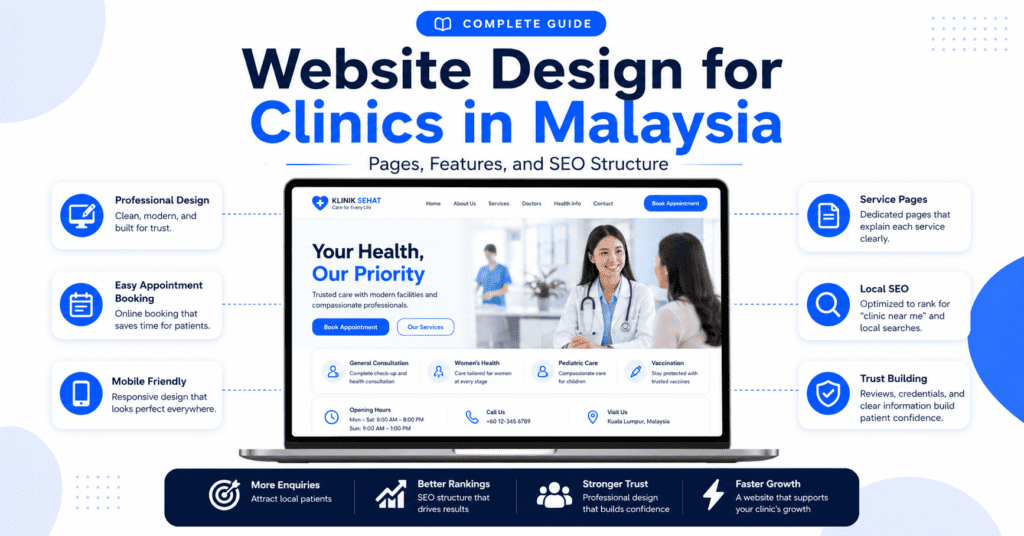
A clinic website is not just an online brochure.
For many patients, your website may be the first serious impression they have of your clinic. Before they call, visit, book an appointment, or send a WhatsApp message, they may search your clinic name, compare your services, check your location, read about your doctors, and look for signs that your clinic is trustworthy.
This is why website design for clinics in Malaysia needs to be handled differently from a normal business website.
A clinic website should look professional, but design alone is not enough. It should make patients feel informed, safe, and confident to take the next step. It should explain your services clearly, show your location, make appointment booking easy, work smoothly on mobile, and support local SEO so nearby patients can find you on Google.
Many clinics already have a basic website, but the website may not be helping much. Some clinic websites are outdated. Some are difficult to use on mobile. Some do not explain the services clearly. Some hide the contact details. Some have no doctor profiles, no appointment flow, no trust sections, and no SEO structure.
A clinic website should do more than exist. It should help patients understand your clinic, trust your team, and contact you easily.
This guide explains what a clinic website in Malaysia should include, which pages are important, what features matter, and how to structure the website for better enquiries and local search visibility.
Why Clinics Need a Professional Website
Patients today often search online before choosing a clinic.
Even if someone hears about your clinic from a friend, family member, or nearby resident, they may still check your website before visiting. They want to confirm your opening hours, location, services, doctor information, appointment process, and contact details.
If your website looks outdated or unclear, it may create doubt. Patients may wonder whether the information is still accurate, whether your clinic is active, or whether another clinic nearby looks more convenient and professional.
A good clinic website helps reduce uncertainty.
It gives patients the information they need before they contact you. It also helps your clinic appear more established, especially when patients are comparing several clinics in the same area.
For private clinics, GP clinics, dental clinics, aesthetic clinics, specialist clinics, wellness clinics, and healthcare service providers, trust is extremely important. Patients are not only buying a product. They are making a health-related decision. They want to feel that the clinic is reliable, professional, and easy to communicate with.
Your website plays a direct role in that first impression.
A Clinic Website Must Be Clear Before It Is Beautiful
A beautiful website is useful, but clarity is more important.
When someone lands on your clinic website, they should quickly understand what type of clinic you are, where you are located, what services you provide, and how to make an appointment.
Many clinic websites make the mistake of using generic homepage messages. Phrases such as “Your trusted healthcare partner” or “Quality care for everyone” may sound nice, but they do not give enough information.
A stronger clinic homepage should be more specific.
For example, if you are a family clinic in Petaling Jaya, the homepage should make that clear. If you provide general consultation, health screening, vaccination, women’s health, child health, or chronic disease management, visitors should be able to see that quickly.
Patients do not want to search through multiple pages just to understand whether your clinic can help them. The homepage should give them a clear overview and guide them to the right service.
Good clinic website design should remove confusion. The easier it is for patients to understand your clinic, the more likely they are to contact you.
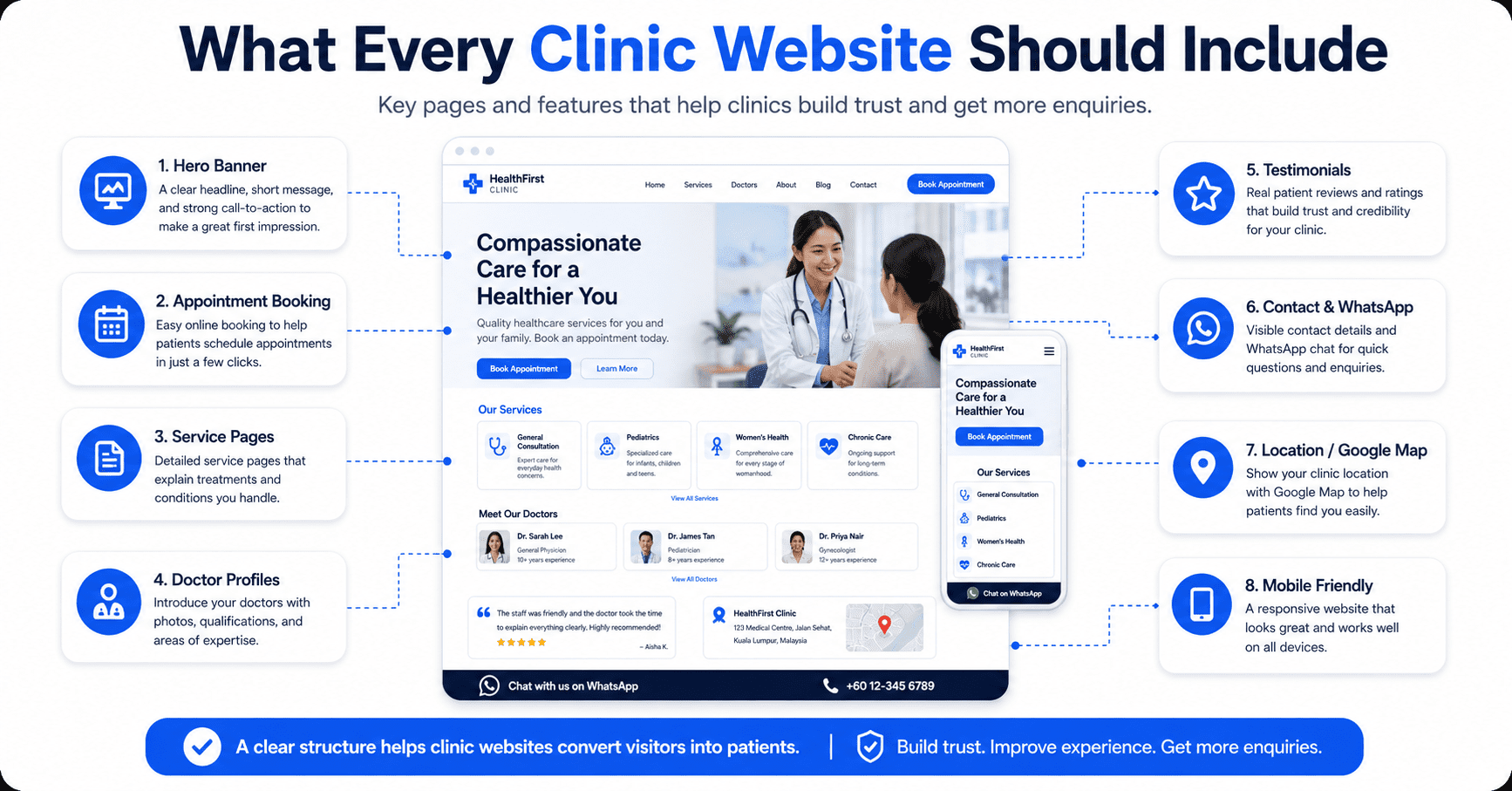
The Most Important Pages for a Clinic Website
A clinic website does not need to be complicated, but it should include the right pages.
The homepage is the most important starting point. It should introduce the clinic clearly, highlight the main services, show location information, provide appointment options, and build trust. It should not only talk about the clinic in general terms. It should guide patients toward the information they are looking for.
The About page should explain your clinic background, care approach, team, and values. This page is important because healthcare decisions involve trust. Patients want to know who is behind the clinic and why they should feel comfortable visiting.
The Services page should explain what your clinic provides. For better SEO and patient clarity, important services should have their own dedicated pages instead of being placed only in one long list. For example, health screening, vaccination, general consultation, dental services, aesthetic treatments, physiotherapy, or specialist services may each deserve their own page if they are important to your clinic.
Doctor or practitioner profile pages are also valuable. Patients often want to know the doctor’s background, experience, qualifications, languages spoken, and areas of interest. A clear doctor profile can make the clinic feel more human and trustworthy.
The Contact page should be simple and complete. It should include address, phone number, WhatsApp link, email, opening hours, map, parking information if relevant, and appointment instructions.
If your clinic serves different locations or has multiple branches, each branch should have its own location section or location page. This helps both users and search engines understand where your clinic operates.
Why Service Pages Matter for Clinic SEO
Many clinic websites have one short page listing all services. This may be easy to set up, but it is not always strong for SEO or patient understanding.
If all your services are squeezed into one page, Google may not clearly understand which specific service each section is targeting. Patients may also not get enough information to make a decision.
Dedicated service pages are usually more effective.
For example, if your clinic offers health screening, that page can explain who the screening is suitable for, what patients can expect, how to prepare, what the process looks like, and how to book. If your clinic offers vaccination, the page can explain the available categories, appointment process, and general guidance without overwhelming the homepage.
This does not mean every small service needs its own page. The goal is to create dedicated pages for services that people actively search for or that are important to your clinic’s revenue.
A clinic in Kuala Lumpur, Petaling Jaya, Subang, Shah Alam, Rawang, Johor Bahru, Penang, or other areas may benefit from service pages that match what local patients are searching for.
For example, instead of only having one “Services” page, a clinic may have pages such as “Health Screening,” “Vaccination,” “General Consultation,” “Women’s Health,” “Child Health,” or “Dental Check-Up,” depending on the clinic’s actual offering.
Each service page should be written for real patients first, not just search engines. The content should be clear, helpful, and easy to understand.
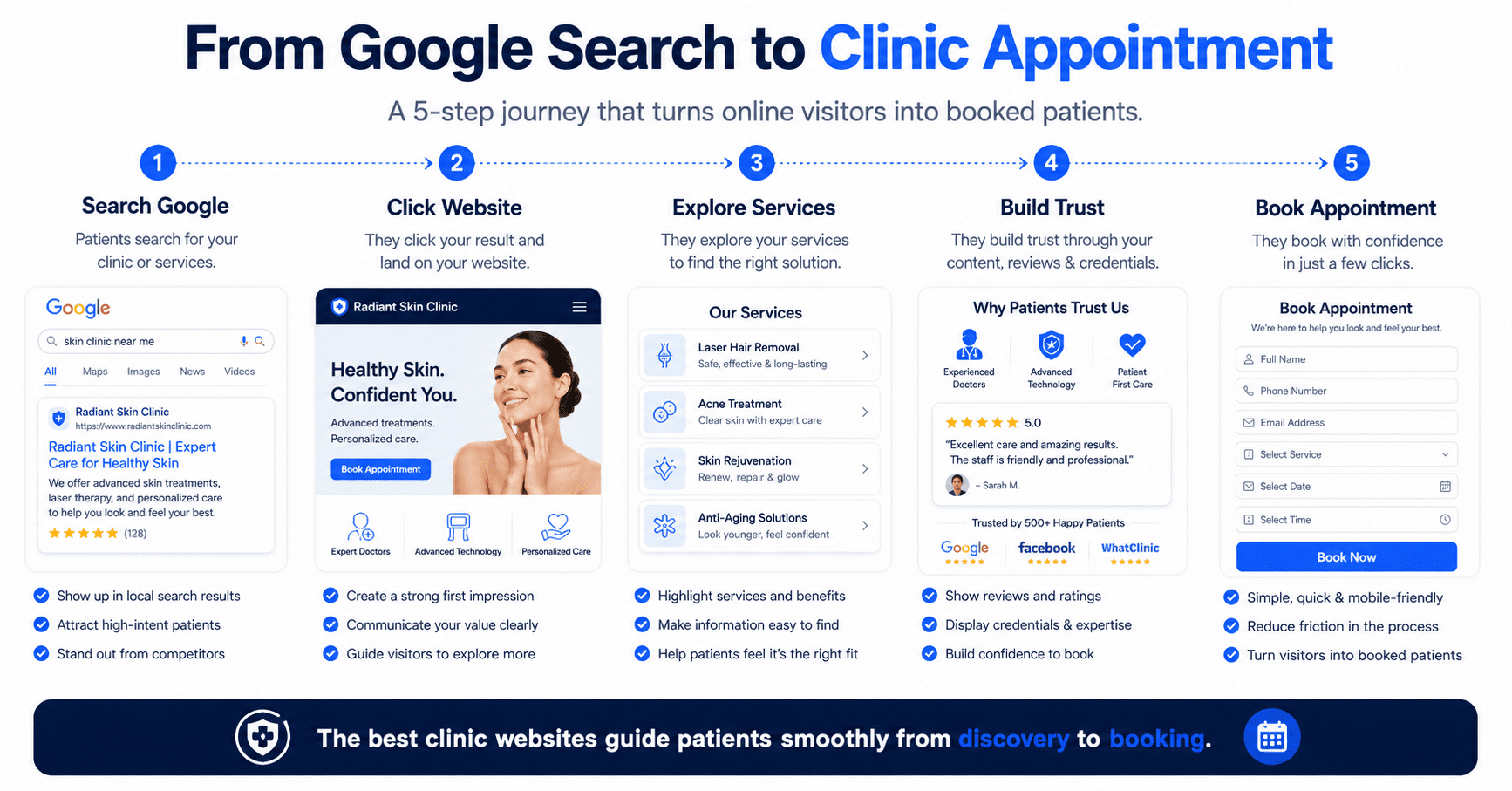
Local SEO Is Important for Clinics
Most patients search for clinics based on location.
They may search for terms such as “clinic near me,” “GP clinic in Petaling Jaya,” “dental clinic Kuala Lumpur,” “health screening clinic Selangor,” or “aesthetic clinic near me.”
This is why local SEO is important for clinic websites.
Your website should clearly show your clinic name, address, service area, phone number, operating hours, and map location. These details should be consistent with your Google Business Profile and other online listings.
If your clinic serves a specific area, mention the location naturally throughout the website. This does not mean repeating the city name unnaturally. It means writing useful content that makes your location clear to patients and search engines.
For example, your homepage may mention that your clinic serves families in a specific neighbourhood. Your contact page may include directions, parking details, nearby landmarks, or public transport information. Your service pages may explain that appointments are available at your clinic location.
If you have multiple branches, each branch should have its own page with unique information. Avoid creating duplicate pages where only the location name changes. Each location page should include specific details that are useful for patients in that area.
Local SEO helps your clinic appear for patients who are already looking for healthcare services nearby. These visitors are usually more ready to take action compared to people casually browsing.
Mobile Design Can Affect Appointment Enquiries
Most patients will view your clinic website from a phone.
They may click from Google Maps, search results, Facebook, Instagram, WhatsApp, or a shared link. If the website does not work well on mobile, you may lose enquiries before patients even read the page properly.
A mobile-friendly clinic website should load quickly, display information clearly, and make contact options easy to tap. Patients should not need to pinch, zoom, or search around to find your phone number, WhatsApp button, appointment form, or address.
The most important information should be easy to reach. This includes appointment CTA, opening hours, location, contact number, and main services.
For clinics, mobile design is not just about looking modern. It affects convenience. A patient who needs quick information may leave if the website feels slow or messy.
A good mobile layout should feel calm, clean, and easy to navigate. It should not overwhelm visitors with too many pop-ups, animations, or complicated menus.
In clinic website design, simplicity often works better than unnecessary visual effects.
Appointment Booking Should Be Easy
A clinic website should make appointment enquiries simple.
Some clinics may use a full online booking system. Others may prefer WhatsApp, phone call, or a simple enquiry form. The right option depends on your clinic’s workflow.
If your clinic team already handles bookings through WhatsApp, then the website should support that behaviour. The WhatsApp button should be visible and should guide patients clearly. Instead of a generic button that says “Contact Us,” a more helpful CTA may say “WhatsApp Us to Book an Appointment” or “Ask About Appointment Availability.”
If you use an appointment form, keep it simple. Patients should not need to answer too many questions before starting the conversation. Name, contact number, preferred service, preferred date, and message may be enough for an initial enquiry.
If you use a booking system, make sure it works smoothly on mobile. A complicated booking process can discourage patients.
The purpose of appointment booking on a website is not to create friction. It is to make the next step easier.
Trust Elements Are Essential for Clinic Websites
Trust is one of the most important parts of healthcare website design.
Patients want to know that your clinic is legitimate, experienced, and professional. They also want to feel that the clinic is suitable for their needs.
Your website can build trust in several ways.
Doctor profiles help patients understand who they may be seeing. Clinic photos help patients feel familiar with the environment before visiting. Testimonials and reviews can show that other patients had a positive experience. Clear service explanations can reduce anxiety because patients know what to expect.
You can also build trust by showing your process. For example, explain how appointments work, what patients should bring, how follow-up is handled, or what happens during a first consultation.
If your clinic has certifications, accreditations, professional memberships, or recognised qualifications, they should be presented clearly and accurately.
However, clinic websites should be careful with claims. Healthcare content should be professional, responsible, and not exaggerated. Avoid overpromising results or using language that may mislead patients.
A trustworthy clinic website should feel informative, calm, and credible.
Content Should Be Written for Patients, Not Only for Search Engines
SEO is important, but clinic website content should never feel like it was written only for Google.
Patients need clear and understandable information. They may not be familiar with medical terms or technical explanations. If the content is too complex, they may feel confused. If the content is too vague, they may not feel confident.
The best clinic website content uses simple language without oversimplifying important information.
It should explain the service, who it may be suitable for, what patients can expect, how to book, and when they should contact the clinic. The tone should be professional but approachable.
For example, a service page should not only say “We provide health screening services.” It should explain why health screening matters, what types of screening are available, how the appointment process works, and how patients can enquire.
Educational blog content can also help build trust and improve SEO. A clinic may publish articles answering common patient questions, explaining service preparation, or sharing general health awareness topics.
However, clinic content should be handled carefully. It should avoid making unrealistic promises or replacing professional consultation. The purpose is to educate and guide patients toward appropriate care, not to create fear or pressure.
Blog Content Can Support Clinic SEO
A clinic website can benefit from blog content when the topics match what patients are searching for.
For example, a clinic may write about health screening preparation, vaccination questions, common symptoms that require medical attention, child health topics, women’s health topics, dental care tips, or general wellness advice.
The purpose of blog content is not only to get traffic. It should help patients understand when they may need to contact a clinic and what services are available.
For local SEO, blog posts can also support service pages by internally linking to them. For example, an article about health screening can link to the clinic’s health screening service page. An article about vaccination questions can link to the vaccination appointment page.
This helps users move from information to action naturally.
The best clinic blog content answers real patient questions. It should be useful, clear, and written in a way that builds trust.
Consistency matters as well. A clinic that publishes helpful content regularly may appear more active and credible than a website that has not been updated for years.
Website Speed and Technical Setup Matter
Clinic websites should load quickly and work reliably.
Patients may leave if the website is slow, especially on mobile. Slow loading can also affect search performance and user experience.
Images should be optimised. Pages should not be overloaded with unnecessary scripts, heavy animations, or large media files. Hosting should be stable. Forms should be tested regularly. Security should be maintained.
SSL is also important because patients may submit contact details through forms. A secure website gives visitors more confidence and helps protect basic data transmission.
If your website is built on WordPress, maintenance is important. Themes, plugins, and security updates should be handled properly. A clinic website should not be left unmanaged for long periods.
Technical reliability may not be visible at first glance, but it affects how patients experience the website.
A professional clinic website should be easy to use and stable behind the scenes.
Common Mistakes in Clinic Website Design
One common mistake is making the website too generic. If the homepage does not clearly explain the type of clinic, location, services, and appointment process, patients may not know whether the clinic is suitable for them.
Another mistake is hiding important contact details. Patients should not need to search for the phone number, WhatsApp link, address, or opening hours.
Some clinic websites also have service pages that are too thin. A short list of treatments is usually not enough to help patients understand the service or help search engines rank the page.
Another mistake is using too many stock images and not enough real clinic photos. Stock images can make a website look polished, but real photos of the clinic, team, reception area, treatment rooms, or location can make the business feel more trustworthy.
Many clinic websites also ignore mobile experience. This is a serious issue because patients often browse from their phones.
Finally, some clinic websites are built once and never updated. Outdated operating hours, old doctor information, broken forms, or missing service updates can damage trust.
A clinic website should be reviewed regularly to make sure the information stays accurate.
What Makes a Good Clinic Homepage?
A good clinic homepage should quickly answer the patient’s main questions.
What type of clinic is this? Where is it located? What services are available? Who are the doctors or practitioners? How can I book or contact the clinic? Why should I trust this clinic?
The homepage should start with a clear headline and appointment CTA. It should then introduce the main services, show trust elements, explain the clinic approach, highlight doctor or team information, and provide easy contact options.
The homepage should not be too crowded. Patients should be able to scan the page easily.
The design should feel clean and professional. Colours should be calming. Typography should be readable. The layout should help visitors move naturally from introduction to enquiry.
A clinic homepage does not need to be overly creative. It needs to be clear, reliable, and easy to use.
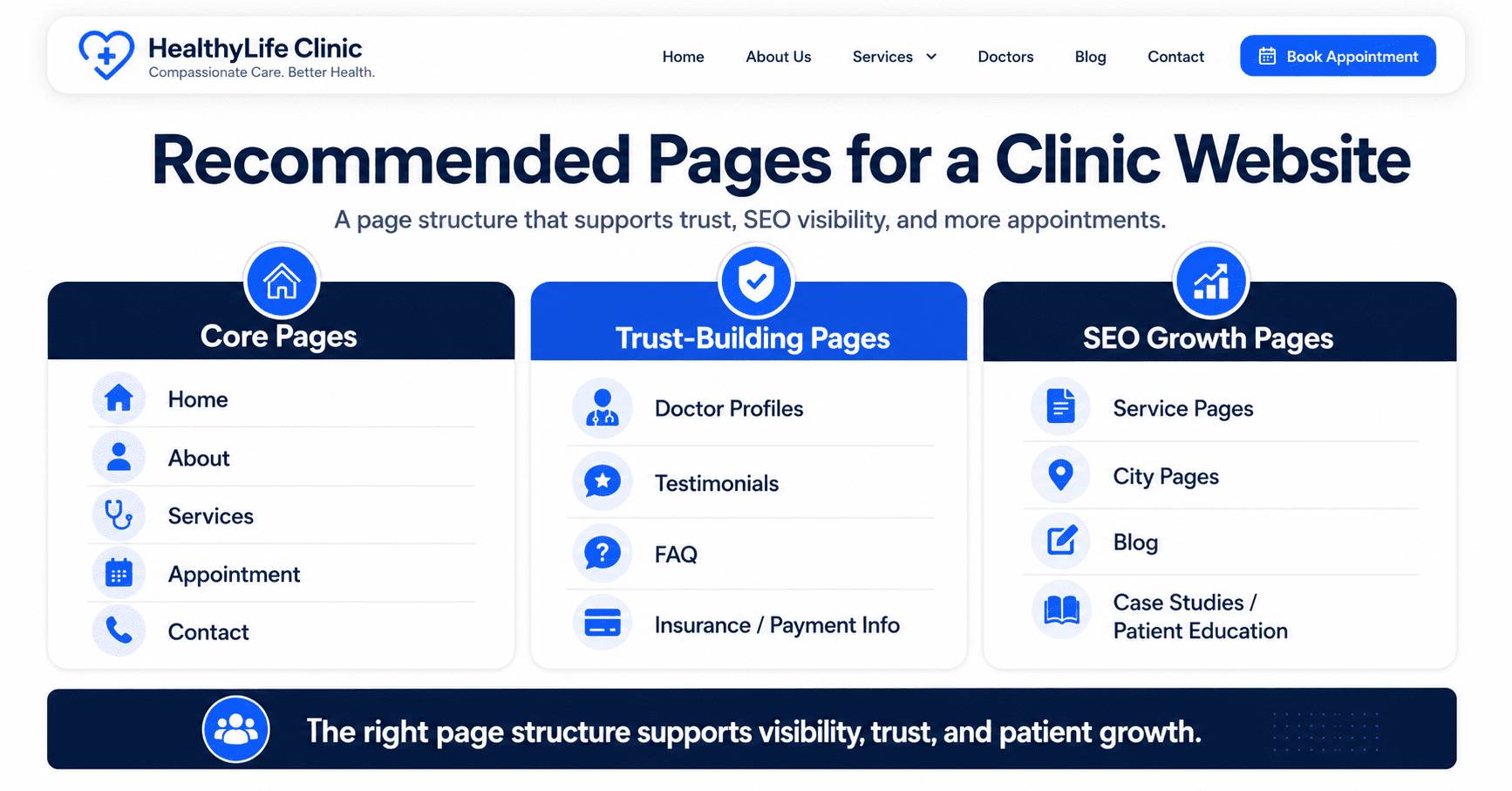
What Makes a Good Clinic Service Page?
A good clinic service page should focus on one service or service category.
It should explain the service in a patient-friendly way. It should help visitors understand whether the service is relevant to them, what the general process looks like, and how to make an appointment.
The page should include clear headings, helpful explanations, trust signals, related services, FAQs, and a visible appointment CTA.
For SEO, the service page should also use a clear page title, readable URL, proper heading structure, and natural keyword usage.
For example, a page about health screening should not only mention “health screening.” It should explain the types of screening available, who may consider screening, how to book, where the clinic is located, and what patients can expect during the visit.
A good service page should help both patients and search engines understand the page clearly.
Should Clinics Use WhatsApp on Their Website?
For many clinics in Malaysia, WhatsApp can be a useful contact channel.
Patients often prefer quick communication, especially when asking about appointment availability, opening hours, services, or general enquiries.
A WhatsApp button can make the enquiry process easier, but it should be used properly. The button should be visible without being annoying. The message should be professional. If possible, the WhatsApp link can include a pre-filled message to make it easier for patients to start the conversation.
For example, the message may say, “Hi, I would like to ask about appointment availability.”
This saves time for the patient and helps the clinic team understand the enquiry faster.
However, WhatsApp should not replace proper website information. Patients should still be able to read about your services, doctors, location, and appointment process before contacting you.
The website should inform first, then make communication easy.
How a Clinic Website Supports Business Growth
A clinic website can support growth in several ways.
It can help new patients discover your clinic through Google. It can improve trust when people compare you with other clinics. It can reduce repetitive questions by explaining services clearly. It can make appointment enquiries easier. It can support paid ads and social media campaigns. It can also help existing patients find updated information quickly.
For clinics that want to grow through SEO, service pages and local content can attract patients who are actively searching for specific services.
For clinics running ads, dedicated landing pages can improve campaign performance because they focus on one service and one action.
For clinics relying on referrals, the website acts as a credibility tool. When someone recommends your clinic, the website helps the referred person learn more before contacting you.
This is why clinic website design should be treated as part of your patient acquisition and communication system.
It is not just about having a website. It is about making the website useful.
Final Thoughts: A Clinic Website Should Build Trust and Make Action Easy
A good clinic website should be clear, professional, mobile-friendly, and easy to use.
It should help patients understand your services, learn about your clinic, trust your team, and contact you without confusion.
For clinics in Malaysia, this usually means having strong local SEO structure, visible appointment options, WhatsApp CTA, clear doctor profiles, helpful service pages, trust-building content, and accurate contact information.
The website should not feel like a static brochure. It should support patient enquiries, search visibility, and clinic credibility.
If your clinic website is outdated, difficult to use, or not bringing enquiries, the issue may not only be design. It may be the structure, content, SEO, trust sections, or appointment flow.
A better clinic website does more than look modern.
It helps patients get the information they need and gives them confidence to take the next step.
Need a Professional Website for Your Clinic?
If your clinic needs a website that looks professional, explains your services clearly, and helps patients make appointments, the right structure matters.
At Bennie Tay, we help clinics and healthcare service providers build conversion-focused websites designed to improve trust, support local SEO, and make enquiries easier.
Whether you need a new clinic website, a redesign, service pages, appointment-focused landing pages, or a monthly website plan, the goal is simple:
Build a clinic website that helps patients find you, trust you, and contact you.
FAQ: Website Design for Clinics in Malaysia
What should a clinic website include?
A clinic website should include a clear homepage, service pages, doctor or practitioner profiles, appointment options, contact details, location map, opening hours, trust sections, mobile-friendly design, and basic SEO setup.
Why is local SEO important for clinics?
Local SEO helps clinics appear when nearby patients search for healthcare services. Many patients search by service and location, so your website should clearly show your clinic location, services, and contact information.
Should a clinic website have WhatsApp?
For many clinics in Malaysia, WhatsApp is useful because patients often prefer quick communication. A visible WhatsApp button can make appointment enquiries easier, but the website should still provide clear service and clinic information.
Do clinics need separate service pages?
Yes, important clinic services should have dedicated pages when possible. Separate service pages help patients understand each service better and can improve SEO visibility for specific searches.
How can a clinic website get more appointment enquiries?
A clinic website can get more enquiries by improving its messaging, mobile experience, trust sections, service pages, appointment CTA, WhatsApp flow, local SEO, and contact form structure.
Is a monthly website plan suitable for clinics?
Yes, a monthly website plan can be suitable for clinics that want a professional website with lower upfront cost, ongoing support, maintenance, and updates.